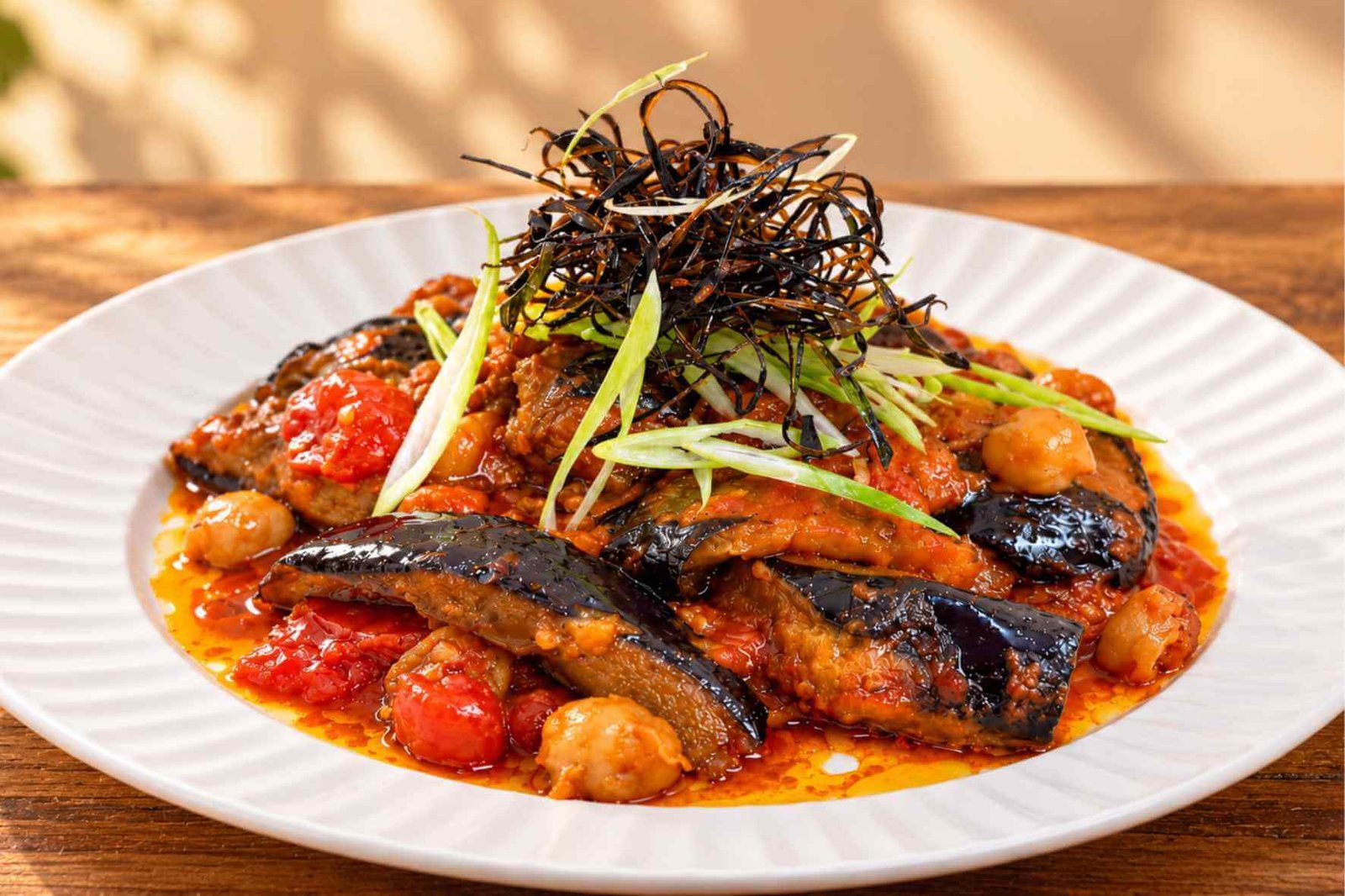
Lebanese eggplant moussaka, also known as maghmour, is a simple dish with a surprisingly generous personality. Tender eggplant, chickpeas, onions, garlic, and ripe tomatoes simmer together in a rich sauce scented with a little cinnamon. Serve it warm for a comforting main dish, or let it cool and enjoy it as part of a Lebanese mezze spread.
This is not the layered Greek casserole many people picture when they hear the word moussaka. Lebanese moussaka is a saucy eggplant dish, usually cooked on the stovetop. Some versions include chickpeas, and it can be served warm or cold.
I love the story often told about the name. Moussaka is commonly connected to the Arabic musaqqa‘a, which is often translated as “chilled.” Other interpretations connect the word with moistening or watering, so the exact origin is not completely settled. Still, the idea of a dish that can be enjoyed cold feels right to me. This recipe is delicious warm, but after resting in the refrigerator, its flavors soften and come together in a way that makes every bite especially enjoyable.
What Is Lebanese Eggplant Moussaka?
Moussaka has many versions across the Middle East and Mediterranean. The Greek version is often baked in layers with eggplant, minced meat, and béchamel. Lebanese eggplant moussaka takes a different path. Here, eggplant is cooked with tomatoes, onions, garlic, and chickpeas until the sauce becomes rich and the vegetables turn soft and full of flavor.
In Lebanon, you may hear this dish called maghmour. It is sometimes served hot as a substantial vegetable dish and sometimes chilled as part of a mezze table. Its texture is more like a thick stew than a sliceable casserole.
The version I make brings together eggplant, ripe tomatoes, tomato paste, chickpeas, onions, and garlic. A small pinch of cinnamon adds warmth without making the dish taste sweet. I also like to finish it with green onion and thin, crispy strips of eggplant peel. They add freshness and crunch to the soft, saucy vegetables.
It is a modest list of ingredients, but each one has a role. The tomatoes bring acidity and moisture. Chickpeas make the dish more filling. Onions add sweetness as they soften, while garlic gives the sauce its savory depth. The eggplant ties everything together.
A Dish That Reminds Me of My Mother
In my mother’s family, vegetarian food has always had a special place at the table. We never thought of it as something to serve only when there was no meat. Vegetable dishes were meals we truly loved and looked forward to. A pot of beans, a plate of lentils, or a dish made with eggplant could bring everyone together just as happily as any meat dish.
Moussaka was one of the dishes my mother used to make, which is why it means so much to me. It is more than eggplant simmered with tomatoes and chickpeas. For me, it brings back the feeling of home and the warmth of sharing a meal with my family. Every time I prepare it, I remember how familiar and comforting my mother’s cooking could be.
I have always loved eggplant, especially when it is fried. It becomes tender and silky inside, with a beautifully browned surface that carries so much flavor. That first bite of fried eggplant is one of my favorite parts of this dish. I love how it later absorbs the tomato sauce while still keeping its own character.
This recipe brings together two things that are close to my heart: the flavors my mother cooked for us and my lifelong love of eggplant. That is what makes this moussaka especially meaningful to me. It is a dish I enjoy cooking, sharing, and remembering.
My Favorite Ways to Cook with Eggplant
I never seem to get tired of cooking with eggplant. It is one of those ingredients that can completely change its character depending on how you prepare it. Roast it, and it becomes soft and smoky. Simmer it in tomato sauce, and it turns tender and full of flavor. Fry it, and you get that golden, delicious bite I find almost impossible to resist. If a recipe includes fried eggplant, you can be sure it already has my attention!
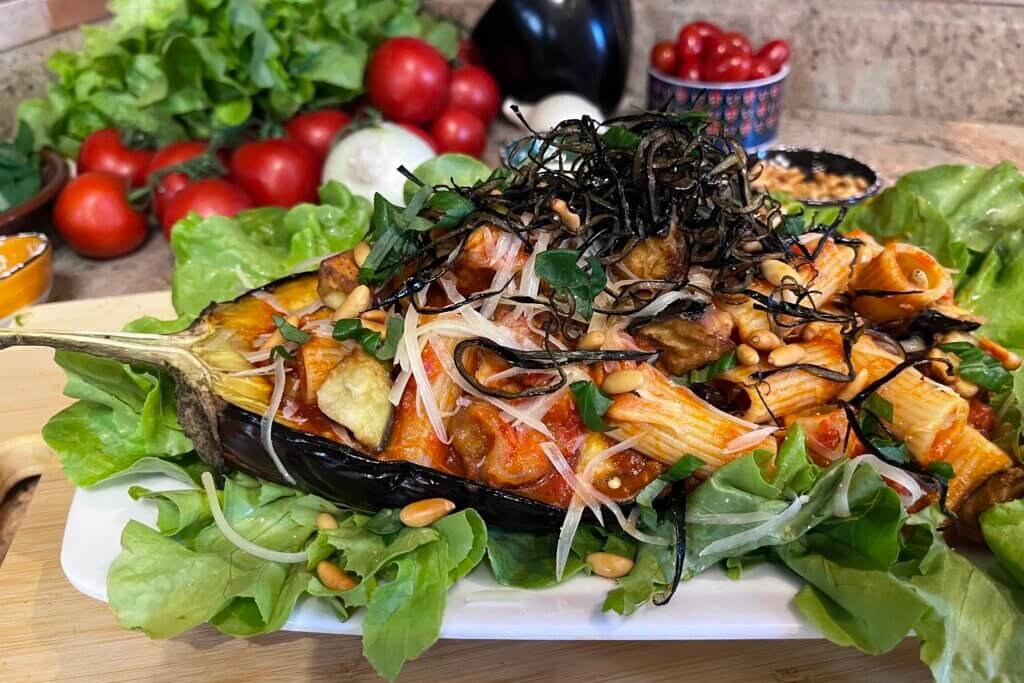
I have used eggplant in many different recipes on my website, and I love how each one brings out a different side of it. My eggplant bruschetta makes a flavorful topping for crisp bread, turning a simple bite into something special. In Rigatoni alla Siciliana, fried eggplant joins pasta and tomato sauce in a hearty dish that is both comforting and beautiful to serve.
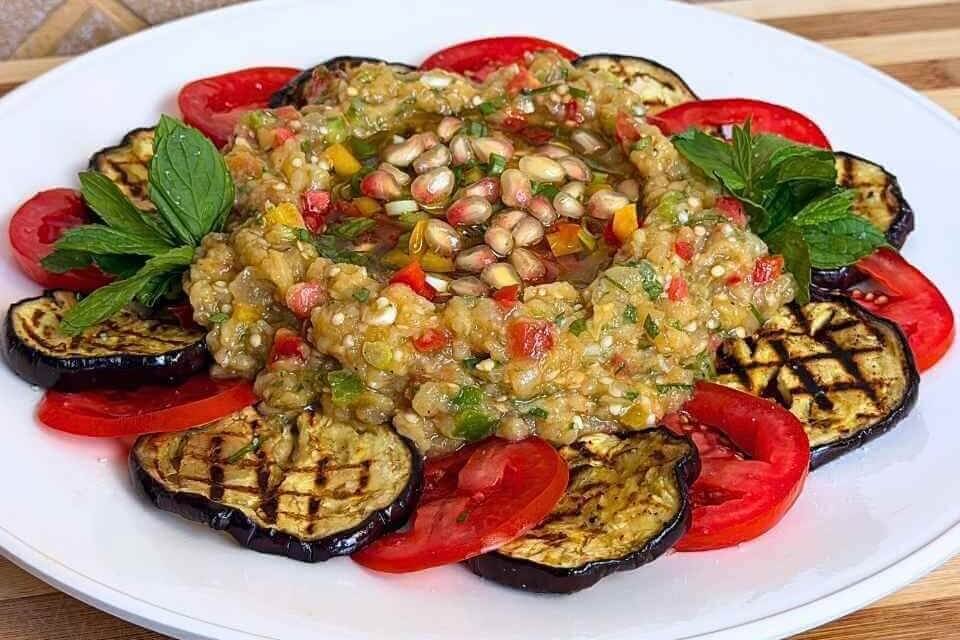
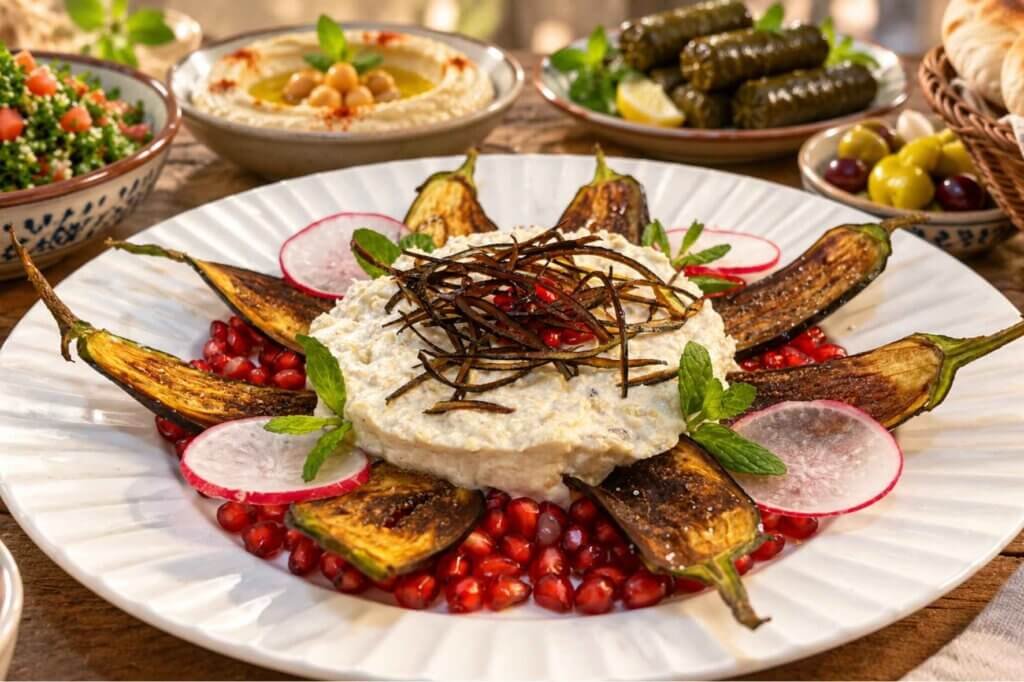
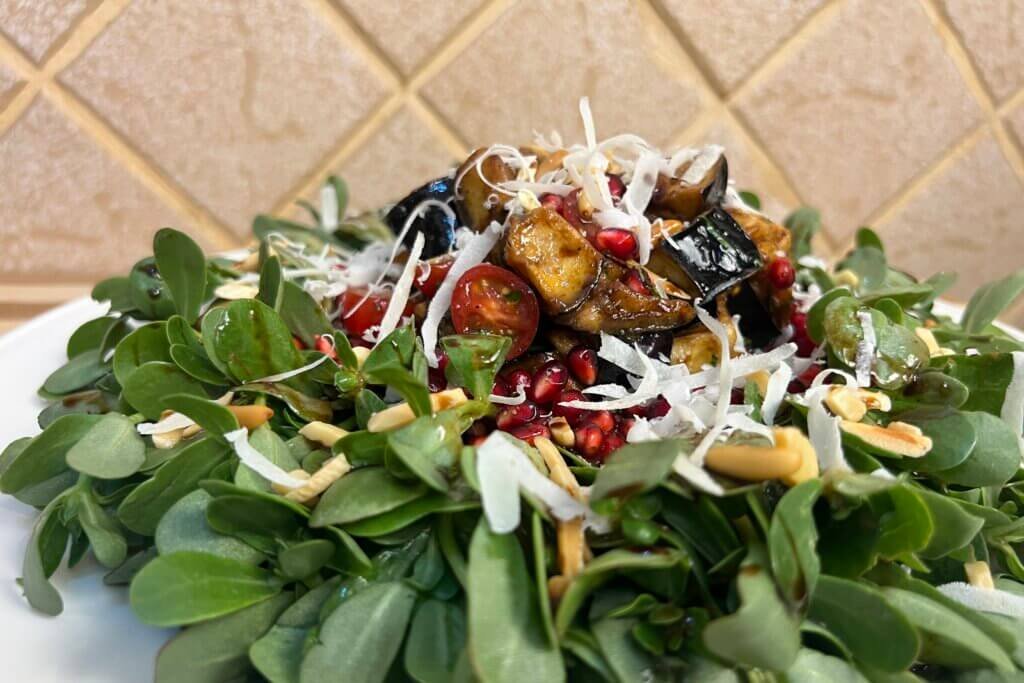
For a Lebanese mezze table, there is my Eggplant Mtabbal. Its smoky, creamy texture is wonderful with warm bread and fresh vegetables. When I want something brighter, I make Eggplant and Purslane Salad, where crisp fried eggplant meets fresh purslane, tomatoes, herbs, and pomegranate. The contrast between the crunchy eggplant and the fresh greens makes every forkful lively.
My Eggplant Raheb takes the vegetable in yet another direction. Roasted eggplant comes together with fresh vegetables, herbs, lemon, and olive oil for a dish that feels light and full of color.
And, of course, there is this moussaka: tender eggplant simmered with tomatoes and chickpeas, bringing back memories of my mother’s cooking. These recipes show just how much eggplant can do. It can be smoky, creamy, crispy, fresh, or wonderfully saucy—and I’m always happy to find another delicious way to cook it.
Why This Recipe Begins with Salting the Eggplant
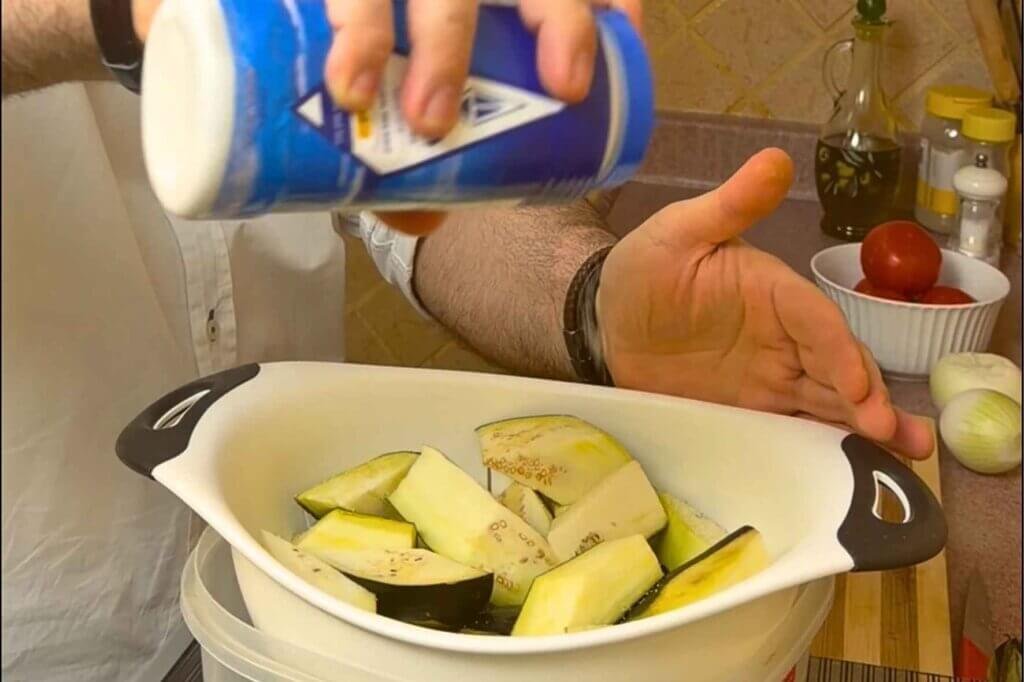
Eggplant is tender and absorbs the flavors around it beautifully. Before cooking, I cut it into pieces of a similar size, so they cook evenly. Then I layer the pieces in a colander with a moderate amount of salt and let them rest in the refrigerator for a few hours.
As the eggplant rests, it releases moisture. This helps prepare it for frying and gives the pieces a less watery texture. When the resting time is over, drain the eggplant well before cooking.
While the eggplant rests, you can prepare the other ingredients. Slice the onions and garlic, peel and dice the tomatoes, and keep the tomato juices. They carry plenty of flavor, so there is no reason to pour them away. If you are using the eggplant peel for garnish, cut it into thin strips and set it aside.
Frying gives the eggplant a golden surface and a tender center. Cook it in batches so the pan does not become crowded. Once the pieces are done, let excess oil drain away before adding them to the sauce.
If you would like a lighter method, skip frying. Add the raw eggplant pieces to the finished tomato and chickpea sauce, cover the pot, and simmer gently until the eggplant is tender. The texture will be different, but it is still a delicious way to prepare the dish.
Building a Rich Tomato and Chickpea Sauce
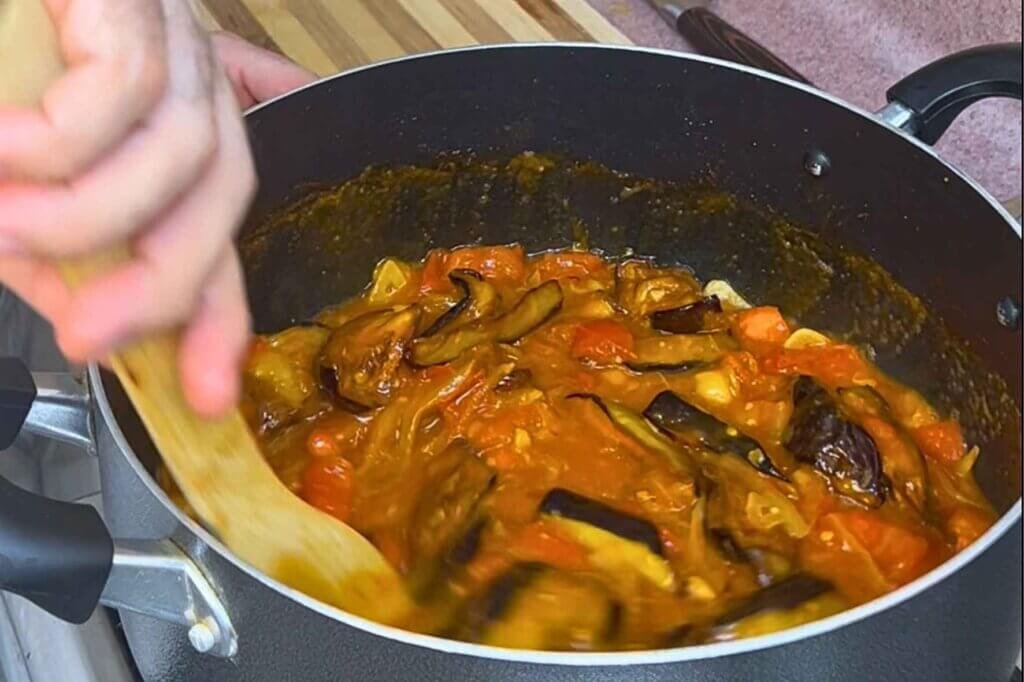
The sauce begins with onions cooked in olive oil. Give them time to soften and develop a little color. Then add the garlic and let it cook briefly. Garlic needs only a short time in the pan; once fragrant, it is ready for the tomatoes.
Add the diced tomatoes along with their juices. Stir in the tomato paste and a small pinch of cinnamon. The paste deepens the tomato flavor, while cinnamon brings a gentle warmth. It should stay in the background. You want it to complement the eggplant, not dominate it.
Next, add the cooked chickpeas and some hot water. Let the sauce come to a boil, then add the fried eggplant and lower the heat. The eggplant will absorb some of the sauce as everything simmers together.
A short, gentle simmer is all the dish needs once the eggplant is cooked. As the sauce thickens, it clings to the vegetables and chickpeas. You are looking for a rich, spoonable consistency: saucy enough to enjoy with bread, but not watery.
Taste before serving and adjust the seasoning. The eggplant has already been salted, so add any extra salt carefully. This is also the moment to decide whether you want the dish more saucy or more concentrated. If it looks too thick, add a little hot water. If it looks thin, leave it uncovered for a few minutes.
The Finishing Touch I Use Across My Eggplant Dishes
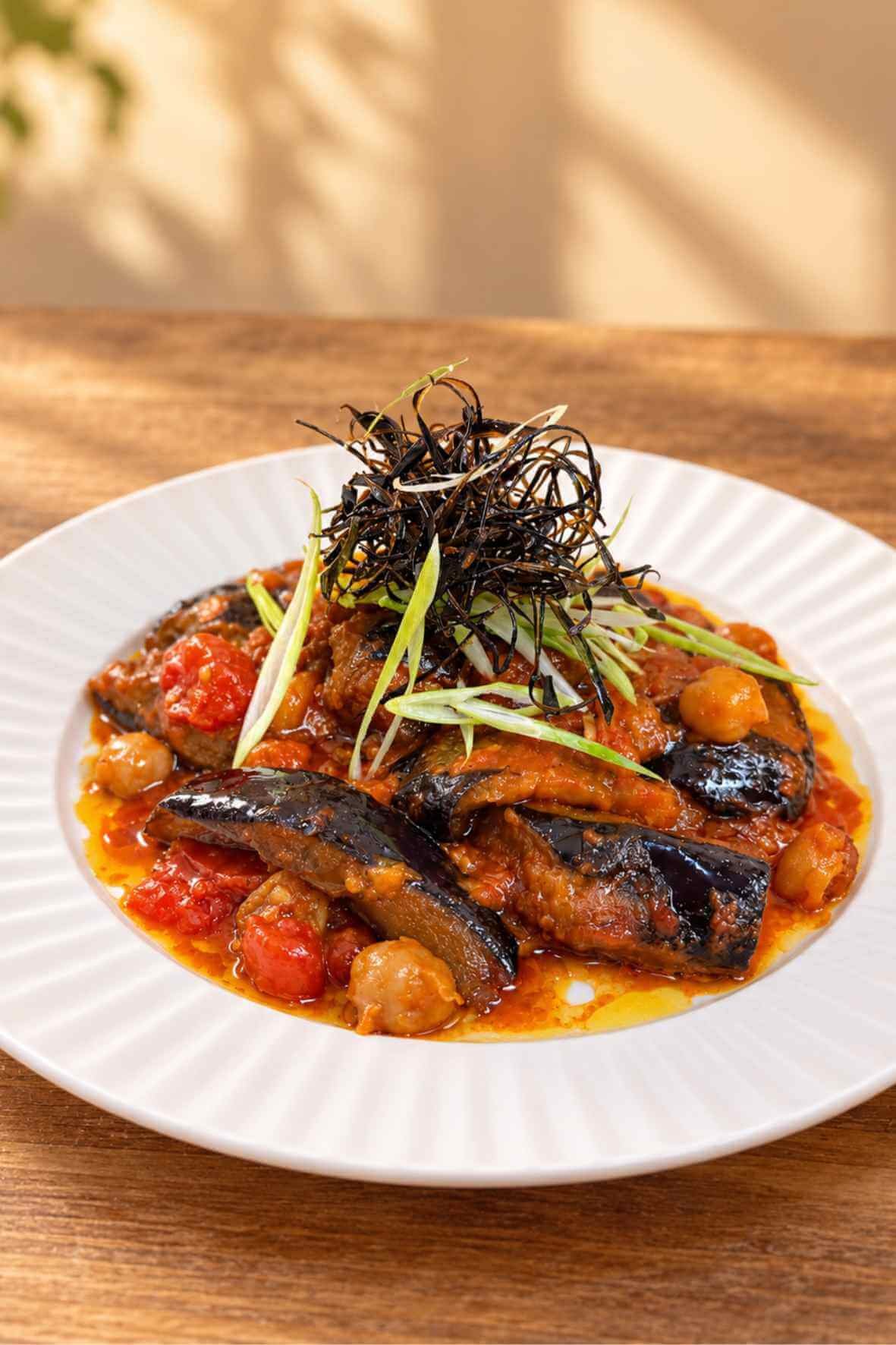
I like to make the most of every part of the eggplant, including the peel. Instead of throwing it away, I slice it into very fine strips and fry them until they turn delicate and crisp. Then I place them over the finished moussaka with a few slivers of green onion. The tomato sauce, tender eggplant, fresh onion, and light crunch all come together in one spoonful, while the garnish gives the dish a beautiful finish.
This is a technique I return to in several of my eggplant recipes. On Rigatoni alla Siciliana, the fried strips add a final flourish to the pasta and its rich sauce. They also make a lovely topping for Eggplant Mtabbal, where they contrast with the creamy dip beneath them.
It is a small touch, but it makes the plate feel thoughtfully finished. I especially enjoy turning an ingredient that might otherwise be discarded into something that adds texture, color, and character to the dish.
Let’s Make Lebanese Eggplant Moussaka
Lebanese Eggplant Moussaka (Maghmour)
Ingredients
Equipment
Method
- Peel each eggplant in alternating strips, leaving some skin on.
- Save the strips of peel for garnish.
- Remove the stems, cut the eggplants in half, then cut them into evenly sized pieces so they cook at the same rate.
- Arrange the eggplant pieces in a colander, sprinkling a moderate amount of salt between the layers.
- Cover and refrigerate for about 2½–4 hours, until the eggplants release water.
- Drain them well.
- Cut the reserved eggplant peel into thin strips.
- Fry in hot oil until lightly golden, then remove and salt immediately.
- Set aside.
- Fry the drained eggplant pieces in batches until golden and tender.
- Transfer them to a colander or paper towels to drain excess oil.
- Heat a little oil in a pot and sauté the onions until softened and just beginning to turn golden.
- Add the garlic and cook briefly.
- Stir in the diced tomatoes and their juices, followed by the tomato paste and a small pinch of cinnamon.
- Stir in the cooked chickpeas, season with salt, and add hot water.
- Cover the pot and bring the sauce to a boil.
- Add the fried eggplant to the sauce and simmer over low heat for about 15 minutes, until the eggplant absorbs the sauce and the mixture thickens.
- Spoon the moussaka onto a serving plate.
- Garnish with extra chickpeas, sliced green onions, and the crispy eggplant strips.
- Add a drizzle of olive oil if you like.
- Serve warm or cooled.
Video
Notes
Build a Vegetarian or Vegan Lebanese Table
Lebanese cooking has many dishes that make vegetables, legumes, herbs, and grains the main event. You do not need to treat them as side dishes. A few well-chosen plates can make a generous meal.
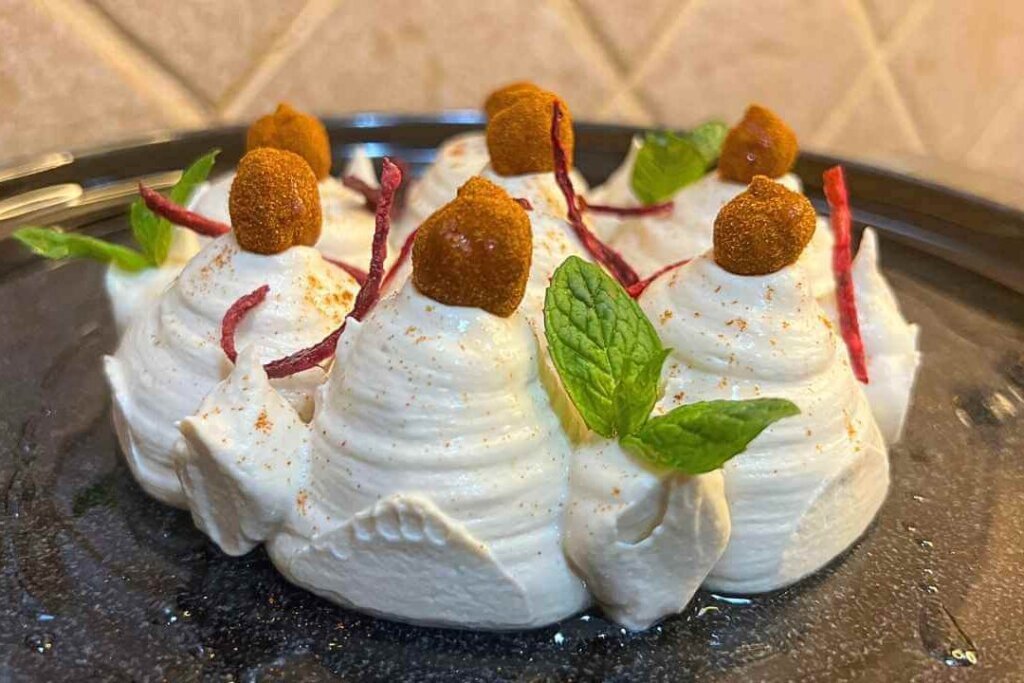
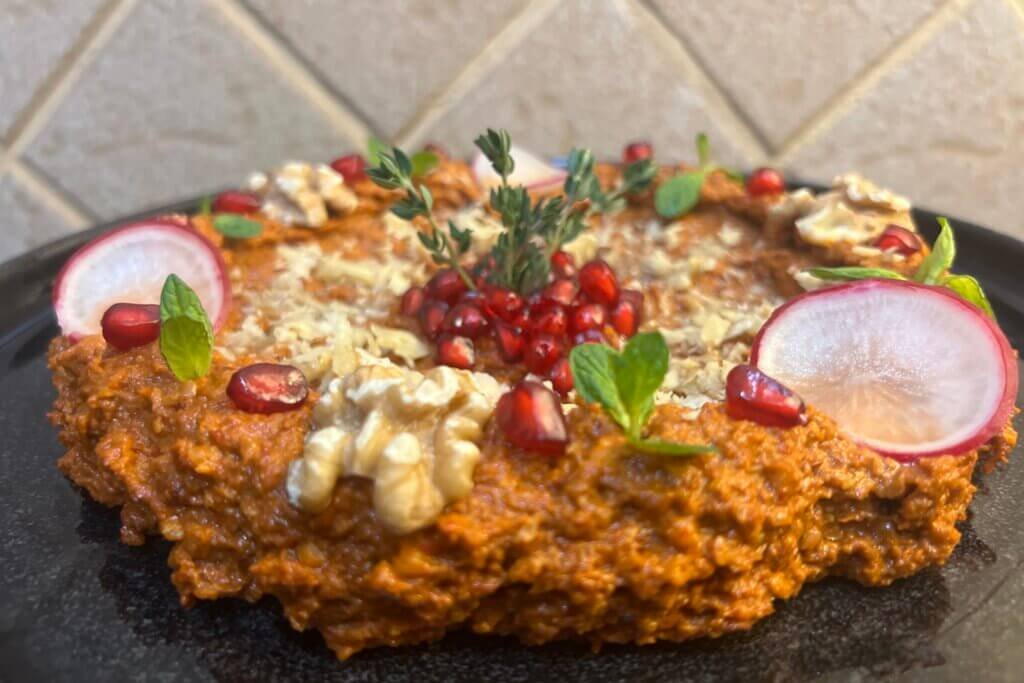
For a classic dip, add Creamy Hummus to the table. Chickpeas and tahini give it a rich, smooth texture, and it is perfect with warm pita. If you want something bolder, Easy Muhammara brings roasted peppers and walnuts together in a sweet, smoky dip.
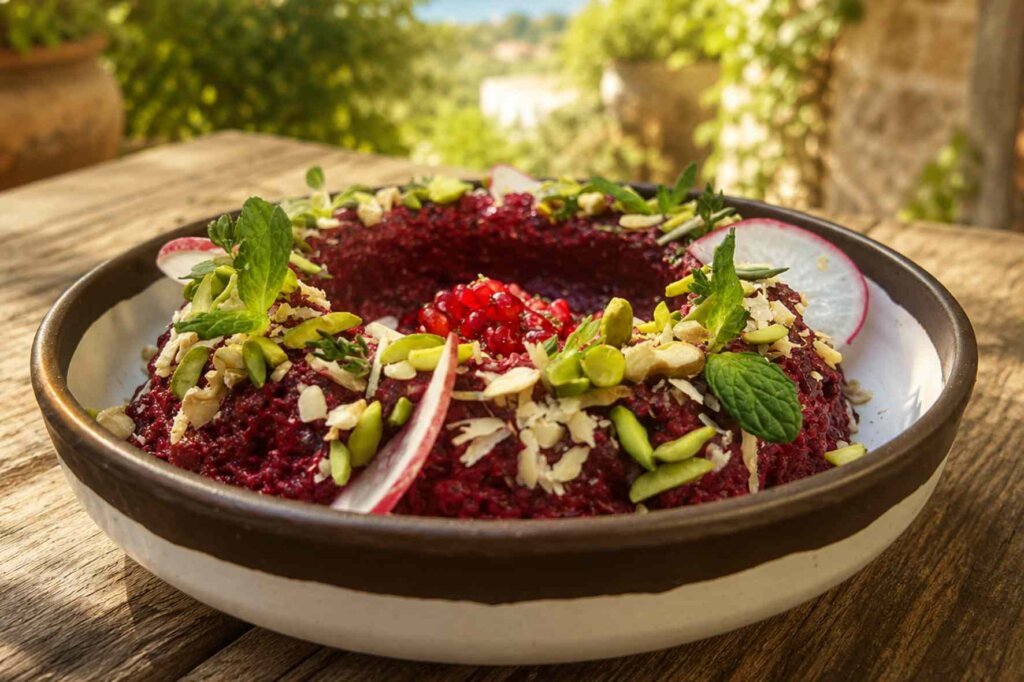
For a bright splash of color, try Beetroot Mutabbal. It combines beetroot, tahini, lemon, and garlic in a creamy vegan dip. It looks beautiful beside the red tomato sauce and dark eggplant in the moussaka.
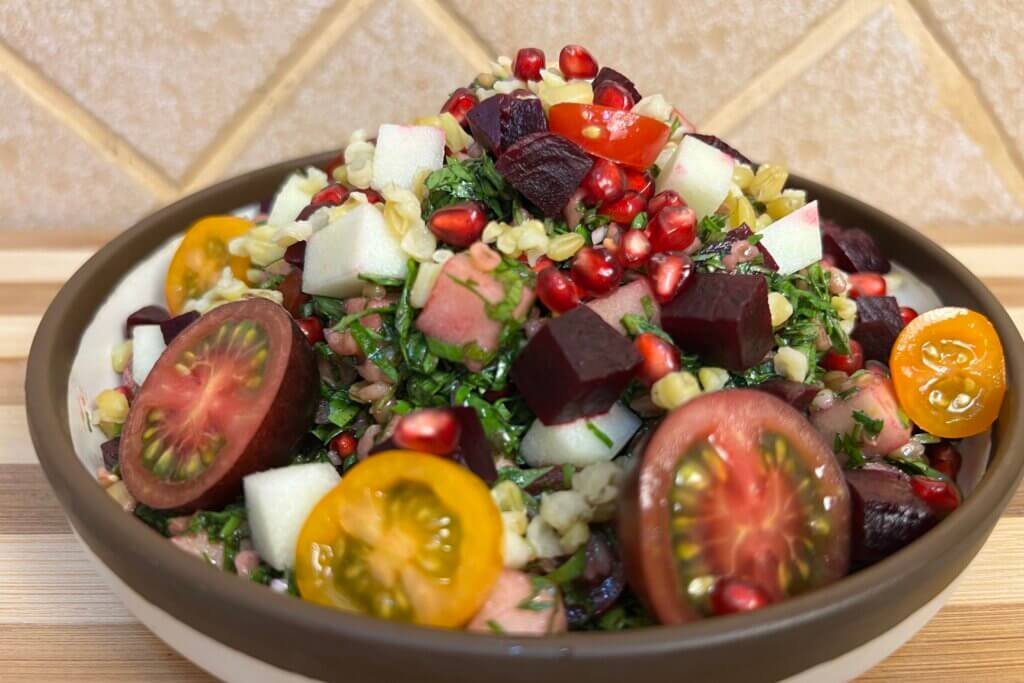
A fresh salad can balance the meal, too. My Freekeh Tabbouleh combines herbs with freekeh, pomegranate, apple, beetroot, and tomatoes. It brings freshness and texture to a table of dips and cooked vegetables.
You can also browse the full recipe collection for more ideas. When you are planning a fully vegan meal, check each recipe’s ingredients. Some dishes that are usually plant-based may include yogurt, butter, or other dairy ingredients.
When to Season a Sauce
When I’m making moussaka—or any sauce, soup, or stew that will simmer for a while—I season gradually and save the final adjustment for the end. As the liquid cooks away, the flavor becomes more concentrated, but the salt stays in the pan. A sauce that tastes perfectly seasoned at the beginning may therefore taste too salty after it thickens.
I don’t mean that you must avoid salt completely at the start. A small pinch can help build the flavor base as the onions soften. However, I add it carefully and consider what will go into the pot afterward. Tomatoes, tomato paste, stock, olives, and other ingredients may already contribute salt.
For this moussaka, I season the onions lightly, let the tomato sauce simmer, and then taste it again after adding the eggplant and chickpeas. Once the sauce reaches the consistency I want, I make the final adjustment. That way, I can judge the seasoning in the finished dish instead of guessing how much the sauce will reduce.

For more on tasting and seasoning in stages, read my guide, How to Season Food: Why Chefs Build Flavor in Layers.
How to Store and Freeze Lebanese Eggplant Moussaka
Lebanese eggplant moussaka is lovely served warm, but it is also a good make-ahead dish. After cooking, divide any leftovers into shallow, airtight containers so they cool quickly. Refrigerate them within two hours, and enjoy them within 3–4 days.
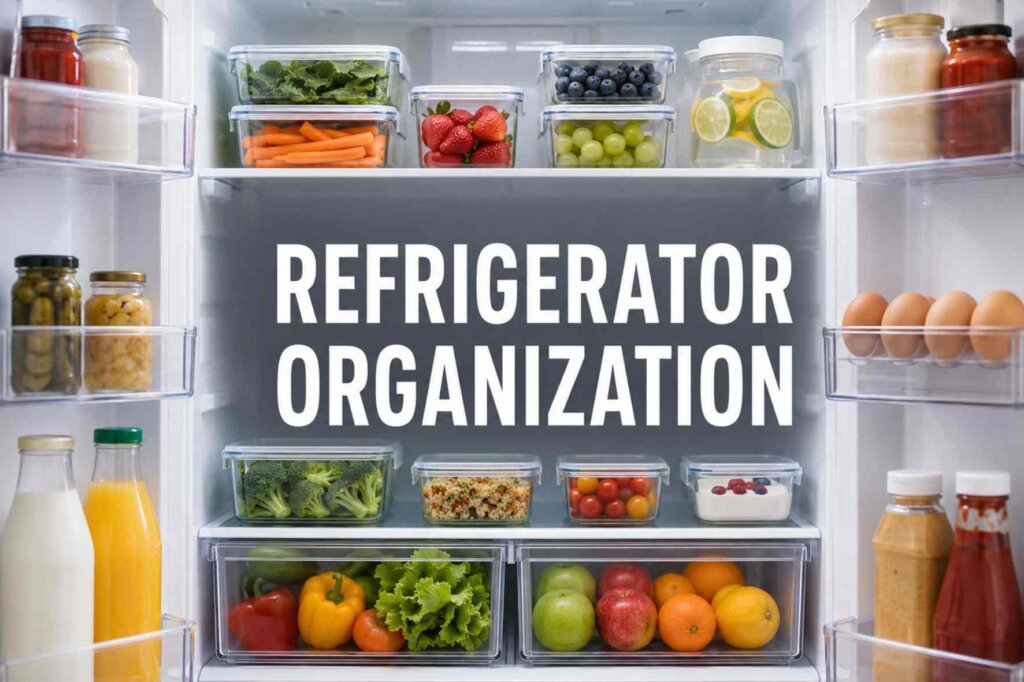
For more info on how to organize a refrigerator read my article.
You can eat the refrigerated moussaka cold or reheat only the portion you plan to serve. Warm it gently in a covered saucepan over low heat, stirring occasionally. If the sauce has thickened in the refrigerator, add a small splash of water. Reheat leftovers until they reach 165°F (74°C) throughout.
Can you freeze eggplant moussaka? Yes. Let the dish cool, then freeze it in meal-sized portions in airtight, freezer-safe containers. Leave a little room at the top for expansion and label each container with the date. For the best quality, use frozen portions within 2–3 months.
The eggplant may become softer after thawing, but the dish will still be flavorful. Thaw a portion overnight in the refrigerator, then reheat it gently. You can also reheat it straight from frozen in a covered saucepan over low heat; allow extra time and stir carefully as it loosens.
Keep the crispy eggplant garnish and green onions separate. Add them just before serving so the strips stay crisp and the onions taste fresh.
Frequently Asked Questions
What is Lebanese eggplant moussaka?
Lebanese eggplant moussaka is a comforting dish of eggplant simmered in tomato sauce with chickpeas, onions, garlic, and a little cinnamon. In Lebanon, it is also known as maghmour.
Is Lebanese moussaka the same as Greek moussaka?
No. This Lebanese version is a saucy stovetop dish made with eggplant and chickpeas. Greek moussaka is usually baked in layers, often with minced meat and béchamel sauce.
Can I serve eggplant moussaka warm or cold?
Both ways are delicious. Serve it warm as a main dish, or chill it and enjoy it as part of a mezze spread. Add the crispy eggplant garnish just before serving.
Is this moussaka recipe vegan?
Yes. This recipe uses vegetables, chickpeas, olive oil, and seasonings, with no meat or dairy ingredients.
Why do I salt the eggplant before cooking it?
Salting the eggplant and letting it rest helps draw out some of its moisture before frying. Afterward, drain it well so it is ready to cook.
Can I make this recipe without frying the eggplant?
Yes. Add the raw eggplant pieces to the prepared tomato and chickpea sauce, cover the pot, and simmer gently until they become tender. The texture will be different, but it is a tasty lighter option.
Can I make Lebanese moussaka ahead of time?
Yes. You can prepare it ahead and refrigerate it. Serve it chilled, bring it to room temperature, or warm it gently before serving.
How should I store leftover moussaka?
Place the leftovers in a covered container and refrigerate them within two hours of cooking. Enjoy them within three to four days.
Can I freeze eggplant moussaka?
Yes. Freeze it in airtight, meal-sized portions. The eggplant may soften a little after thawing, but the dish will still be flavorful. Keep the crispy garnish separate and add it just before serving.
Keep Cooking
I hope this Lebanese eggplant moussaka brings something delicious to your table and becomes one of those recipes you enjoy making again and again. If you’d like to see how I prepare it, join me on my YouTube channel and watch the recipe come together step by step. You’ll also find plenty of other dishes, practical cooking tips, and techniques to help you feel more confident in your own kitchen.
I love sharing the little details that make a difference, from preparing the eggplant to building a flavorful sauce and finishing the plate. Subscribe to the channel so you can join me for the next recipe and tell me in the comments how you served this one. Did you enjoy it warm, or did you try it chilled? I’d love to hear how it turned out in your kitchen. Happy cooking and thank you for being part of my cooking community!

Chef François El Aaraj is a corporate chef and culinary consultant with more than 30 years of experience in professional kitchens and restaurant openings across Lebanon and abroad. Through this website, he shares authentic recipes, cooking techniques, and chef secrets designed to help home cooks create flavorful meals with confidence.
Leave a Reply