Eggplant mtabbal is one of those dishes that makes me reach for a piece of warm bread before the rest of the table is ready. The smoky eggplant, nutty tahini, and gentle garlic come together in a dip that feels rich without needing a long list of ingredients. For me, it belongs to the generous, familiar side of Lebanese cooking.
After many years in professional kitchens, I still enjoy the challenge of getting a simple dish right. With a sauce or dip like this, there is very little to hide behind. Therefore, the small details matter: tender eggplant, well-stirred tahini, and seasoning that lets you taste both.
I also love what happens once the plate reaches the table. Someone takes a little with bread, another person adds fresh vegetables, and the meal begins through sharing. That is exactly how I like to serve it.
What Is Eggplant Mtabbal?
Eggplant mtabbal is a creamy dip built around cooked eggplant and tahini. You may also see the name written as mutabal, moutabal, or mutabbal. The spelling changes, but the combination of eggplant and sesame paste remains the heart of the dish.
In my recipe, I use grilled eggplant, tahini, garlic, labneh, salt, and lemon salt. As a result, the finished dip has a smoky base, a nutty richness, and a gentle tang.
The labneh adds a soft dairy note and helps bring the mixture together. However, it should support the eggplant rather than take over the flavor. I want the first scoop to taste clearly of roasted vegetables.
Lemon salt means food-grade citric acid. It gives this particular recipe its acidity; it is not the same ingredient as ordinary salt.
Although the ingredient list is short, each part has a purpose. Once you understand that balance, preparing the dip becomes much easier.
Why Simple Lebanese Dishes Stay with Me
Some of my most meaningful food memories come from my grandmother’s table. She was a vegetarian, and much of what she prepared came from her garden. Consequently, vegetables had a place of their own in the meal.
She cooked what she cultivated. There was no need to turn the table into a grand display. A modest vegetable dish, fresh vegetables on the side, and warm bread could give me everything I wanted from lunch.
Between my restaurant shifts, I would come in the afternoon to eat with her. Even after working around carefully prepared restaurant food, I chose her cooking whenever I could. Sitting down with her was a pure delight.
Those meals taught me to respect the pleasure in familiar ingredients. Today, that memory shapes how I approach dishes such as eggplant mtabbal. I want the preparation to be careful, but I also want the food to feel welcoming.
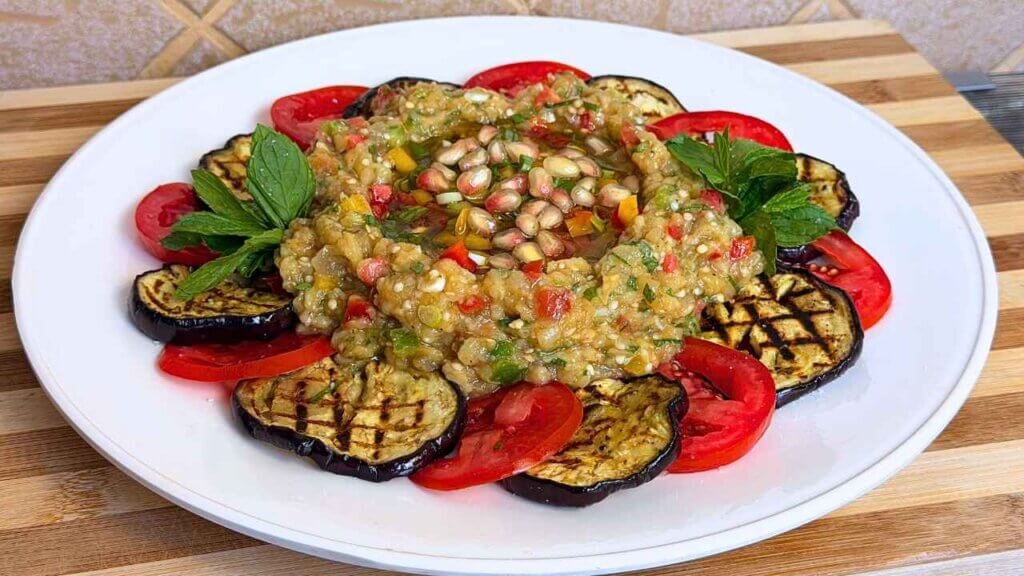
My Eggplant Raheb salad carries that same connection to simple Lebanese meals. However, it brings chopped vegetables, herbs, and a fresher texture to the table.
The Difference Between Eggplant Mtabbal and Raheb
Both dishes begin with eggplant, yet they offer different kinds of pleasure.
Mtabbal gets its creamy character from tahini. In my version, a little labneh adds another layer of softness. Meanwhile, garlic and acidity keep the richness balanced.
Raheb moves in a different direction. Tomatoes, peppers, spring onions, and herbs bring color and texture to the cooked eggplant. Therefore, it feels more like a vegetable salad than a creamy dip.
I enjoy serving either one with bread. However, when I want several mezze dishes together, the difference in texture makes them good companions.
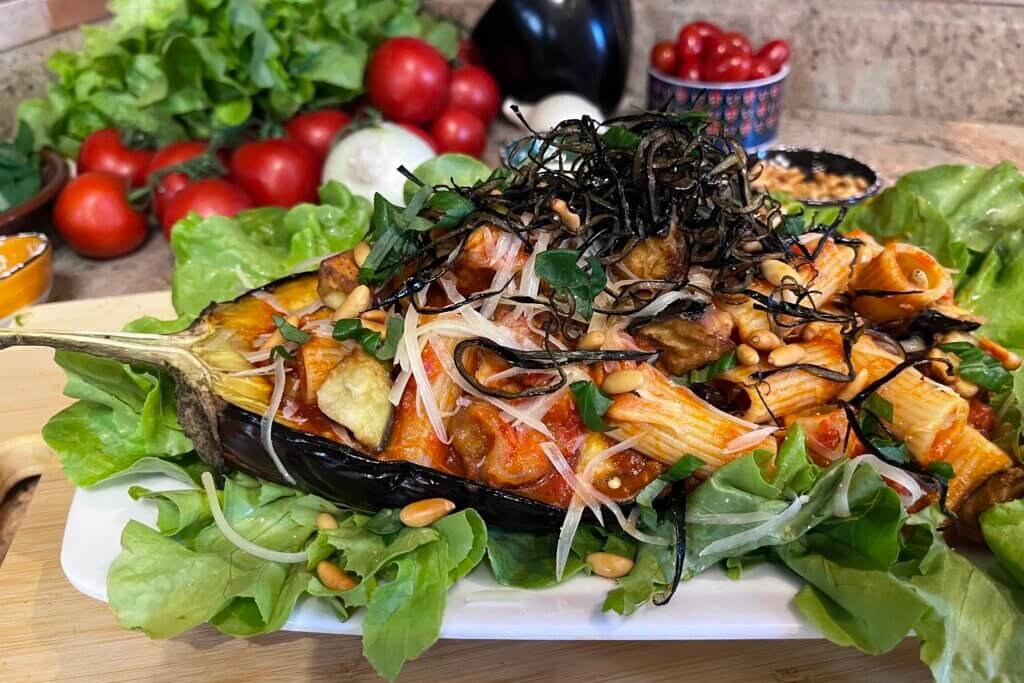
The same ingredient also takes on another role in my Rigatoni alla Siciliana. There, eggplant becomes part of a comforting pasta dish. That versatility is one reason I enjoy cooking with it so much.
Is Mtabbal the Same as Baba Ghanoush?
You will see these names used differently across menus, households, and countries. In some places, baba ghanoush refers to a tahini-based eggplant dip. Elsewhere, cooks distinguish it from mtabbal.
Therefore, I find the ingredients more useful than the name alone. Here, I am sharing my Lebanese eggplant mtabbal with tahini and labneh. The recipe card makes that version clear.
Choosing Eggplants for a Creamy Dip
Before I think about seasoning, I look at the eggplants.
I choose firm vegetables with smooth skin and no soft, damaged areas. If I am cooking several at once, I also prefer similar sizes. That makes it easier to manage the cooking without leaving one underdone.
However, I do not rely on size alone to judge quality. A fresh-looking eggplant in good condition matters more than simply choosing the smallest one available.
The recipe uses 500 grams of grilled, peeled, and drained eggplant flesh. This is an important detail. Whole raw eggplants lose weight through cooking and peeling, so 500 grams of whole vegetables will not give you 500 grams of prepared flesh.
For that reason, weigh the cooked eggplant at the stage described in the recipe. This helps keep the tahini and seasoning in the right proportion.
The Smoky Flavor Starts with the Cooking
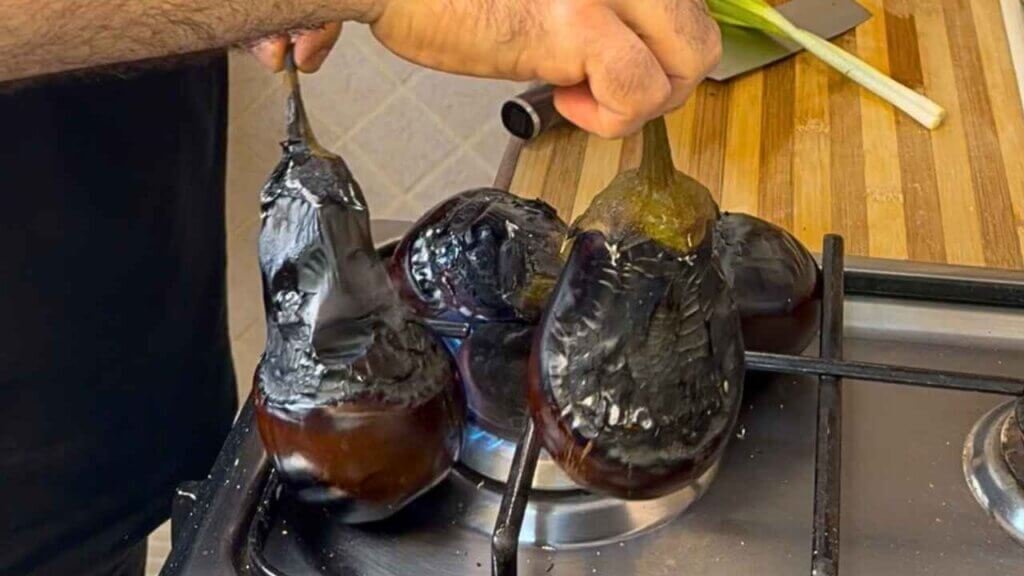
For good eggplant mtabbal, the flesh needs to be thoroughly tender. A dark skin does not always mean that the center is ready.
Therefore, I check the softness rather than judging by appearance alone. Undercooked eggplant will not mash easily, and it can leave firm pieces in the finished dip.
Grilling can give the eggplant a smoky character that I particularly enjoy. However, an oven is a practical alternative when that is what you have available. The flavor may be milder, but you can still achieve tender flesh.
Once the eggplant is cooked, remove the skin carefully. Small burnt fragments can slip into the flesh, so take a moment to check it.
A smoky aroma makes the dish appealing. In contrast, a mouthful of burnt skin can make it bitter. Keeping that distinction in mind helps you get a cleaner flavor.
The full method is in the recipe card below. Here, the main point is to give the eggplant enough time before moving on.
Drain the Eggplant Before Adding Tahini
A watery dip often begins with watery eggplant.
After peeling, I allow excess liquid to drain away. As a result, the flesh can hold the tahini mixture without becoming loose and thin.
However, draining does not mean squeezing the eggplant until it is dry. I want soft, moist flesh with flavor. The aim is simply to remove the liquid that would collect around the finished dip.
This step also makes seasoning more predictable. If the mixture is diluted with too much water, you may keep adding ingredients while trying to restore the flavor.
Instead, start with properly prepared eggplant. Then, you can make small adjustments with much more control.
It is a useful kitchen lesson beyond this recipe: fix the texture of the main ingredient before trying to correct everything with seasoning.
Why Tahini Matters in Eggplant Mtabbal
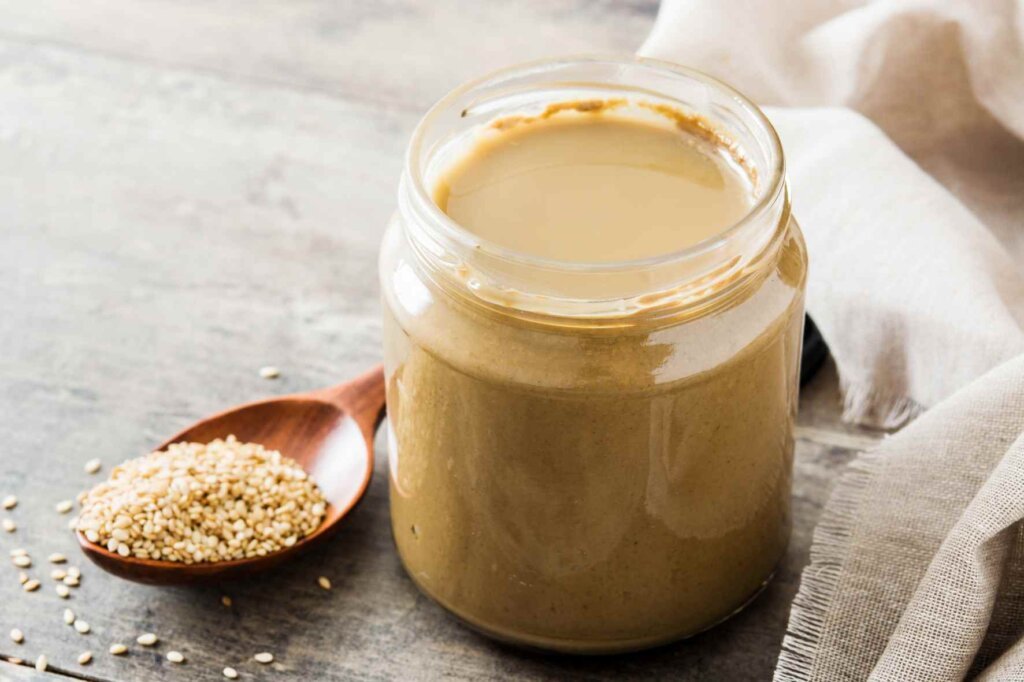
Tahini gives this dip its sesame flavor and much of its richness. Therefore, choosing a tahini you enjoy makes a real difference.
Before measuring it, stir the jar thoroughly. The oil can separate from the thicker paste, leaving very different textures at the top and bottom.
If you measure only the oily layer, the result will differ from a spoonful taken from the dense paste below. Mixing the jar first gives you a more even ingredient.
I also taste the tahini on its own. It should have a pleasant sesame character. However, if it tastes stale or unpleasant, it will affect the whole dip.
Once combined with the eggplant, the tahini should feel like part of the dish. I still want the smoky vegetable flavor to come through clearly.
If you enjoy this combination, try my beetroot mutabbal. It explores a similar idea with a different vegetable base and a striking color.
Labneh, Garlic, and Acidity: Getting the Balance Right
My recipe includes a small amount of labneh. It brings creaminess and tang, while allowing the eggplant and tahini to remain the main flavors.
Because it contains labneh, this version is vegetarian, but it is not vegan. If you need to avoid dairy, that ingredient requires a deliberate adjustment rather than being overlooked.
Garlic also needs care. I use a small clove because I want its flavor to sit within the dip. A large amount can easily become the strongest thing on the plate.
Meanwhile, lemon salt supplies the acidity in this version. It is concentrated, so measure it accurately. Do not replace it with an equal weight of lemon juice; the two ingredients behave differently.
When adjusting the seasoning, I taste a little dip with bread as well as on its own. After all, that is how many people will eat it.
For more on balancing a dish, this is a natural place to explore my guide to seasoning food.
How Smooth Should Eggplant Mtabbal Be?
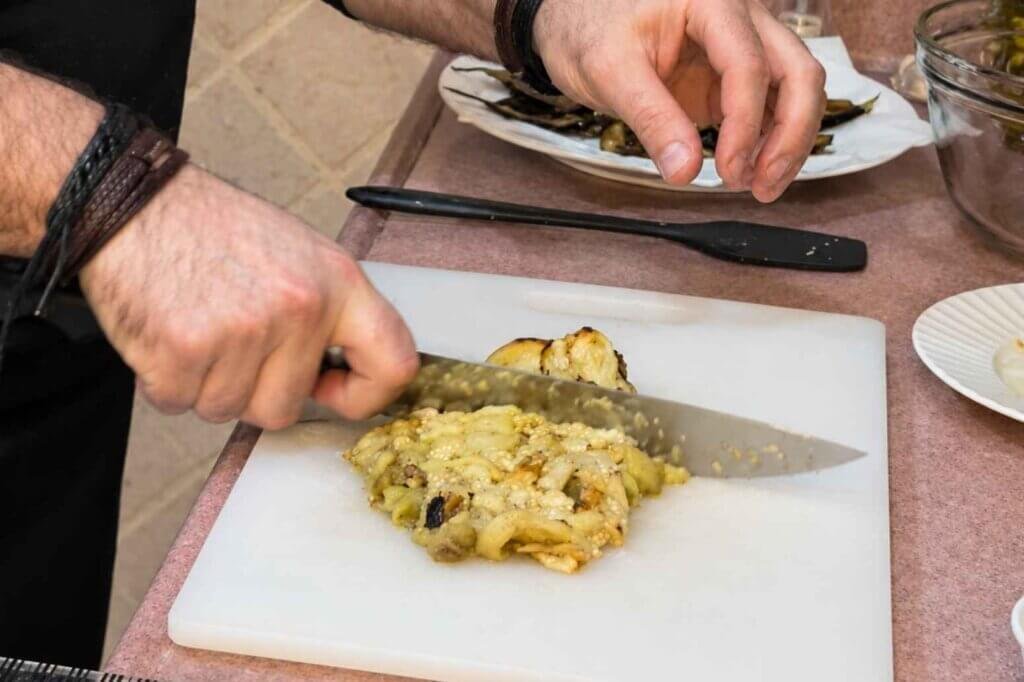
I like a creamy dip that still has some character from the eggplant.
A fork gives you control over the texture. You can break down the flesh while leaving a little structure. However, some people prefer a smoother finish, and that is a matter of taste.
If you use a food processor, work in short pulses and check the mixture often. Once it reaches the texture you enjoy, stop.
The important thing is that the eggplant has cooked properly first. Blending cannot turn firm, undercooked flesh into the same result as tender roasted eggplant.
Similarly, extra tahini will not solve every texture problem. Start with the cooking and draining, then decide how smooth you want the dip.
Let’s Make Mtabbal
Lebanese Eggplant Mtabbal
Ingredients
Equipment
Method
- Prepare the eggplants. Pierce each large eggplant once or twice with a knife to prevent it from bursting during cooking.
- Char over a gas flame. Place the eggplants directly over the flame, turning regularly so they cook on all sides. Continue until the skins are charred and the flesh is completely soft. The chef prefers this method to oven roasting because it gives a stronger smoky flavour.
- Cool and peel. Transfer the cooked eggplants to a bowl of ice water, as demonstrated in the video. Remove the burnt skins and drain the flesh well.
- Prepare the garnishes. Thinly slice the radishes and place them in ice water. Cut the small garnish eggplants lengthwise, keeping their stems attached. Prepare very thin strips of eggplant skin for the crispy garnish.
- Fry the eggplant garnishes. Heat the frying oil. Fry the small eggplant pieces and thin strips separately until cooked and golden or crisp. Transfer to a plate lined with paper towels and season lightly with salt.
- Crush the garlic. Crush a small garlic clove with a little salt until it forms a paste.
- Chop the eggplant flesh. Finely chop the peeled eggplant with a knife. Keep a little texture rather than blending it into a completely smooth purée.
- Mix the mtabbal. Combine the chopped eggplant with the crushed garlic, tahini, lemon and a little labneh. Stir thoroughly, taste and adjust the seasoning. Remember that the garlic already contains salt.
- Chill. Refrigerate until cold before serving.
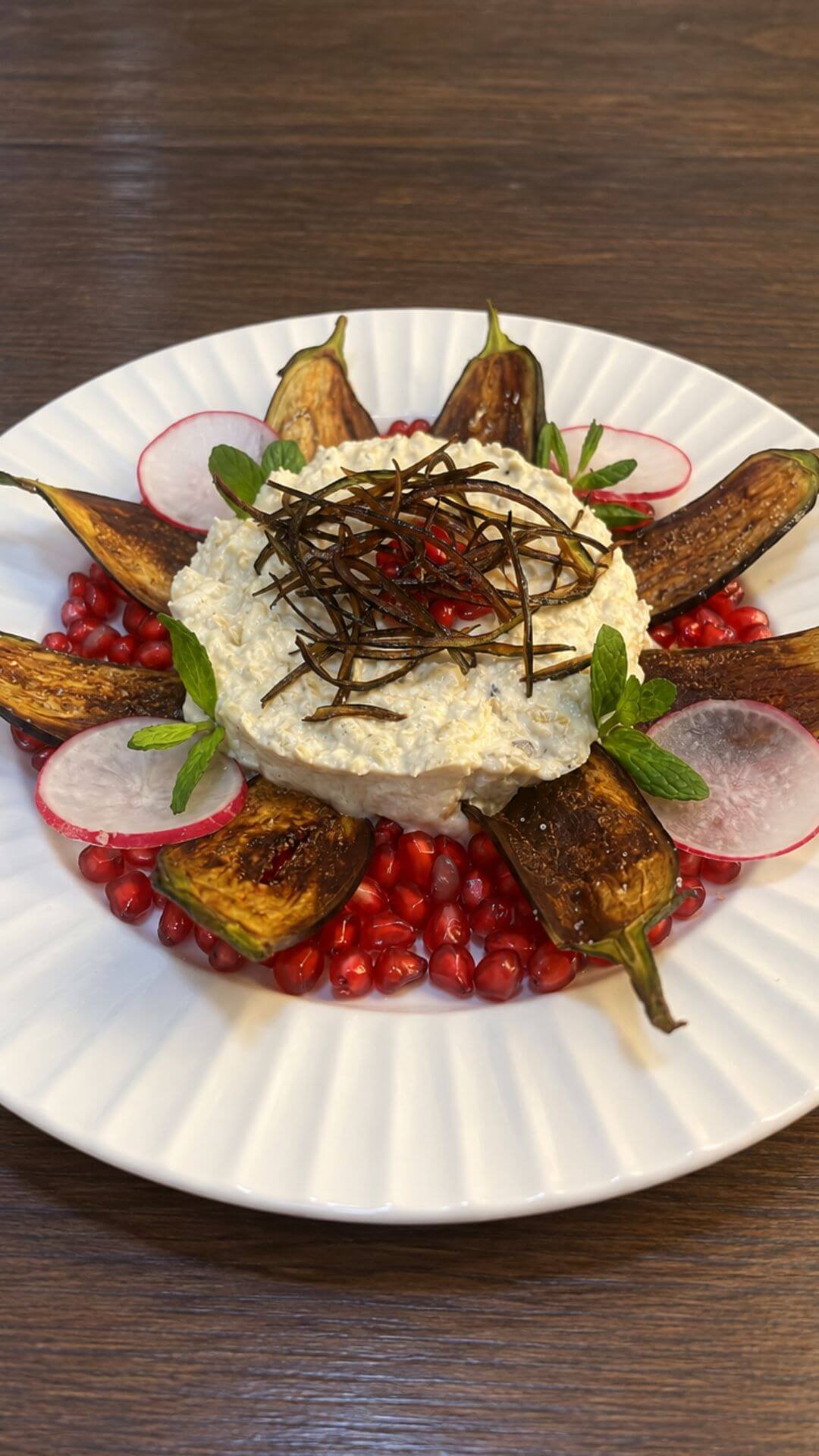
- Plate and garnish. Spoon the mtabbal onto a serving plate, using a ring mould if desired. Smooth the surface, add pomegranate seeds and arrange the drained radish slices and fried eggplant garnishes. Add the crispy strips just before serving.
Video
Common Problems and Simple Fixes
Why Is My Mtabbal Watery?
The eggplant may not have drained sufficiently. Therefore, check that stage before changing the proportions.
For the next batch, let the peeled flesh release its excess liquid before you weigh and mix it. This is more reliable than adding extra tahini until the dip becomes heavy.
Why Does It Taste Bitter?
Burnt skin or unpleasant-tasting tahini may be responsible. However, the best answer depends on which ingredient tastes bitter.
Taste the components separately while preparing them. As a result, you can spot the problem before everything is mixed together.
Why Is the Garlic Too Strong?
Garlic cloves vary in size, and raw garlic can dominate a mild dip. Therefore, follow the recipe’s small-clove measure rather than automatically using a large one.
If you enjoy extra garlic, add it gradually. You can always add more after tasting.
Why Does It Taste Mostly of Tahini?
First, check the eggplant weight. Using 500 grams of raw whole eggplant instead of 500 grams of prepared flesh changes the balance.
Also, make sure the tahini was stirred before measuring. Both details help the recipe behave more consistently.
Serving Eggplant Mtabbal on a Lebanese Mezze Table
Warm bread is my first choice alongside this dip. I also enjoy crisp vegetables, which give a fresh contrast to its creamy texture.
For a small meal, you do not need many dishes. Mtabbal, a salad, and bread can make a lovely starting point. Then, add another dish according to your appetite.
For a more varied spread, I would include eggplant mousakaa or eggplant and purslane salad. Each gives eggplant a different role, so the table has variety even when one vegetable appears more than once.
However, you can also move beyond eggplant. Loubieh bi zeit, a lentil dish, or fresh salad will bring another texture.
For a family meal with meat, mtabbal can sit beside shish tawook. Its creamy sesame flavor offers a pleasant contrast to the grilled chicken.
The best spread is one you can prepare with care and enjoy sharing.
A Simple Finish Makes the Plate Inviting
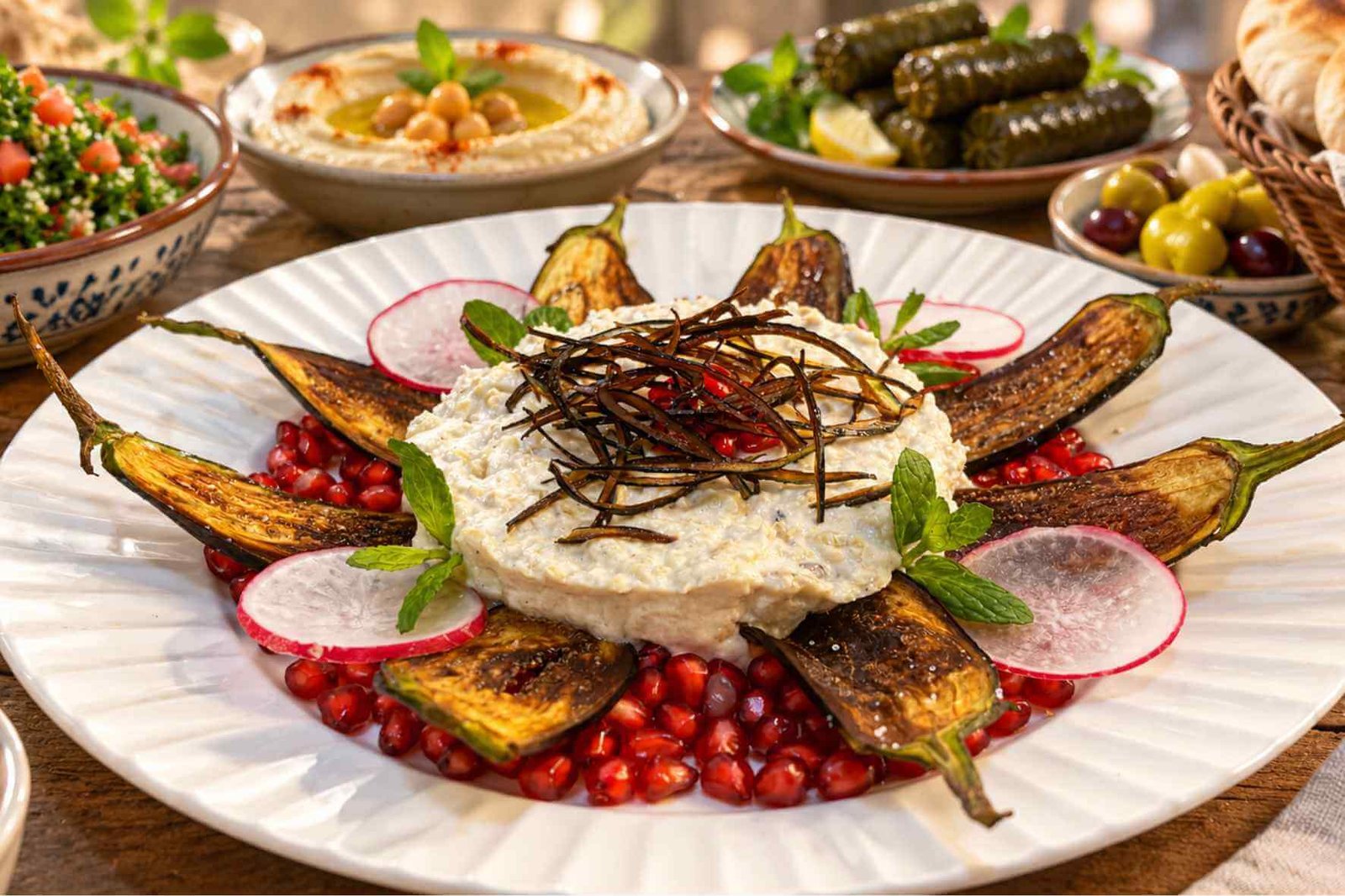
For this presentation, I shape the eggplant mtabbal into a thick, round mound in the center of a wide white plate. Then, I arrange roasted baby eggplant halves around it, leaving their stems attached for a rustic finish.
Next, I scatter pomegranate seeds around the base and tuck thin radish slices and fresh mint leaves between the eggplants. The red, pink, and green bring the plate to life, while the garnishes add freshness and texture.
Finally, I top the mtabbal with fine, crisp strips of eggplant skin. They add height and a delicate crunch, making the dish feel special while keeping the eggplant at the heart of the presentation.
Preparing Ahead and Enjoying Leftovers
You can organize the preparation by cooking the eggplant before you need to mix the dip. Once cooled safely, keep it covered and refrigerated until needed.
Then, drain and weigh the prepared flesh before adding the remaining ingredients. This keeps the recipe proportions clear.
For leftovers, use a clean, covered container and refrigerate promptly. Also, serve out a small portion rather than repeatedly leaving the entire batch on the table.
Before serving again, stir gently and check the consistency. Add fresh garnish at the end so it stays attractive.
My refrigerator organization guide is a useful companion if you are preparing several dishes ahead. A little planning makes a mezze meal much easier to manage.
Questions About Eggplant Mtabbal
Does This Recipe Contain Lemon Juice?
This version uses lemon salt, or food-grade citric acid. Therefore, follow that ingredient in the recipe card rather than adding an unmeasured quantity of lemon juice.
Is Eggplant Mtabbal Dairy-Free?
Some versions are. However, mine contains labneh, so it includes milk. It also contains sesame through the tahini.
How Many Servings Does It Make?
This batch makes about four appetizer servings. Our working estimate is approximately 190 calories per serving, before bread, garnish, and extra olive oil.
Can I Serve It Without Bread?
Yes. Cucumber, radish, and other crisp vegetables make pleasant companions. You can also serve a spoonful beside the rest of your meal.
The Plate I Want People to Share
For me, eggplant mtabbal shows how much pleasure a short ingredient list can offer. Tender eggplant, tahini, and careful seasoning can create a dish people keep reaching for.
It also connects two parts of my cooking life. Professional kitchens taught me to pay attention to technique. Meanwhile, my grandmother’s table reminds me why a warm welcome matters.
I want to bring both to the recipes I share: enough guidance to help you succeed, and food that makes you happy to sit down.
You will find the full quantities and method in the recipe card below. You can also visit my YouTube channel to follow my cooking videos.
Then tell me how you enjoy your mtabbal: with warm bread, fresh vegetables, or a whole table of mezze?

Chef François El Aaraj is a corporate chef and culinary consultant with more than 30 years of experience in professional kitchens and restaurant openings across Lebanon and abroad. Through this website, he shares authentic recipes, cooking techniques, and chef secrets designed to help home cooks create flavorful meals with confidence.
Leave a Reply