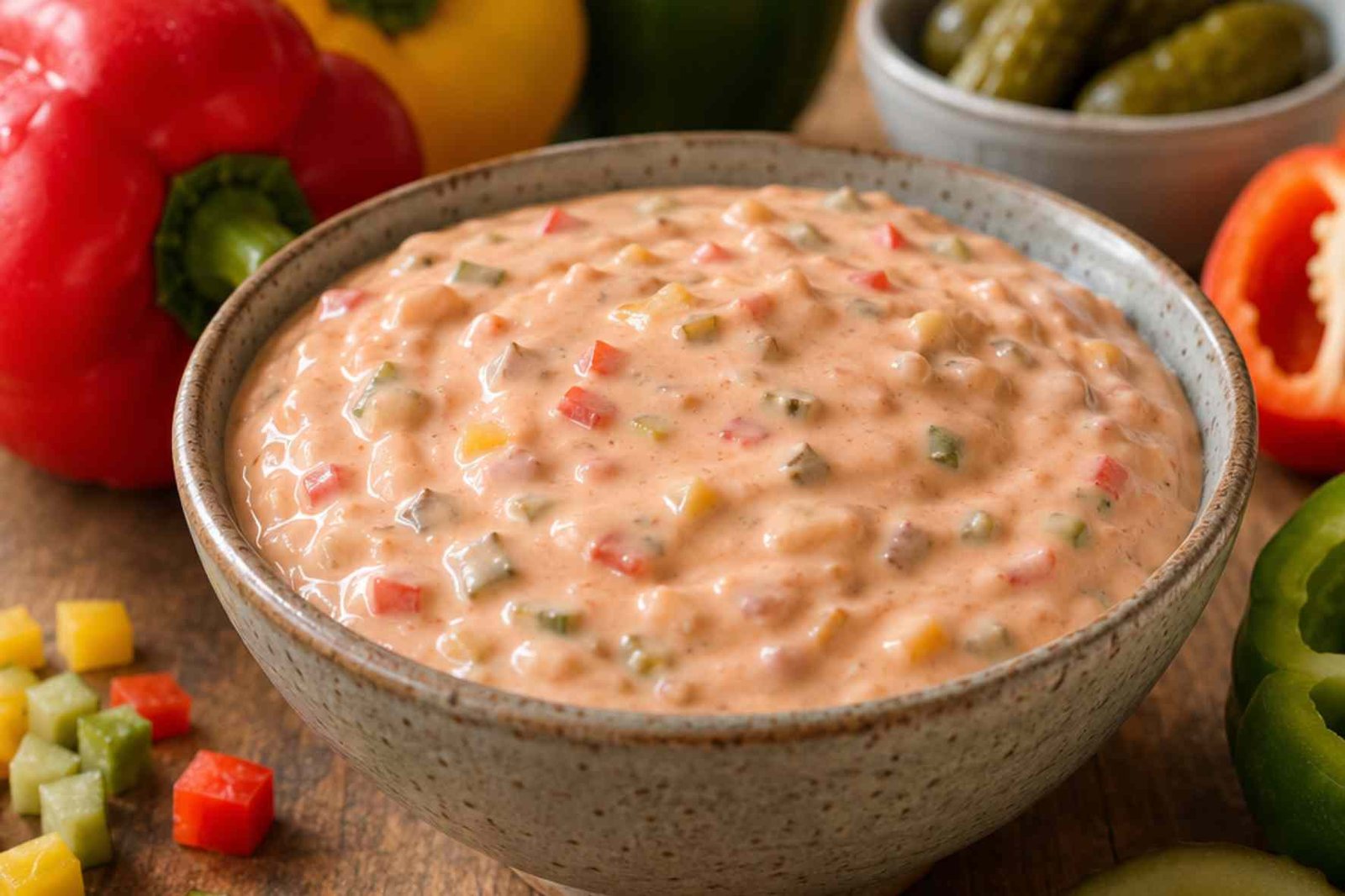
Thousand Island dressing is one of those classic sauces that works with almost everything. It tastes creamy, tangy, slightly sweet, and gently spicy. Meanwhile, finely diced peppers and cucumber pickles give it a pleasant crunch and extra freshness.
Many people buy this dressing ready-made. However, preparing it at home takes only a few minutes. It also gives you complete control over its flavor, texture, and freshness. Most importantly, you can make it using familiar ingredients that may already be in your kitchen.
What Is Thousand Island Dressing?
Thousand Island dressing is a creamy sauce known for its tangy, slightly sweet, and mildly spicy flavor. It also contains finely chopped ingredients that give it a pleasant texture.
The sauce starts with a creamy base made from mayonnaise and ketchup. Mustard, sriracha, Worcestershire sauce, and white pepper then create a more balanced flavor. Finally, finely diced colored peppers and cucumber pickles add freshness, crunch, and acidity.
More Than a Salad Dressing
Despite its name, Thousand Island dressing is not limited to salads. It also makes an excellent burger sauce, sandwich spread, and dipping sauce. Moreover, its creamy texture pairs beautifully with seafood, fried foods, and fresh vegetables.
Many commercial versions contain extra sugar, preservatives, and artificial flavors. However, the homemade version uses simple ingredients and allows each flavor to remain distinct. You can also control its sweetness, heat, and texture.
The combination of creamy, tangy, sweet, and crunchy elements makes this dressing extremely versatile. Therefore, it deserves a permanent place among your favorite homemade sauces.
Why Is It Called Thousand Island Dressing?
The name Thousand Island dressing comes from the Thousand Islands region. This beautiful area sits along the St. Lawrence River. It lies between northern New York and Ontario, Canada.
The region contains more than 1,800 islands. Some islands hold homes, while others remain completely natural. During the late nineteenth and early twentieth centuries, the area became a popular summer destination. Wealthy visitors often arrived by boat and stayed in elegant hotels.
The Story Behind the Dressing
Several stories explain who first created Thousand Island dressing. However, historians still debate its exact origin.
One popular story connects the sauce to fishing guides in the Thousand Islands region. Their families prepared creamy dressings for fresh fish, vegetables, and simple meals. Visitors later tasted the sauce and introduced it to hotels and restaurants.
Another story credits a local woman named Sophia LaLonde. According to this account, she prepared the dressing for her husband, who worked as a fishing guide. Actress May Irwin later tasted the sauce and enjoyed it. She reportedly requested the recipe and helped introduce it to a wider audience.
Other accounts connect the dressing to luxury hotels in the area. The kitchens may have refined the original recipe before serving it to travelers. Over time, restaurants across North America added the sauce to salads and sandwiches.
A Recipe That Continued to Change
Early recipes did not always use the same ingredients. Many versions combined mayonnaise, ketchup, chili sauce, pickles, peppers, onions, or hard-boiled eggs. Some cooks also added lemon juice, vinegar, or fresh herbs.
Therefore, no single ingredient list defines every Thousand Island dressing. However, most versions share the same character. They combine a creamy base with tomato flavor, acidity, and finely chopped ingredients.
My version keeps that familiar balance. Mayonnaise creates the creamy texture. Meanwhile, ketchup adds sweetness and color. Mustard, sriracha, and Worcestershire sauce deepen the flavor. Finally, colored peppers and cucumber pickles add freshness and crunch.
Although the recipe has evolved, its name still honors the region that made it famous. Today, people enjoy Thousand Island dressing far beyond those islands. Yet every bowl carries a small connection to its culinary history.
Thousand Island Dressing vs. Cocktail Sauce
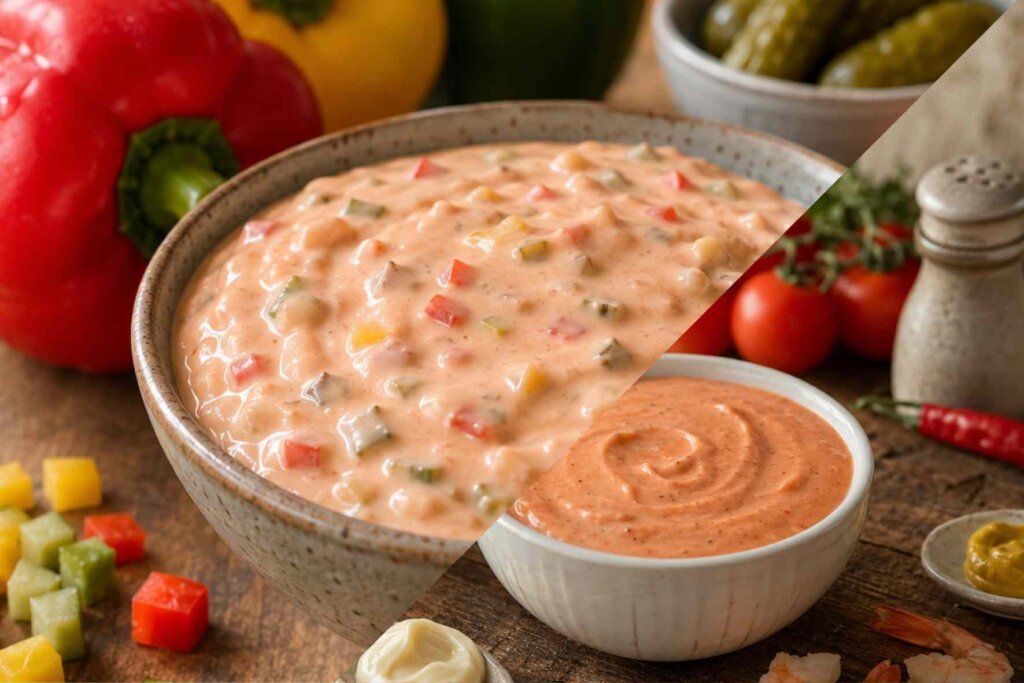
Thousand Island dressing and cocktail sauce share several ingredients. Therefore, they often have a similar creamy color and tangy flavor. However, they do not offer the same texture or serve exactly the same purpose.
In this recipe, cocktail sauce forms the smooth base of Thousand Island dressing. It combines mayonnaise, ketchup, mustard, sriracha, Worcestershire sauce, and white pepper. Together, these ingredients create a creamy, balanced sauce with gentle heat.
However, the recipe does not stop there. Finely diced colored peppers and cucumber pickles transform that smooth base. They add freshness, acidity, color, and a pleasant crunch.
Texture Creates the Main Difference
Cocktail sauce usually has a smooth and creamy consistency. Therefore, it works especially well as a dipping sauce. You can serve it with shrimp, seafood, mozzarella sticks, fish fingers, and other crispy appetizers.
In contrast, Thousand Island dressing contains visible pieces of vegetables and pickles. As a result, it has more texture and a heartier consistency. These small pieces help the sauce stand out in salads, burgers, wraps, and sandwiches.
The chopped pickles also add extra acidity. Meanwhile, the colored peppers bring a mild sweetness and fresh flavor. Together, they give the finished dressing a more complex character.
Two Sauces with Different Uses
Cocktail sauce remains an excellent choice when you want a smooth dip. Its creamy texture coats seafood and fried foods evenly. Moreover, its balanced acidity helps cut through rich flavors.
Thousand Island dressing works better when the sauce becomes part of the dish. For example, it can coat lettuce, fill a burger, or add moisture to a sandwich. The chopped ingredients also remain noticeable in every bite.
Still, both sauces deserve a place in your kitchen. Once you prepare the cocktail sauce, you can easily turn part of it into Thousand Island dressing. Simply add the prepared peppers and cucumber pickles.
This simple method saves time and creates two different sauces from one flavorful base. Therefore, you can offer more variety without preparing every sauce from the beginning.
Why Homemade Thousand Island Dressing Tastes Better
Bottled Thousand Island dressing may seem convenient. However, homemade dressing offers fresher flavor and a more enjoyable texture. It also takes only a few minutes to prepare.
When you make the sauce at home, you control every ingredient. Therefore, you can adjust the sweetness, acidity, heat, and consistency. You can also choose fresh peppers and crunchy cucumber pickles.
Fresh Ingredients Create Better Flavor
Fresh peppers give the dressing a mild sweetness and a crisp bite. Meanwhile, cucumber pickles add acidity and a pleasant salty flavor. These ingredients taste brighter when you chop them just before mixing the sauce.
Commercial dressings must remain stable for long periods. Therefore, manufacturers may use preservatives, stabilizers, or added flavorings. Homemade Thousand Island dressing does not need those additions. Instead, it relies on fresh ingredients and proper refrigeration.
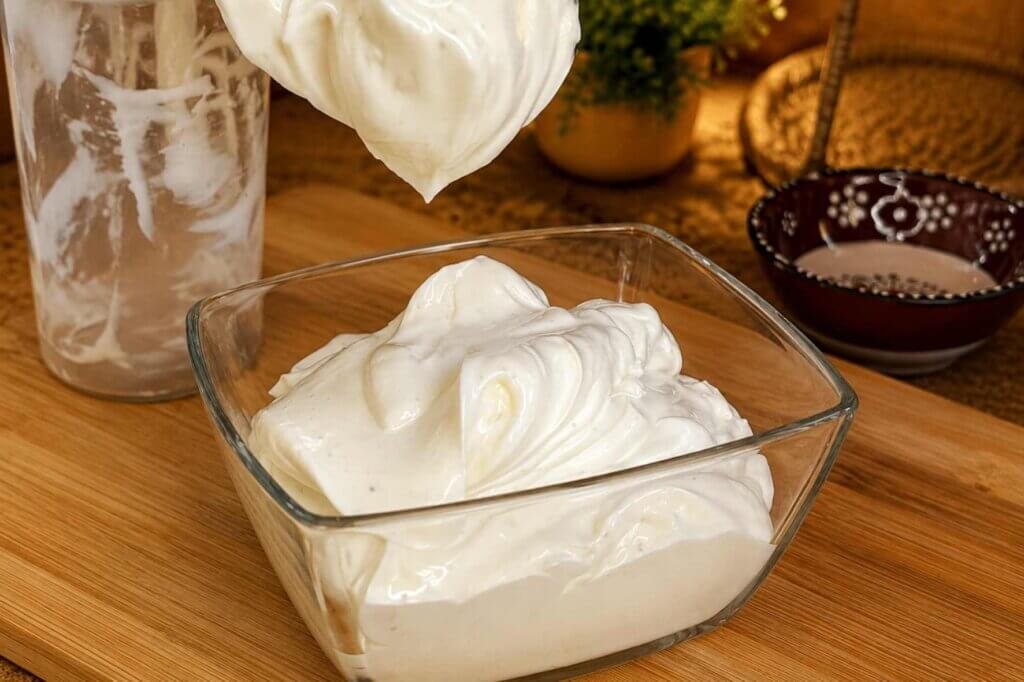
Most importantly, the dressing tastes even more delicious when you prepare it with homemade mayonnaise. Fresh mayonnaise creates a richer and creamier base than many commercial products. It also gives the dressing a smoother texture and a fresher flavor.
Moreover, preparing your own mayonnaise lets you control the oil, acidity, and seasoning. These small details influence the final dressing. Therefore, starting with good homemade mayonnaise can noticeably improve the entire recipe.
You Control the Final Balance
Not everyone enjoys the same level of sweetness or heat. Some people prefer a mild dressing. Others want more sriracha, mustard, or pickle flavor.
A homemade recipe makes those adjustments easy. Add a little more ketchup for sweetness. Increase the mustard for extra sharpness. You can also add more sriracha for a stronger spicy note.
However, make small adjustments. Taste the dressing after each addition. This approach helps you preserve the balance between creaminess, acidity, sweetness, and heat.
Better Texture in Every Bite
Texture plays an important role in Thousand Island dressing. Finely diced peppers add freshness. At the same time, cucumber pickles create a light crunch.
Bottled dressings often contain very small or softened vegetable pieces. In contrast, fresh ingredients remain more noticeable. They give the sauce color, character, and a homemade appearance.
You can also control the size of the pieces. Dice them very finely for a smoother salad dressing. Alternatively, leave them slightly larger for burgers and sandwiches.
Finally, refrigerate the dressing for at least 30 minutes before serving. This resting time allows the flavors to blend. As a result, the sauce tastes richer, creamier, and more balanced.
Let’s Make This Easy Homemade Thousand Island Dressing
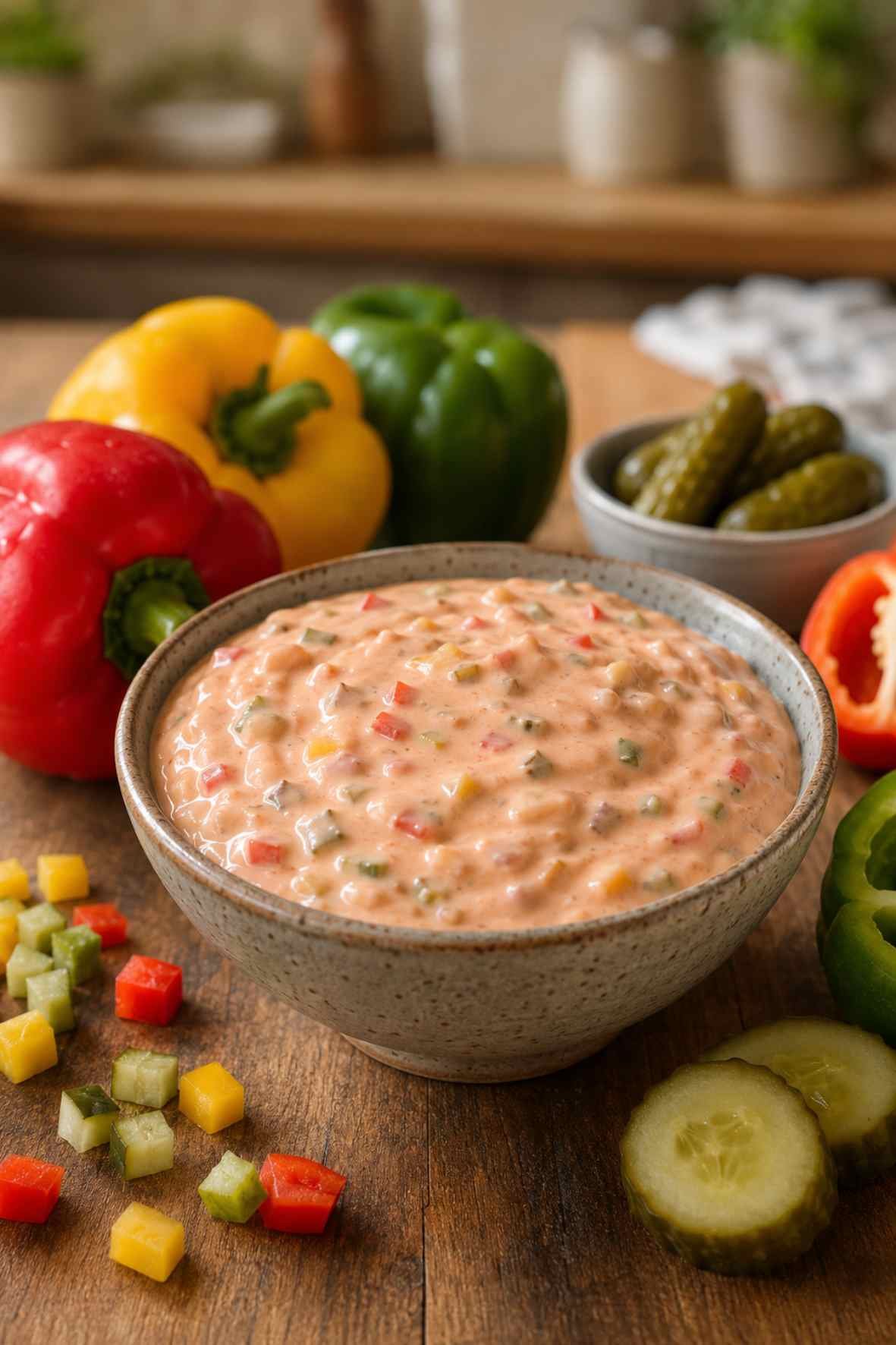
Easy Homemade Thousand Island Dressing Recipe
Ingredients
Equipment
Method
- Wash and dry the colored bell pepper thoroughly.
- Cut the pepper open. Remove the seeds and the soft white membrane inside, as these parts may release excess moisture into the sauce.
- Finely dice the cleaned bell pepper.
- Finely dice the cucumber pickle. Drain or gently pat it dry if it contains excess liquid.
- Add the mayonnaise, ketchup, sriracha, mustard, Worcestershire sauce, and white pepper to a mixing bowl.
- Stir until the cocktail sauce becomes smooth and evenly combined.
- Add the diced bell pepper and cucumber pickle.
- Mix gently until they are evenly distributed throughout the sauce.
- Cover and refrigerate for at least 30 minutes to allow the flavors to blend.
- Stir the Thousand Island dressing once more before serving.
Video
Why Peppers and Pickles Matter
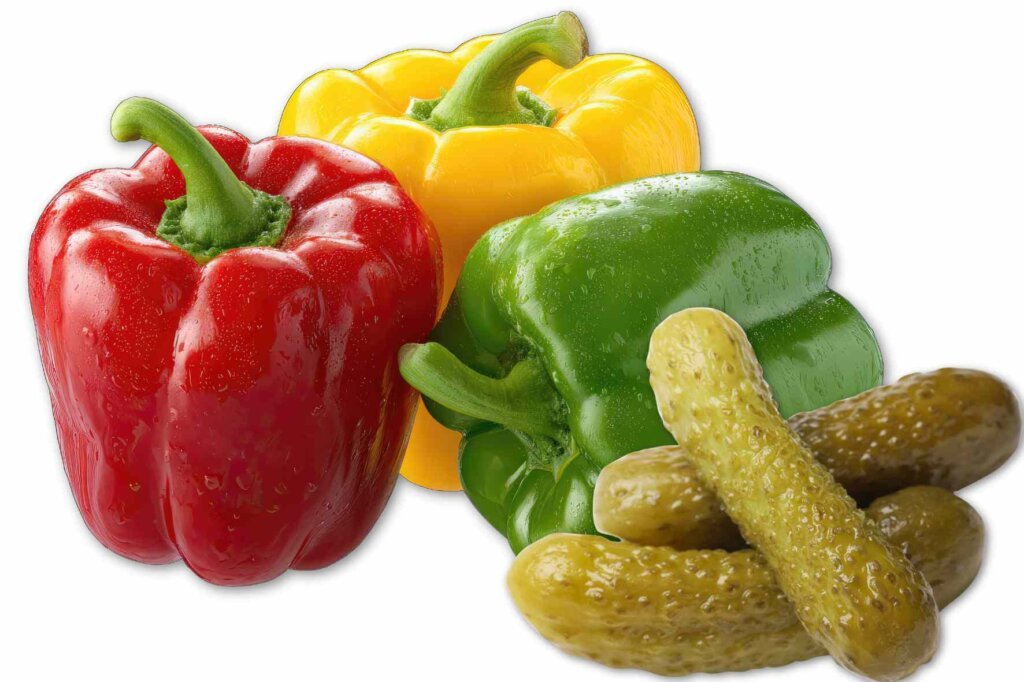
Peppers and cucumber pickles may look like simple additions. However, they define the character of Thousand Island dressing. Without them, the recipe remains closer to a smooth cocktail sauce.
These ingredients add more than texture. They also create freshness, acidity, color, and balance. Therefore, preparing them correctly improves the finished dressing.
Colored Peppers Add Freshness and Sweetness
Red, yellow, and green bell peppers each bring something different. Red and yellow peppers taste naturally sweet. Meanwhile, green peppers offer a sharper and slightly grassy flavor.
Using several colors also makes the dressing more attractive. Small pieces appear throughout the creamy pink base. As a result, the dressing looks fresh, colorful, and homemade.
Dice the peppers very finely. Large pieces may overpower the sauce or fall from salads and sandwiches. However, small pieces spread evenly throughout the dressing. Therefore, every spoonful contains a balanced amount.
Remove the Excess Moisture
Bell peppers contain water. The seeds and soft white membrane can also hold extra moisture. If that liquid enters the bowl, it may thin the dressing.
First, cut the pepper open. Then, remove the seeds and the thick or soft inner membrane. You do not need to scrape away every pale section. Instead, remove only the excess parts that may release water.
Next, dry the pepper before dicing it. This small step helps the sauce maintain its creamy consistency. It also prevents water from collecting on the surface during refrigeration.
Pickles Add Acidity and Crunch
Cucumber pickles bring a tangy, salty flavor. This acidity balances the richness of the mayonnaise. At the same time, their crunch gives the dressing more texture.
Choose firm pickles whenever possible. Soft pickles may disappear into the sauce and release too much liquid. Finely dice them so they mix evenly with the peppers.
After chopping, check the pickles for excess brine. If they appear very wet, drain them well. You can also pat them gently with a paper towel. However, do not press them too firmly or remove all their flavor.
Together, peppers and pickles turn a creamy sauce into true Thousand Island dressing. They create the colorful appearance, tangy flavor, and gentle crunch that make this classic dressing so enjoyable.
How to Prevent Watery Thousand Island Dressing
A good Thousand Island dressing should taste creamy and hold its shape. However, peppers and pickles contain moisture. That liquid can gradually enter the sauce and make it thinner.
Fortunately, a few simple preparation steps can protect the texture. These details become especially important when you prepare the dressing in advance.
Dry the Peppers Before Chopping
Always wash the colored peppers before using them. However, dry them thoroughly afterward. Water left on the surface can enter the dressing during mixing.
Next, cut each pepper open and remove the seeds. Also, remove the thick, soft parts of the white membrane. You do not need to remove every pale section. Instead, focus on the excess parts that hold moisture.
After cleaning the pepper, pat the inside with a paper towel. Then, dice it finely and evenly. Avoid crushing the pieces because pressure may release more juice.
Drain the Cucumber Pickles
Cucumber pickles sit in brine. Therefore, they often carry a considerable amount of liquid. Always drain them before chopping.
First, remove the pickles from the jar. Then, place them on a paper towel for a few minutes. You can also pat the surface gently.
After dicing the pickles, check the cutting board for excess brine. If you notice a small pool of liquid, drain the pieces again. However, avoid squeezing them too firmly. They should retain their tangy flavor and light crunch.
Use Thick Mayonnaise
The consistency of the mayonnaise affects the entire recipe. Thick mayonnaise creates a stable base for the liquid ingredients. In contrast, thin mayonnaise may produce a runny dressing.
Homemade mayonnaise works especially well because it offers a rich and creamy texture. However, make sure the mayonnaise has formed a stable emulsion before using it. A loose or separated mayonnaise cannot support the other ingredients properly.
You can learn more about this process in my guide to the science of emulsions. It explains how oil and water-based ingredients combine into stable sauces.
Add the Vegetables at the End
Prepare the cocktail sauce base first. Mix the mayonnaise, ketchup, mustard, sriracha, Worcestershire sauce, and white pepper until smooth.
Next, fold in the diced peppers and pickles. Avoid stirring them too aggressively. Gentle mixing protects their texture and prevents them from releasing unnecessary moisture.
Finally, refrigerate the dressing in a covered container. If a little liquid appears later, stir the sauce gently before serving. Proper preparation should keep the dressing thick, creamy, and flavorful.
What to Serve with Thousand Island Dressing
Thousand Island dressing offers much more than a topping for lettuce. Its creamy texture and balanced flavor complement many dishes. The acidity also cuts through rich or fried foods.
You can serve it as a dressing, dipping sauce, or sandwich spread. Therefore, one small batch can complete several meals.
Salads
Thousand Island dressing pairs beautifully with crisp lettuce. Try it with iceberg, romaine, or mixed greens. Fresh cucumbers, tomatoes, carrots, and radishes also work well.
The dressing can also add richness to an avocado salad. Avocado has a mild and buttery flavor. Therefore, the pickles and peppers provide a welcome tangy contrast.
You can also drizzle it over a crab salad or kani salad. Its creamy base complements seafood. Meanwhile, the diced vegetables add extra texture.
Always add the dressing shortly before serving. Otherwise, the salt and acidity may soften the vegetables.
Burgers and Sandwiches
Thousand Island dressing makes an excellent burger sauce. Spread it on both sides of the bun. Then, add the cooked burger, cheese, lettuce, tomato, and pickles.
The sauce adds moisture without hiding the flavor of the meat. Moreover, its acidity balances melted cheese and rich burger patties. It pairs especially well with my homemade burger meat recipe.
You can also use it in chicken sandwiches, turkey sandwiches, and wraps. Add a thin layer because too much dressing may make the bread soggy.
For toasted sandwiches, spread the sauce after toasting. This method protects its creamy texture and fresh flavor.
Crispy Appetizers
The sauce works very well as a dip for fried appetizers. Its creamy texture coats crispy food, while its acidity balances the oil.
Serve it with mozzarella sticks, fish fingers, spring rolls, or cheese rolls. You can also pair it with onion rings, potato wedges, and French fries.
For parties, serve the sauce in a small bowl. Keep it beside the appetizers instead of pouring it over them. This approach helps the food stay crisp for longer.
Chicken and Seafood
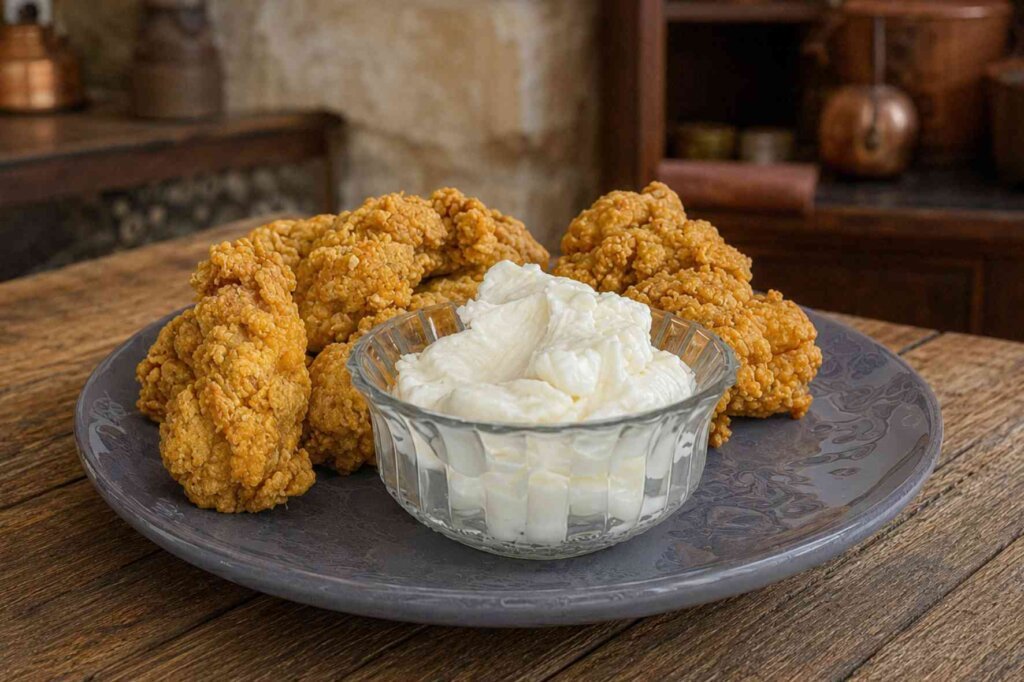
Thousand Island dressing complements grilled and fried chicken. Serve it beside crispy chicken, chicken tenders, or grilled chicken strips. It also works inside chicken wraps and sandwiches.
Seafood also pairs naturally with its creamy and tangy flavor. Try it with shrimp, crab cakes, fried fish, or calamari. However, use a small amount with delicate seafood so the sauce does not overpower it.
Fresh Vegetables
You can also serve this dressing with a fresh vegetable platter. Pair it with cucumber sticks, carrots, celery, radishes, and colored peppers.
This option works well for gatherings and casual snacks. Moreover, the colorful vegetables look attractive beside the pale pink dressing. The result feels fresh, simple, and inviting.
Common Mistakes When Making Thousand Island Dressing
Thousand Island dressing requires no special cooking skills. However, small mistakes can affect its texture and flavor. Careful preparation helps the sauce remain creamy, balanced, and fresh.
Leaving Too Much Moisture in the Vegetables
Peppers and pickles naturally contain liquid. Therefore, adding them while wet can thin the dressing.
Dry the peppers before chopping them. Also, remove the seeds and excess soft membrane. Then, drain the pickles and pat them gently with a paper towel.
This simple step protects the creamy texture. It also helps the dressing last longer in the refrigerator.
Cutting the Pieces Too Large
Large pieces of pepper and pickle can overpower the sauce. They may also fall from salads, burgers, and sandwiches.
Instead, use a sharp knife and create a fine, even dice. Small pieces spread evenly throughout the dressing. As a result, every spoonful offers the right balance of creaminess and crunch.
However, do not mince the vegetables into a paste. The dressing should still contain visible pieces and a light texture.
Adding Too Much Pickle Brine
Pickle brine can add acidity and salt. However, it can quickly make the dressing watery.
If the sauce needs more tang, begin with extra mustard or chopped pickles. Add brine only when necessary. Start with a few drops and mix before tasting again.
Using Thin or Separated Mayonnaise
Mayonnaise forms the main base of this recipe. Therefore, its consistency directly affects the finished sauce.
Avoid mayonnaise that looks watery or separated. Instead, use a thick, stable mayonnaise. Homemade mayonnaise makes the dressing even creamier and more flavorful.
If you prepare the mayonnaise yourself, add the oil slowly. This method helps create a stable emulsion and prevents separation.
Skipping the Resting Time
You can serve Thousand Island dressing immediately. However, it tastes better after resting.
Cover the bowl and refrigerate it for at least 30 minutes. During this time, the mustard, sriracha, pickles, and peppers blend into the creamy base.
The dressing will taste smoother and more balanced. Therefore, plan this short resting time whenever possible.
Adding Too Many Extra Ingredients
Many versions of Thousand Island dressing include onions, eggs, herbs, or extra seasonings. However, adding everything at once can hide the main flavors.
Begin with the original recipe. Then, taste it after chilling. If you want to adjust it, add one ingredient at a time.
A good dressing needs balance. The mayonnaise should remain creamy. The ketchup should add gentle sweetness. Meanwhile, the pickles and peppers should provide acidity, freshness, and crunch.
Leaving It at Room Temperature
Thousand Island dressing contains mayonnaise and fresh vegetables. Therefore, it should not remain at room temperature for long periods.
Return the dressing to the refrigerator after serving. For outdoor meals or buffets, place the serving bowl over ice. This step helps keep the sauce cold and safe.
How to Store Thousand Island Dressing
Homemade Thousand Island dressing contains mayonnaise and fresh vegetables. Therefore, you must keep it refrigerated. Proper storage protects its flavor, texture, and freshness.
Use a Clean, Airtight Container
Transfer the dressing into a clean, airtight container after mixing it. A glass jar with a fitted lid works very well.
A covered container prevents the dressing from absorbing odors from other foods. It also reduces air exposure and helps preserve its creamy texture.
Always use a clean spoon when serving the sauce. Dipping used utensils into the container can introduce crumbs and bacteria. Therefore, remove only the amount you need.
Keep the Dressing Cold
Store the dressing at 4°C or below. Place it toward the back of the refrigerator, where the temperature remains more stable. Avoid storing it inside the refrigerator door.
Homemade Thousand Island dressing tastes best when served cold. However, give it a gentle stir before serving. The chopped vegetables may release a small amount of moisture during storage.
Do not leave the dressing at room temperature for more than two hours. During very hot weather above 32°C, reduce that time to one hour. This rule becomes especially important during outdoor meals and summer gatherings.
How Long Does It Last?
When prepared with fresh homemade mayonnaise, use the dressing within three to four days. This conservative period suits recipes that may contain fresh eggs and chopped vegetables.
If you use commercial mayonnaise, the dressing may maintain its quality for several days. However, I still recommend preparing a small batch and enjoying it while the vegetables remain fresh and crunchy.
Write the preparation date on the container. This simple habit helps you track its storage time.
Check It Before Serving
Discard the dressing if it develops an unpleasant smell, unusual color, mold, or heavy separation. Also, discard it if you cannot confirm how long it remained unrefrigerated.
Do not taste questionable dressing to test its safety. When in doubt, prepare a fresh batch. The recipe takes only a few minutes, so freshness remains the best choice.
Can You Freeze Thousand Island Dressing?
I do not recommend freezing Thousand Island dressing. Freezing may extend its storage time. However, it can damage the creamy texture and fresh flavor.
Mayonnaise forms the base of this recipe. It contains an emulsion of oil and water-based ingredients. Freezing can break that emulsion. As a result, the sauce may separate after thawing.
Freezing Changes the Texture
Once thawed, the mayonnaise may appear oily, grainy, or curdled. Stirring can improve the appearance slightly. However, it rarely restores the original smooth texture.
The chopped peppers and cucumber pickles also contain water. Ice crystals form inside those vegetables during freezing. After thawing, the pieces may become soft and release extra liquid.
Therefore, the finished dressing may taste watery and lose its pleasant crunch. These changes make it less suitable for salads, burgers, and sandwiches.
Prepare a Smaller Batch Instead
This dressing takes only a few minutes to prepare. Therefore, making a smaller fresh batch offers a better solution than freezing it.
You can also prepare the cocktail sauce base in advance. Then, add freshly diced peppers and pickles shortly before serving. This method protects their color, texture, and flavor.
If you have leftover peppers or pickles, store them separately. Keep the peppers dry and refrigerated. Meanwhile, keep the pickles covered in their original brine.
Freezing works well for many ingredients and prepared dishes. However, every food reacts differently to low temperatures. You can read my complete guide on how to freeze food properly for more useful storage advice.
For Thousand Island dressing, refrigeration remains the best choice. Prepare only what you need and enjoy it within three to four days. Fresh dressing will always provide the creamiest texture and brightest flavor.
Frequently Asked Questions About Thousand Island Dressing
Is Thousand Island dressing the same as burger sauce?
Many burger sauces resemble Thousand Island dressing. Both often contain mayonnaise, ketchup, mustard, and pickles. However, burger sauce recipes vary widely.
Some burger sauces include onions, vinegar, paprika, or extra spices. Thousand Island dressing usually has a creamier consistency and contains finely chopped vegetables. Still, it makes an excellent sauce for homemade burgers.
Can I prepare it without sriracha?
Yes, you can leave out the sriracha. However, it adds gentle heat and helps balance the mayonnaise and ketchup.
For a mild dressing, use less sriracha instead of removing it completely. Start with ½ teaspoon and adjust the flavor after mixing.
Which colored peppers should I use?
You can use red, yellow, green, or orange bell peppers. Red and yellow peppers add more sweetness. Meanwhile, green peppers offer a fresher and slightly sharper flavor.
I prefer mixing several colors. This combination creates a balanced taste and makes the dressing more attractive.
Can I use pickle relish instead of cucumber pickles?
Yes, pickle relish can work. However, check its sweetness and moisture before adding it.
Some commercial relishes contain added sugar and a large amount of liquid. Therefore, drain the relish well and add it gradually. Freshly diced cucumber pickles provide better crunch and more control over the final flavor.
Can I make Thousand Island dressing in advance?
Yes. In fact, preparing it ahead improves the flavor. The ingredients need time to blend.
Prepare the dressing several hours before serving. Then, cover it and place it in the refrigerator. Stir it gently before using it.
For the freshest result, you can also prepare the smooth base first. Add the diced peppers and pickles a short time before serving.
Why did my dressing become watery?
Wet peppers or poorly drained pickles usually cause a watery dressing. The vegetables may release more liquid as the sauce rests.
Dry the peppers thoroughly before dicing them. Also, drain the pickles and remove any excess brine. Thick mayonnaise will provide a stronger base.
If the dressing becomes slightly thin, add a spoonful of mayonnaise. Then, refrigerate it before serving.
Can I make a lighter version?
Yes. You can replace part of the mayonnaise with thick Greek yogurt. However, this change will create a tangier and less traditional flavor.
Choose thick yogurt and avoid watery varieties. Start by replacing one-quarter of the mayonnaise. Then, adjust the ratio according to your preference.
Does Thousand Island dressing contain dairy?
The original recipe does not require dairy. Mayonnaise usually contains eggs and oil, but it does not normally contain milk.
However, always check packaged ingredient labels. Some commercial products may contain milk-derived ingredients or cross-contamination warnings.
Is Thousand Island dressing gluten-free?
The main ingredients may naturally contain no gluten. However, Worcestershire sauce, mustard, ketchup, and other packaged products can vary.
Check every label if you follow a strict gluten-free diet. Choose products that clearly state their gluten-free status.
Can I use this dressing as a dip?
Yes. Thousand Island dressing makes a creamy and flavorful dip. Serve it with mozzarella sticks, fish fingers, crispy chicken, potato wedges, or fresh vegetables.
Keep the sauce thick when using it as a dip. For salads, you can loosen it with a few drops of water or pickle brine.
Final Thoughts on Homemade Thousand Island Dressing
Homemade Thousand Island dressing proves that a flavorful sauce does not need complicated ingredients. Mayonnaise and ketchup create the creamy base. Meanwhile, mustard, sriracha, Worcestershire sauce, and white pepper build depth.
Finally, colored peppers and cucumber pickles complete the recipe. They add freshness, acidity, color, and a pleasant crunch. Without them, the sauce remains closer to cocktail sauce.
Small preparation details still make a big difference. Dry the peppers before chopping them. Remove the seeds and excess soft membrane. Moreover, drain the pickles well to protect the creamy consistency.
For an even richer result, begin with my homemade mayonnaise recipe. Fresh mayonnaise gives the dressing a smoother texture and deeper flavor. It also allows you to control every ingredient from the beginning.
Serve this dressing with salads, burgers, sandwiches, seafood, or crispy appetizers. You can also offer it beside a fresh vegetable platter. Its balanced flavor makes it suitable for both casual meals and special gatherings.
However, prepare only the amount you need. Thousand Island dressing tastes best when fresh. Store any leftovers in a clean, airtight container and refrigerate them promptly.
If you enjoy preparing sauces at home, explore my other sauce and dip recipes. You will find cocktail sauce, Lebanese garlic dip, honey mustard, pesto, and many other ideas. You can also browse my cooking tips for practical techniques that improve everyday recipes.
Finally, visit my YouTube channel to watch the recipes come together step by step. Seeing each texture and technique can make the preparation even easier. Then, return to the website whenever you need the complete ingredients, measurements, and written instructions.

Chef François El Aaraj is a corporate chef and culinary consultant with more than 30 years of experience in professional kitchens and restaurant openings across Lebanon and abroad. Through this website, he shares authentic recipes, cooking techniques, and chef secrets designed to help home cooks create flavorful meals with confidence.
Leave a Reply