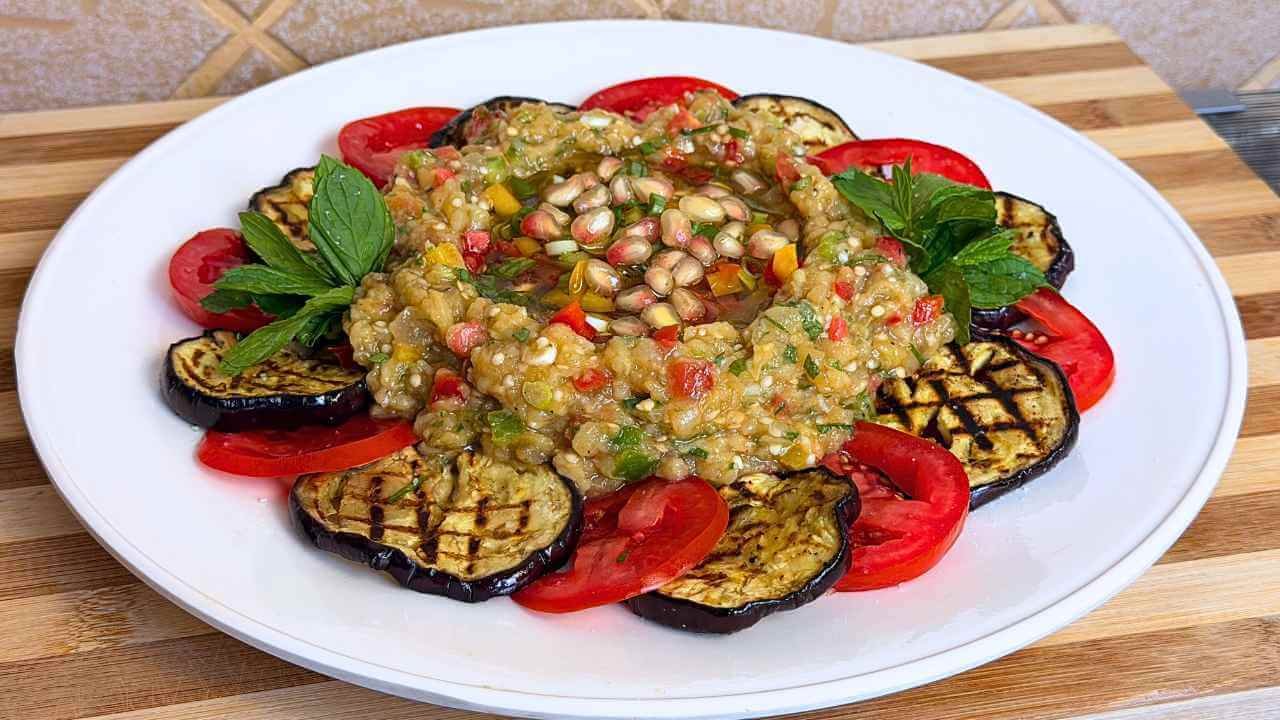
Eggplant Raheb is one of my wife’s favorite dishes. Whenever I prepare it, she likes an extra sprinkle of sumac on top. That little touch adds the sharp, tangy flavor she loves. For me, however, this Lebanese salad brings back another table: my grandmother’s.
Her table was modest. There might be a vegetable dish, a plate of fresh vegetables, and warm bread. Yet those meals gave me a kind of comfort that stayed with me long after I returned to work.
As a chef, I have spent many years in busy restaurant kitchens. I love the skill, energy, and care that go into professional cooking. Still, when I had the chance to eat with my grandmother between my shifts, I always chose her food.
This recipe carries some of that feeling. It brings together soft roasted eggplant, crisp vegetables, fresh herbs, lemon, and olive oil. Then, a few pomegranate seeds add a bright finish. It is simple food with plenty to offer.
The Afternoon Table I Still Remember

My grandmother was a vegetarian. Much of her cooking was vegan, too, although that was never the purpose behind it. She cooked from what she grew in her garden.
Therefore, vegetables were at the heart of her meals. What she cultivated helped decide what she put on the table. Her cooking followed the garden rather than a complicated menu.
When I describe her food as clean, I mean fresh, simple, and close to its source. I remember vegetables prepared with care and meals built around familiar ingredients. That is the feeling I want to keep alive in my own kitchen.
Between my restaurant shifts, I would come in the afternoon to eat with her. After the pace of a professional kitchen, sitting at her table was a pure delight.
There was no need for a large spread. A dish like this, fresh vegetables on the side, and warm bread were enough. I could tear off a piece of bread, take a bite, and settle into the meal.
For a little while, I could rest. Her table was my haven for the day.
Those afternoons remind me that a meal has value beyond its presentation. The company, the welcome, and the care behind the cooking matter just as much. Today, when I place a simple vegetable dish on the table, I still think about that.
What Is Eggplant Raheb?
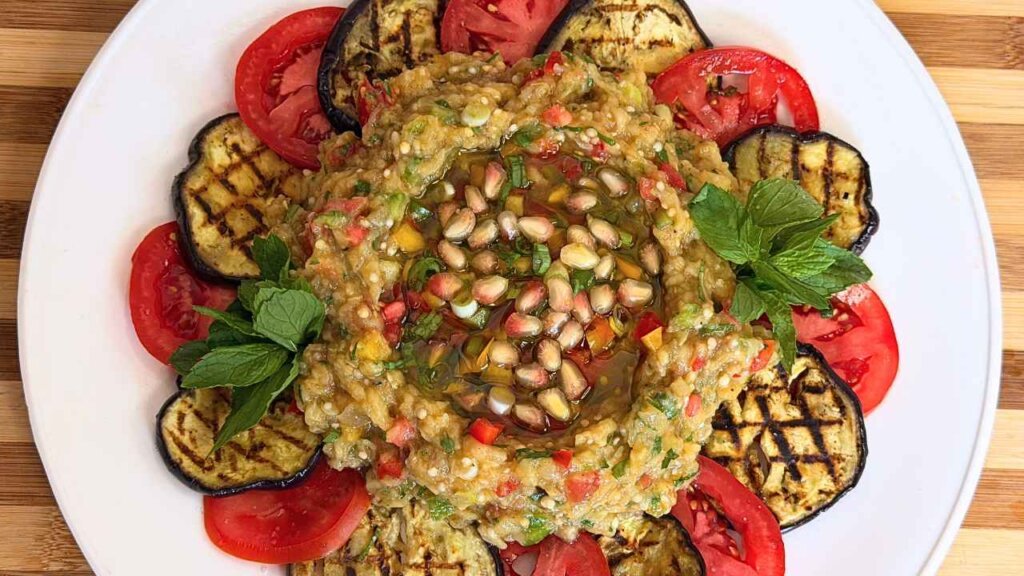
Eggplant Raheb, also called salatet el raheb, is a Lebanese eggplant salad. In my version, roasted eggplant forms the soft base. Tomatoes, spring onions, and colorful peppers bring freshness and a little crunch.
Meanwhile, parsley and mint lift the flavor. Garlic adds depth, while lemon juice and olive oil bring everything together.
I like to keep some texture in the eggplant. It should be soft enough to scoop with bread, but the salad should still feel like a collection of vegetables. Each bite can have a slightly different balance.
The pomegranate seeds finish the dish beautifully. Their small bursts of juice work well with the smoky eggplant and tangy dressing.
You can serve this salad as a mezze dish, a generous side, or part of a simple lunch. It also works well when you want to put more vegetables at the center of the table.
My Wife’s Favorite Finish: Extra Sumac
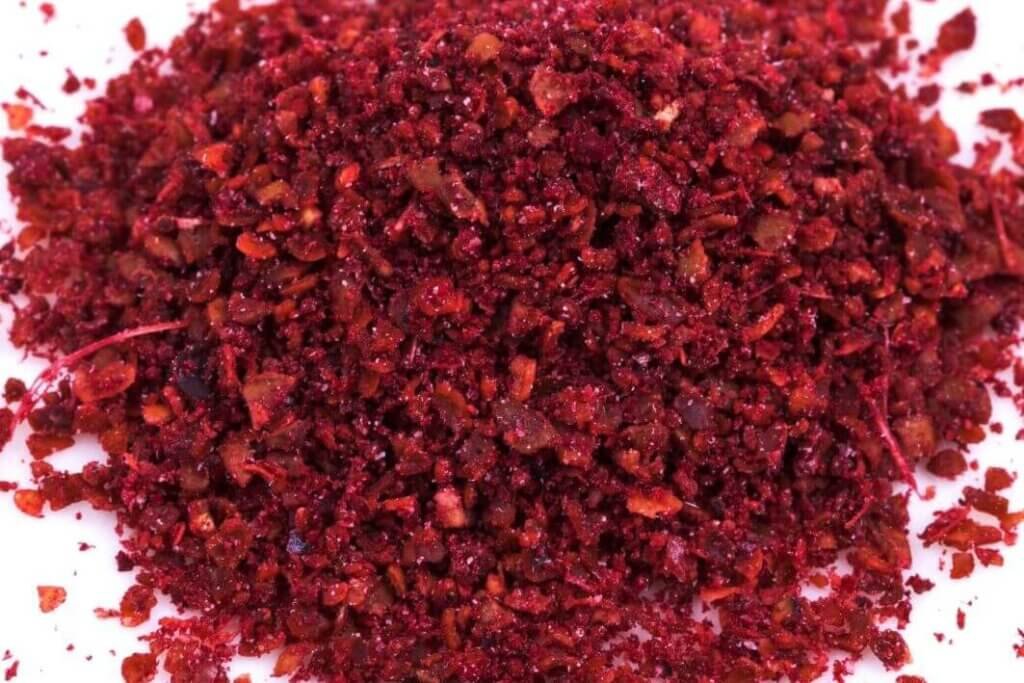
My wife loves this salad with extra sumac. I enjoy how such a small addition can make a familiar dish feel personal.
Sumac has a tart flavor that works especially well with vegetables. Here, it adds another layer of tang alongside the lemon. However, I taste the salad before adding more of either.
The goal is balance. I still want to taste the eggplant, herbs, and olive oil clearly. If the dressing becomes too sharp, those softer flavors can disappear.
When serving guests, you can place a little sumac on the table. That way, everyone can add the amount they enjoy.
If you are curious about this spice, my sumac article explains more about its flavor and how to use it in everyday cooking.
I like giving people small ways to make a recipe their own. My wife’s extra sumac is a good example: the same salad, with a finish that makes it hers.
The Richness of Vegan Food in Our Lebanese Kitchen
When I think about vegan food, many Lebanese dishes come to mind immediately. Vegetables, lentils, chickpeas, bulgur, herbs, and olive oil already have a generous place in our cooking.
For example, loubieh bi zeit turns green beans into a full-flavored vegetable dish. Lentil dishes offer comfort and substance. Meanwhile, salads and greens bring variety to the table.
My grandmother’s cooking showed me this richness in a very natural way. She did not need to build a meal around a meat substitute. She knew how to turn what her garden offered into something worth sitting down for.
That approach still inspires me. A vegetable can have its own character. Eggplant becomes soft and smoky. Onions develop sweetness. Fresh herbs bring fragrance, and lemon adds brightness.
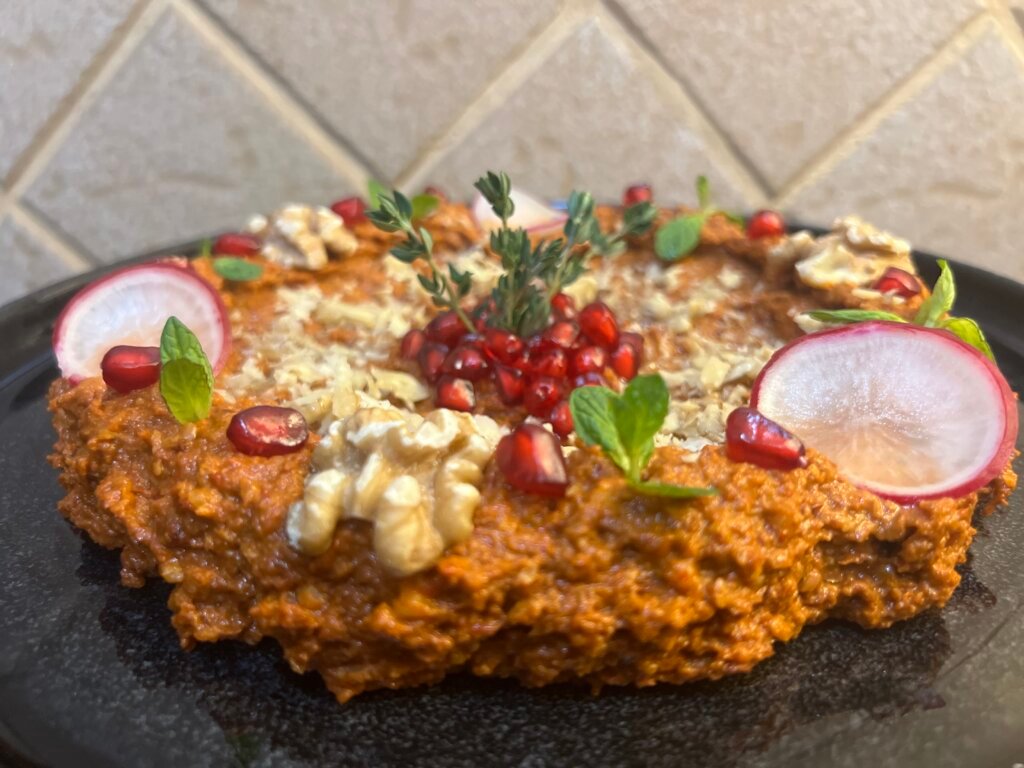
My mdardara, muhammara, and bulgur pilaf are other dishes to explore if you enjoy this kind of cooking.
Of course, every recipe has its own ingredients. Some Lebanese dishes include yogurt, butter, or meat, so it helps to check the recipe when planning a fully vegan meal.
This Eggplant Raheb is vegan as written. Its flavor comes from vegetables, herbs, garlic, lemon, olive oil, and pomegranate.

Let’s Make Eggplant Raheb

Eggplant Raheb
Ingredients
Equipment
Method
- Prepare the eggplants. Set one eggplant aside for the garnish. Roast the remaining eggplants over a gas flame, turning them carefully until the skins are charred and the flesh is soft. Turn the bottoms toward the flame so they cook evenly.
- Salt the garnish slices. Cut the reserved eggplant into evenly thick rounds. Sprinkle a tray with salt, arrange the slices on top, and sprinkle a little more salt over them. Leave them to release some moisture.
- Chop the vegetables. Finely dice the tomatoes and the green, red, and yellow peppers. Finely chop the spring onions, mint, and parsley. If using fresh chili, remove its seeds and chop it finely. Reserve a little of the chopped vegetables for decoration.
- Peel and drain the roasted eggplants. Carefully transfer the cooked eggplants to cold water. Once safe to handle, remove the charred skins and trim off the stems. Place the flesh in a strainer and leave it to drain thoroughly.
- Chill the ingredients. Let the drained eggplant cool briefly, then refrigerate it along with the chopped vegetables. The ingredients should be well chilled before mixing.
- Grill the garnish. Lightly brush the eggplant rounds with olive oil and place them on a hot grill. Leave them until grill marks form and they release easily. Rotate them to create crossed grill marks, then turn them over and cook until tender. Season with a little black pepper and let them cool.
- Prepare the garlic and eggplant. Crush the garlic with a little salt and place it in a mixing bowl. Roughly chop the chilled eggplant flesh with a knife, leaving small pieces for texture. Do not blend it in a food processor.
- Mix the salad. Add the chopped eggplant, tomatoes, peppers, spring onions, parsley, mint, and optional chili to the bowl. Add the lemon juice, olive oil, salt, and black pepper. Mix gently, making sure the garlic is evenly distributed.
- Plate and garnish. Arrange the grilled eggplant rounds on a serving plate and spoon the salad into the center. Decorate with the reserved chopped vegetables, pomegranate seeds, and fresh mint leaves. Finish with a drizzle of olive oil and serve chilled.
Video
Eggplant Raheb and Mtabbal: Two Different Ways to Enjoy Eggplant
People sometimes expect every roasted eggplant dish to taste like mtabbal. However, these dishes offer different experiences.
Mtabbal usually brings roasted eggplant together with tahini. The result is richer and creamier. Depending on the recipe, it may also include yogurt.
In contrast, my Eggplant Raheb has no tahini. The chopped vegetables and herbs give it a fresher, more varied texture. Lemon and olive oil provide the dressing.
I enjoy both. When I want a creamy dip, I make mtabbal. When I want soft eggplant with crisp vegetables, I choose Raheb.
You can explore my mtabbal recipe to see how the same main ingredient takes on another character.
If you serve both on one table, give each its own finish. Let the creamy dip sit beside the colorful salad, with fresh vegetables and bread for sharing.
Choosing Eggplants for a Better Salad
Good preparation starts with the vegetables you bring home.
For this salad, I look for firm eggplants with smooth skin. I avoid ones with soft, damaged areas. If I cook several together, I try to choose similar sizes so I can manage the cooking more easily.
Size alone does not tell me everything about quality. Therefore, I pay attention to the condition of the eggplant as well.
Once it is cooked, the flesh should be very tender. A firm center will not give this salad the soft texture it needs.
I also choose tomatoes that have flavor but still hold their shape when chopped. Very watery tomatoes can loosen the salad too much. Similarly, fresh peppers should add a pleasant crunch rather than tough, tired pieces.
A simple dish leaves room to notice every ingredient. That is why these small choices matter.
Why Roasting Makes Such a Difference
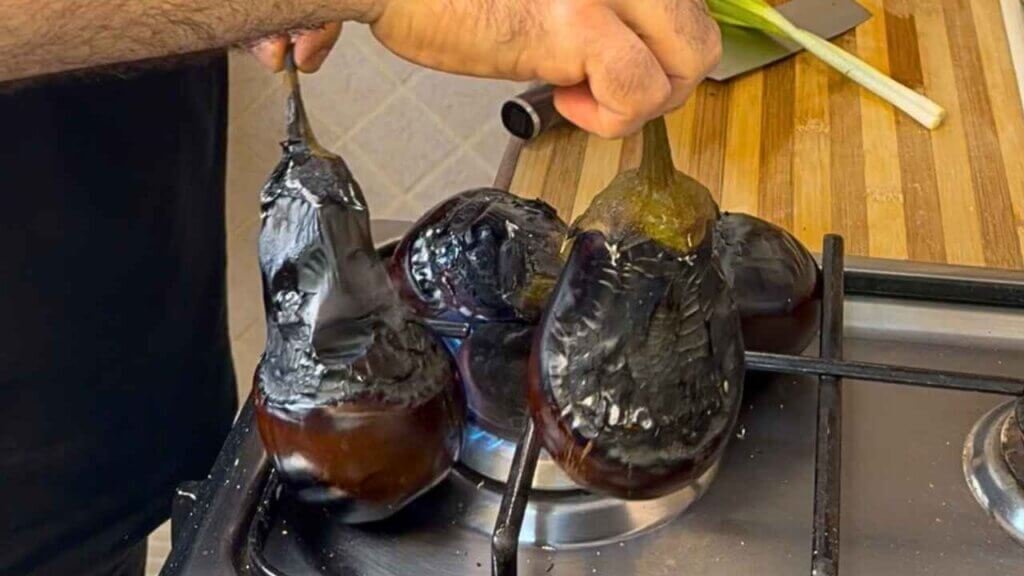
Roasting changes the character of eggplant. The flesh softens and becomes easy to chop or mash. With a suitable grilling method, the outside can also develop the smoky character I enjoy.
However, browning the skin is only part of the job. The inside must cook through.
I judge the eggplant by tenderness rather than color alone. Cooking time can vary with its size and the heat source, so a fixed number of minutes is only a guide.
After cooking, I remove the skin carefully and keep burnt fragments out of the flesh. A little smoky flavor is welcome. Large pieces of burnt skin can make the salad unpleasant.
An oven is another useful option when a grill is unavailable. It will soften the eggplant well, although the smoky flavor may be milder.
The detailed cooking method belongs in the recipe card below. Here, the main lesson is simple: give the eggplant enough time to become tender before building the salad.
The Small Details That Keep Raheb Salad Fresh
One common problem is excess moisture. Roasted eggplant can release liquid, and tomatoes add more.
Therefore, I let the cooked eggplant drain when needed. I want tender flesh that holds the dressing rather than a pool of liquid at the bottom of the bowl.
Next, I pay attention to the cut of the vegetables. Small, even pieces spread their flavor through the salad. Large chunks can overwhelm a bite of soft eggplant.
I also avoid turning everything into a smooth paste. A fork or knife gives me more control over the texture than blending the entire salad.
Finally, I taste before serving. The vegetables may need a small adjustment in salt or lemon. Meanwhile, raw garlic can become more noticeable as the salad rests, so I add it with care.
For more on building balanced flavor, this is a good place to explore my article on how to season food.
The Nutritional Value of Eggplant
Eggplant brings vegetables and fiber to the meal without contributing much fat on its own.
According to the University of Illinois Extension, one cup of cubed eggplant provides roughly 20 calories, 5 grams of carbohydrates, and 2 grams of fiber. It also contains modest amounts of vitamins and minerals, including potassium and folate. These figures describe plain eggplant, rather than a finished salad with dressing.
Eggplant is not a major source of protein. Therefore, if I want to build a more substantial vegan meal around this salad, I serve it with chickpeas, lentils, or beans.
The finished dish has a different nutritional profile from the vegetable alone. Olive oil supplies most of the added fat and a large share of the calories. Tomatoes, peppers, herbs, and pomegranate add variety to the ingredients.
For this recipe divided into four servings, our working estimate is approximately 270 calories per serving, excluding bread and any extra oil used for garnish. This is an estimate, since trimming, peeling, and ingredient variations affect the final calculation.
I enjoy this dish as part of a varied meal. It is satisfying food made from familiar ingredients, with room for both pleasure and balance.
Building a Simple Meal Around Eggplant Raheb
The first way I want to serve this salad is the way that reminds me of my grandmother: warm bread and fresh vegetables beside it.
Cucumber, radishes, and leafy greens give the meal a crisp contrast. Meanwhile, bread makes it easy to scoop up the soft eggplant and dressing.
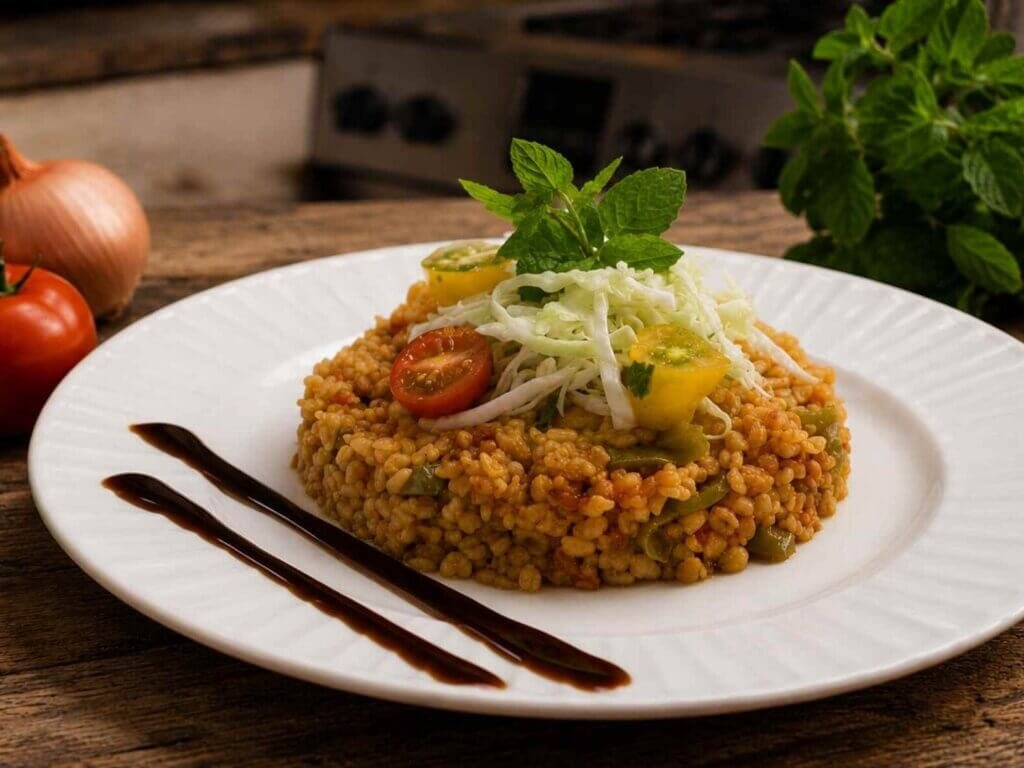
For a more filling vegan table, add a chickpea or lentil dish. You can also pair it with my tomato bulgur pilaf, depending on how much variety you want.
Loubieh bi zeit makes another lovely companion. Both dishes bring vegetables to the center of the meal, while offering different textures and flavors.
If you are preparing a larger mezze spread, mtabbal belongs beside it too. However, check the ingredients in the dip if the entire meal needs to be vegan.
You do not need to prepare every option at once. Two or three well-made dishes can create a generous table. That is something my grandmother’s meals taught me.
A Beautiful Plate Without Complicated Decoration
This salad already has plenty of color. Therefore, I like to let the ingredients do most of the work.
A wide plate gives the eggplant mixture room to spread. Pomegranate seeds make a bright topping, while a few fresh herb leaves add a simple finish.
For a more decorative presentation, I sometimes arrange grilled eggplant and tomato slices around the salad. They frame the dish while keeping the main ingredients visible.
However, I avoid adding so much garnish that serving becomes awkward. The plate should invite people to take a bite.

If you add extra olive oil for presentation, remember that it becomes part of the dish. A small drizzle may be enough, especially when the salad already has dressing.
Preparing Ahead Without Losing the Texture
When I want to organize my cooking, I prepare the eggplant separately from the fresh vegetables.
That gives me more control over moisture and texture. Then, I combine the ingredients closer to serving and finish with herbs and pomegranate.
If the salad rests before it reaches the table, I taste it again. The dressing can settle through the vegetables, while additional moisture may appear.
For the best texture, I prefer serving it soon after mixing. If you refrigerate it, follow your usual safe cooling and storage practices for cooked vegetables and prepared salads.
My article Refrigerator Organization: A Practical Guide is a useful related read for planning the kitchen space around dishes prepared ahead.
Questions People Ask About Eggplant Raheb
Does Eggplant Raheb contain tahini?
My version does not. It uses lemon juice and olive oil for the dressing. For roasted eggplant with tahini, have a look at my mtabbal recipe.
Can I add sumac?
Yes. My wife particularly enjoys extra sumac on hers. Add a little, taste, and adjust the lemon if needed so the dressing remains balanced.
Can I roast the eggplant in the oven?
Yes. The oven is a practical option for tender eggplant. However, the flavor may be less smoky than eggplant cooked over a suitable grill or flame.
Is this a main dish or a side dish?
It works well as a side or mezze dish. For a fuller meal, serve it with bread and a dish based on lentils, beans, or chickpeas.
Can I leave out the pomegranate?
Yes. The seeds add color and juicy contrast, but you can still enjoy the salad without them. Keep the other flavors balanced and finish with fresh herbs.
A Little of Her Table, Shared with Yours
My career has taken me through many kitchens. I have worked with ambitious menus and carefully planned presentations. Yet my grandmother’s modest table remains one of the meals I most want to return to.
I remember coming in between shifts. I remember warm bread, fresh vegetables, and the pleasure of sitting down with her. Those afternoons gave me a peaceful place in the middle of the day.
Today, Eggplant Raheb brings that feeling into my own home. My wife adds her extra sumac, and the dish becomes part of another family memory.
That is what I hope these recipes can do for you, too. Help you cook something delicious, bring people to the table, and create a moment worth remembering.
You will find the full recipe in the card below. You can also watch me prepare it on my YouTube channel and follow the texture and presentation as I go.
Then tell me: which simple dish brings you back to someone you love?

Chef François El Aaraj is a corporate chef and culinary consultant with more than 30 years of experience in professional kitchens and restaurant openings across Lebanon and abroad. Through this website, he shares authentic recipes, cooking techniques, and chef secrets designed to help home cooks create flavorful meals with confidence.
Leave a Reply