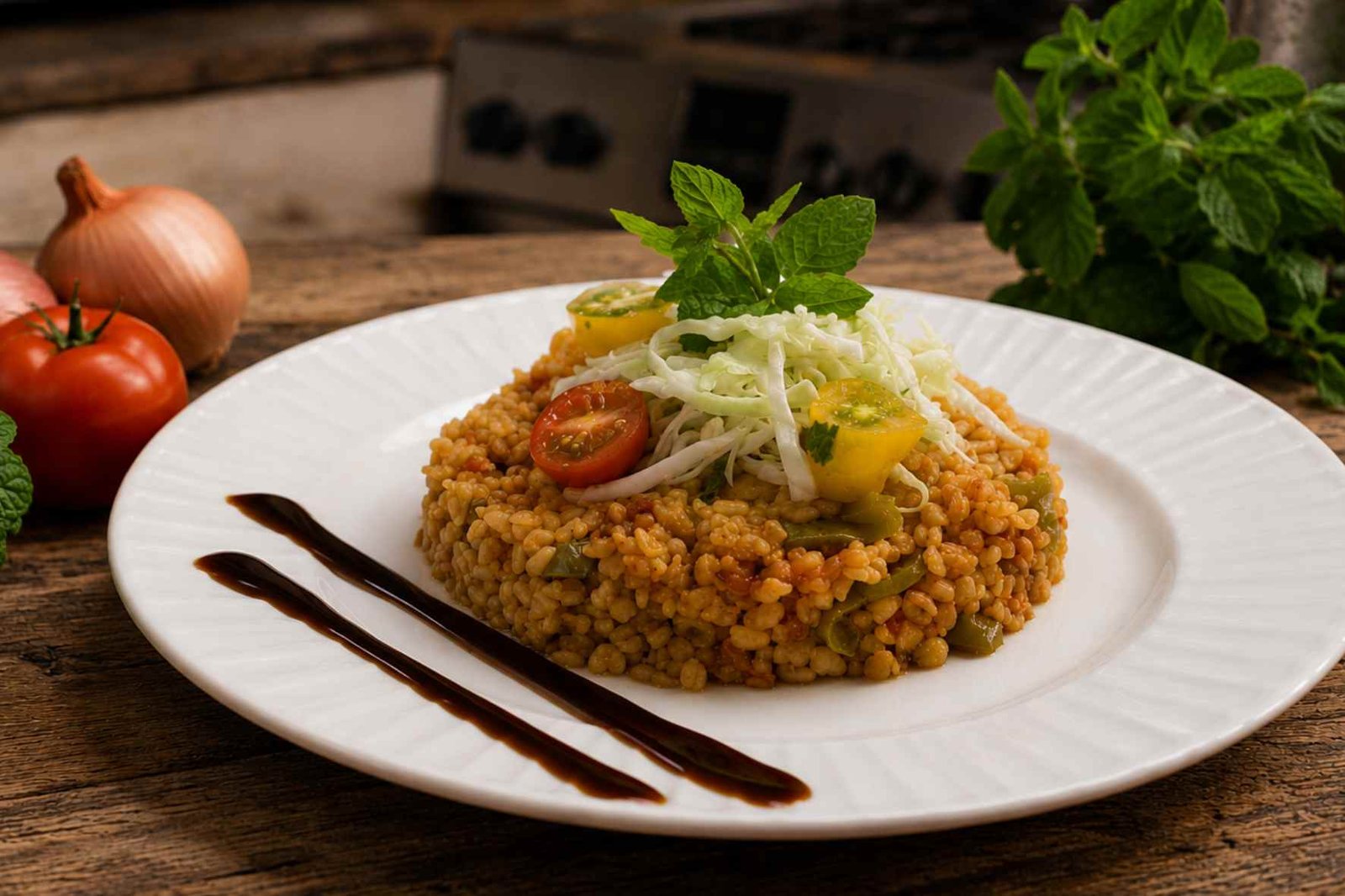
Tomato bulgur pilaf is one of those dishes that instantly takes me back to my childhood. It reminds me of two incredible women who shaped the way I understand food: my late maternal grandmother and my mother. Both of them prepared this humble dish beautifully, but every spoonful still brings back memories of my grandmother’s cooking.
My grandmother was one of the sweetest people anyone could ever meet. She lived well into her nineties and was originally from Kawkaba, a small village in southern Lebanon near the Palestinian border. She belonged to a generation that lived a simple but demanding life. At a time when running water did not reach every home, she carried heavy jars from the village spring to provide water for her family. She raised nine children, tended her garden with care, and cooked almost everything from the vegetables, herbs, and grains she grew herself.
The Taste of a Simple Village Life

Because the land provided most of what she needed, many of her meals were naturally vegetarian. They were never elaborate, yet every dish carried an unforgettable flavor. Looking back, I believe it was a combination of fresh ingredients, years of experience, and the love she poured into every meal. Her cooking reflected the simplicity and generosity of village life, and those flavors have stayed with me ever since.
When I began working in Beirut, I lived with her at her home in Achrafieh. At that point, I was already working in professional kitchens, surrounded by elegant restaurant dishes prepared with premium ingredients. Yet, every day, I found myself looking forward to coming home for lunch. As much as I appreciated the refined food served in the restaurants where I worked, nothing compared to the warmth and comfort of my grandmother’s cooking.
Tomato bulgur pilaf was one of the dishes she prepared almost every week. I can still picture the pot gently simmering on the stove and remember its rich tomato aroma filling the house. To this day, I can honestly say that I have never tasted tomato bulgur pilaf quite like hers. That recipe, along with the memories it carries, inspired me to share this version with you today.
What Is Tomato Bulgur Pilaf?
We prepare tomato bulgur pilaf by cooking white coarse bulgur with onions, tomato paste, and water until the grains become tender and fluffy. Although every country has its own variation, the Lebanese version relies on simple ingredients and a balanced tomato flavor that lets the natural nuttiness of the bulgur shine.
Unlike plain steamed bulgur, we begin tomato bulgur pilaf by gently sautéing the onions until they become soft and sweet. We then cook the tomato paste for a few minutes to develop a richer, deeper flavor before stirring in the bulgur and lightly toasting it. Next, we pour hot water into the pot and allow the bulgur to slowly absorb the liquid as it cooks, giving every grain its rich tomato color and flavor. With just a few pantry staples and the right technique, you can create a side dish that is both satisfying and full of character.
Why It’s So Popular
One of the reasons this dish has remained popular for generations is its versatility. You can serve tomato bulgur pilaf with a simple family meal or as part of an elaborate spread of grilled meats, roasted vegetables, and fresh salads. In Lebanon, many families choose it instead of rice because it offers a heartier texture and a slightly nutty flavor that pairs well with a wide variety of dishes.
Although the ingredient list is surprisingly short, every step contributes to the final result. The quality of the bulgur, properly cooking the tomato paste, lightly toasting the grains, and allowing the pilaf to rest before serving all play an important role in creating a light, fluffy texture instead of a sticky or mushy one.
After preparing tomato bulgur pilaf countless times throughout my career, I have learned that its beauty lies in its simplicity. You do not need expensive ingredients or complicated techniques. When each step is done with care, this humble dish becomes one that people happily return to, generation after generation.
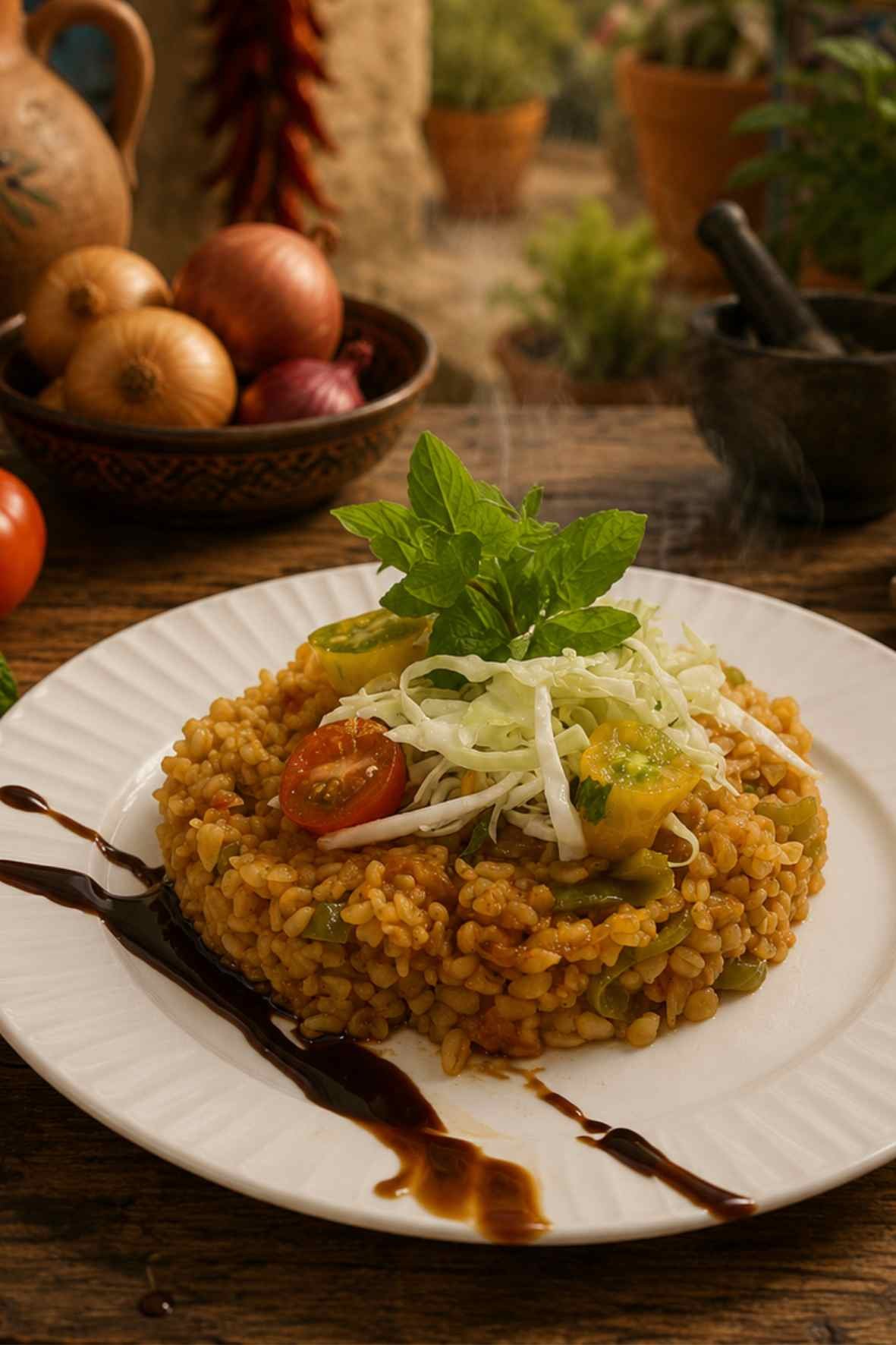
Tomato Bulgur Pilaf
Ingredients
Equipment
Method
- Finely chop the onion.
- Peel the garlic and mince it.
- Dice the tomato and green pepper.
- Finely chop the green chili.
- Heat a generous drizzle of olive oil in a pot over medium heat.
- Ass the chopped onion and saute for 3-4 minutes until soft and translucent.
- Add the garlic, green pepper, and chili pepper.
- Saute for 1-2 minutes until fragrant, stirring to avoid burning.
- Add the diced tomato and tomato paste.
- Stir well and let cook for about 3 minutes, until the mixture becomes slightly thick and glossy.
- Add salt, black pepper, and cumin.
- Stir to evenly coat the vegetables with the spices.
- Add the coarse bulgur to the pot and mix well so it is fully coated with the tomato mixture.
- Pour in the hot water, stir once, then bring to a gentle boil.
- Reduce the heat to low, cover, and let cook for 12 to 15 minutes, until the bulgur has absorbed the liquid.
- Turn off the heat and let the bulgur rest, covered, for minutes. Fluff gently with a fork before serving.
- Watch the video recipe to see how I served it in a restaurant-style presentation.
Video
Lebanon’s Rich Tradition of Vegan Cooking
Many people are surprised to discover just how many naturally vegan dishes exist in Lebanese cuisine. Long before plant-based cooking became popular around the world, Lebanese families were preparing delicious meals made from grains, legumes, vegetables, olive oil, and seasonal herbs. For many generations, this was simply the way people cooked.
My grandmother was a perfect example of this tradition. She grew much of her own produce, so vegetables, grains, beans, and herbs naturally formed the foundation of her kitchen. Meat was never the focus of her meals. Instead, she transformed simple ingredients into dishes that were nourishing, satisfying, and full of flavor.
Today, many people view vegan cooking as a modern lifestyle. However, Lebanese families have prepared naturally vegan dishes for centuries. They never created these recipes to follow a trend. Instead, they cooked with the grains, legumes, vegetables, herbs, and olive oil that the land generously provided. They were born from the land, the changing seasons, and the ingredients families cultivated in their own gardens. That is why they continue to feel so honest and comforting.
Tomato bulgur pilaf is one of the finest examples of this heritage. With just a handful of pantry staples, it delivers incredible flavor while reminding us that some of the most memorable meals are also the simplest.
Choosing the Right Bulgur Makes All the Difference
One of the most common mistakes people make when preparing tomato bulgur pilaf is using the wrong type of bulgur. Although all bulgur is made from whole wheat that has been parboiled, dried, and cracked, it is sold in different grain sizes and colors, each suited to different recipes.
For this recipe, we use white coarse bulgur, which is the traditional choice in many Lebanese homes. Its large grains cook beautifully, absorbing the tomato flavor while remaining light and fluffy. The result is a pilaf with distinct grains and a pleasant bite rather than a soft or sticky texture.
White Bulgur vs. Brown Bulgur
In Lebanon, you will often find both white coarse bulgur and brown coarse bulgur in supermarkets. While both are made from wheat, white bulgur has a milder flavor and a lighter color after cooking, making it ideal for tomato bulgur pilaf. Brown bulgur has a deeper, nuttier taste and a darker appearance, which can slightly change both the flavor and the look of the finished dish.
Don’t Substitute Fine Bulgur
Fine bulgur, the variety traditionally used for tabbouleh, is not suitable for this recipe. Because the grains are much smaller, they absorb liquid much more quickly and produce a completely different texture. Instead of a fluffy pilaf with separate grains, the dish becomes much softer and loses the hearty character that makes tomato bulgur pilaf so enjoyable.
Choosing the correct bulgur may seem like a small detail, but it is one of the most important steps in creating an authentic Lebanese tomato bulgur pilaf. Starting with white coarse bulgur gives you the texture, appearance, and flavor that generations of Lebanese families have enjoyed.
The Secret to a Flavorful Tomato Bulgur Pilaf
Tomato bulgur pilaf is made with only a handful of ingredients, which means every step matters. Unlike recipes that rely on many spices or rich sauces, this dish develops its flavor by building one layer at a time. Taking a few extra minutes at the beginning makes a noticeable difference in the finished pilaf.
Start by Softening the Onions
The first step is to gently cook the onions until they become soft and translucent. There is no need to brown them deeply. Instead, allow them to slowly release their natural sweetness. This creates a delicate base that balances the acidity of the tomatoes and adds depth to the entire dish.
Cook the Tomato Paste Before Adding the Water
One of the most important techniques is to sauté the tomato paste with the onions for a few minutes before adding the water. Fresh tomato paste has a slightly raw flavor, but gentle cooking allows its natural sweetness to develop while creating a richer, deeper tomato taste.
Toast the Bulgur
Once the tomato paste has cooked, stir in the white coarse bulgur and let it toast for a minute or two. This simple step coats every grain with the tomato mixture and olive oil, helping the bulgur absorb flavor evenly as it cooks. It also helps the grains remain separate, giving the pilaf its characteristic fluffy texture.
Although tomato bulgur pilaf is considered a humble everyday dish, these small techniques are what transform a few simple ingredients into a meal that generations of Lebanese families have loved. Sometimes, the simplest recipes are the ones that demand the greatest attention to detail.
What to Serve with Tomato Bulgur Pilaf
One of the reasons tomato bulgur pilaf has remained a favorite for generations is its incredible versatility. It is flavorful enough to stand on its own as a light meal, yet it also pairs beautifully with a wide variety of Lebanese and Mediterranean dishes. Whether you are preparing a simple family lunch or a larger gathering, this pilaf complements almost everything that comes to the table.
Perfect with Grilled Meats
Tomato bulgur pilaf is traditionally served alongside grilled meats, where its rich tomato flavor balances the smoky taste of the barbecue. It is especially delicious with chicken tawook, grilled kafta, beef skewers, lamb chops, or grilled chicken. The fluffy texture of the bulgur also absorbs the juices from the meat, making every bite even more satisfying.
A Wonderful Addition to a Lebanese Mezze
This pilaf also fits naturally into a Lebanese mezze spread. Serve it with creamy hummus, smoky mtabbal, fresh tabbouleh, fattoush, stuffed grape leaves, or a bowl of homemade yogurt. Together, these dishes create a colorful table filled with different textures and flavors that invite everyone to share.
A Complete Vegan Meal
If you follow a vegan diet, serve tomato bulgur pilaf as the centerpiece of your meal. Pair it with mujaddara, moussaka, loubieh b zeit, bamieh b zeit, hindbeh, ful medames, or a simple salad prepared with seasonal vegetables. Lebanese families have enjoyed these combinations for generations. They show that you can create a satisfying, flavorful meal without serving meat.
Whether you serve it beside grilled meats or as part of a table filled with traditional vegan dishes, tomato bulgur pilaf has a way of bringing comfort to every meal. Its simple ingredients and familiar flavors allow it to complement almost any menu without ever overshadowing the main dish.
Common Mistakes When Making Tomato Bulgur Pilaf
Tomato bulgur pilaf is a forgiving recipe, but a few small mistakes can affect its texture and flavor. Over the years, I have noticed that most problems come down to technique rather than the ingredients themselves. Fortunately, they are all easy to avoid.
Using the Wrong Type of Bulgur
The first mistake is choosing the wrong bulgur. This recipe is designed for white coarse bulgur, which cooks into light, fluffy grains. Using fine bulgur, or even medium bulgur, changes the cooking time and produces a much softer texture that is no longer a true pilaf.
Rushing the Onion and Tomato Paste
It can be tempting to add all the ingredients to the pot at once, but doing so means missing the opportunity to build flavor. Giving the onions time to soften and allowing the tomato paste to cook for a few minutes creates a richer, sweeter base that makes a noticeable difference in the finished dish.
Adding Too Much Water
One of the easiest ways to end up with mushy bulgur is adding more water than the recipe requires. White coarse bulgur absorbs liquid gradually, so using the correct ratio is essential. If the grains are swimming in excess liquid, they lose their light, fluffy texture.
Lifting the Lid Too Often
Every time you remove the lid, steam escapes from the pot. That steam is what gently finishes cooking the bulgur. Try to resist the urge to stir or check the pilaf repeatedly. Allow it to cook undisturbed until the liquid has been absorbed.
Skipping the Resting Time
As simple as it sounds, resting the pilaf for a few minutes after cooking is one of the most important steps. During this time, the remaining moisture is distributed evenly throughout the grains, making the pilaf lighter and easier to fluff with a fork before serving.
Like many traditional Lebanese recipes, tomato bulgur pilaf does not require complicated techniques. Instead, success comes from respecting a few simple steps that generations of home cooks have followed for decades.
Can You Make Tomato Bulgur Pilaf Ahead of Time?
Tomato bulgur pilaf is an excellent make-ahead dish. In fact, many people enjoy it even more the next day. As it rests, the flavors blend together and become even richer.
Store It in the Refrigerator
Allow the pilaf to cool completely before storing it. Then transfer it to an airtight container and refrigerate it for up to four days. This simple step helps preserve both the texture and the flavor.
Reheat It the Right Way
Reheat the pilaf gently over low heat. Add a splash of water if it seems dry. Then cover the pan for a few minutes to create steam. Finally, fluff the bulgur with a fork before serving. Avoid stirring too much, as this can break the grains and make the pilaf heavy.
Freeze for Later
Tomato bulgur pilaf also freezes well. Divide it into individual portions before freezing. This makes it easy to thaw only what you need. When you are ready to enjoy it, let it thaw overnight in the refrigerator. Then reheat it gently on the stovetop or in the microwave.
If you enjoy preparing meals in advance, this recipe is a great addition to your meal plan. It saves time, reduces food waste, and gives you a homemade side dish whenever you need one. For more practical storage tips, be sure to read our guide on how to freeze food properly, where we share simple techniques to preserve flavor and texture.
Final Thoughts
Tomato bulgur pilaf reminds me that the simplest recipes often leave the strongest memories. My grandmother prepared it with humble ingredients, yet every plate tasted extraordinary. Later, my mother continued the same tradition. Today, I still prepare this dish with those memories in mind.
Throughout my career, I have cooked countless recipes in professional kitchens. Nevertheless, this tomato bulgur pilaf remains one of my favorite comfort foods. It proves that great cooking does not depend on expensive ingredients. Instead, it comes from choosing quality ingredients, following the right technique, and preparing every meal with care.
I hope this recipe brings the same warmth to your table that it has always brought to mine. Whether you serve it with grilled meats, enjoy it as part of a vegan meal, or prepare it for a busy weekday dinner, I believe it will become one of the recipes you make again and again.
If you enjoyed this recipe, I invite you to explore more traditional Lebanese recipes and professional cooking tips here on the website. You can also visit our YouTube channel, where Chef François shares step-by-step video tutorials, practical techniques, and family recipes that have shaped his culinary journey for decades.

Chef François El Aaraj is a corporate chef and culinary consultant with more than 30 years of experience in professional kitchens and restaurant openings across Lebanon and abroad. Through this website, he shares authentic recipes, cooking techniques, and chef secrets designed to help home cooks create flavorful meals with confidence.
Leave a Reply