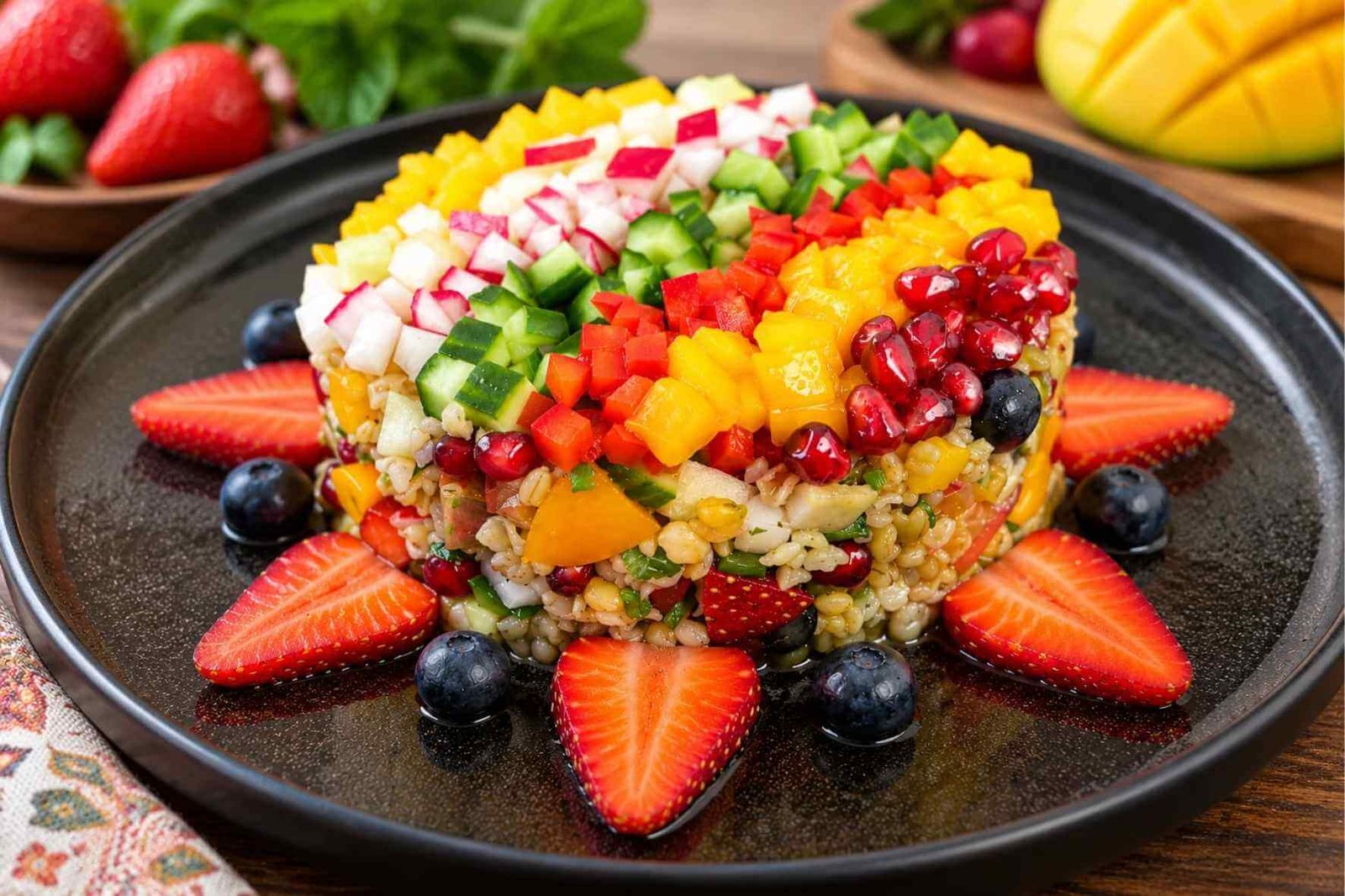
Some dishes make an impression before anyone takes the first bite. Their colors catch your attention, their presentation invites curiosity, and suddenly everyone around the table wants to know what you have prepared. My Freekeh Colorful Salad with Fruits is one of those dishes.
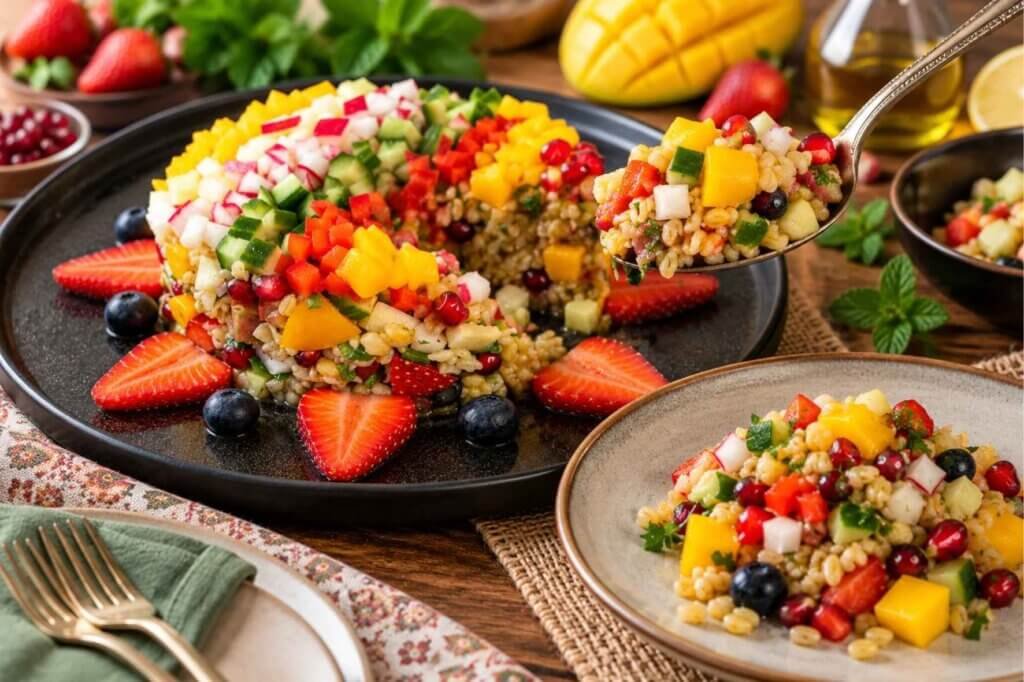
Imagine a beautifully arranged salad featuring smoky freekeh, juicy mango, crisp green apple, strawberries, blueberries, pomegranate seeds, and fresh vegetables. Every ingredient brings its own color, texture, and flavor. Meanwhile, a light honey-lemon dressing connects everything without hiding the individual ingredients.
At first glance, you might wonder whether this is a savory salad or a fruit salad. That is precisely what makes it interesting.
Throughout my career in professional kitchens, I have learned that a memorable dish does not always require expensive ingredients or complicated techniques. Sometimes, the difference comes from combining familiar ingredients in an unexpected way.
This colorful freekeh salad follows that philosophy. It takes a traditional grain and gives it a fresh, contemporary personality.
Better still, you can prepare it at home and present it with the elegance of a restaurant dish.
Freekeh Colorful Salad with Fruits: A Different Way to Enjoy a Traditional Grain
In Lebanon and throughout the Levant, freekeh has a special place in our kitchens.
We usually associate it with warm, comforting meals. It often appears alongside chicken, meat, or vegetables, absorbing the flavors of broth and spices.
However, freekeh has much more potential.
Its distinctive smoky flavor makes it an excellent ingredient for cold salads. Unlike a neutral grain, freekeh already brings character to the plate.
That character becomes particularly interesting when you introduce fresh fruit.
The sweetness of mango, for example, creates a contrast with the smoky grains. Green apple adds a crisp, slightly tart bite. Pomegranate seeds contribute little bursts of freshness, while strawberries and blueberries make the salad even more colorful.
As a result, this recipe offers something different from the salads we prepare every day.
It also demonstrates an important cooking principle: ingredients do not have to belong to the same traditional category to work beautifully together.
What matters is how their flavors interact.
What Exactly Is Freekeh?
Freekeh is wheat harvested while the grains are still young and green. Traditionally, the harvested wheat is roasted or exposed to heat, which gives it its characteristic smoky aroma. The grains are then processed and prepared for cooking.
This traditional method gives freekeh a flavor that is noticeably different from rice, quinoa, or ordinary bulgur.
Its texture is another advantage.
When cooked correctly, freekeh remains pleasantly chewy. Therefore, it holds its shape well when mixed with other ingredients.
That makes it particularly suitable for a salad containing juicy fruits and vegetables.
Why I Prefer Smoked Freekeh for This Salad
The smoky flavor is essential to the personality of this dish.
Without it, the combination of fruit and vegetables would taste much lighter and sweeter. Smoked freekeh introduces an earthy note that helps balance those flavors.
Think of the contrast between sweet mango and smoky grains.
One ingredient is bright and juicy. The other is warm and nutty in character. Together, they create a more interesting bite than either ingredient would provide alone.
The same principle applies to green apple and pomegranate.
Their acidity cuts through the richer notes of the freekeh, making the salad feel refreshing rather than heavy.
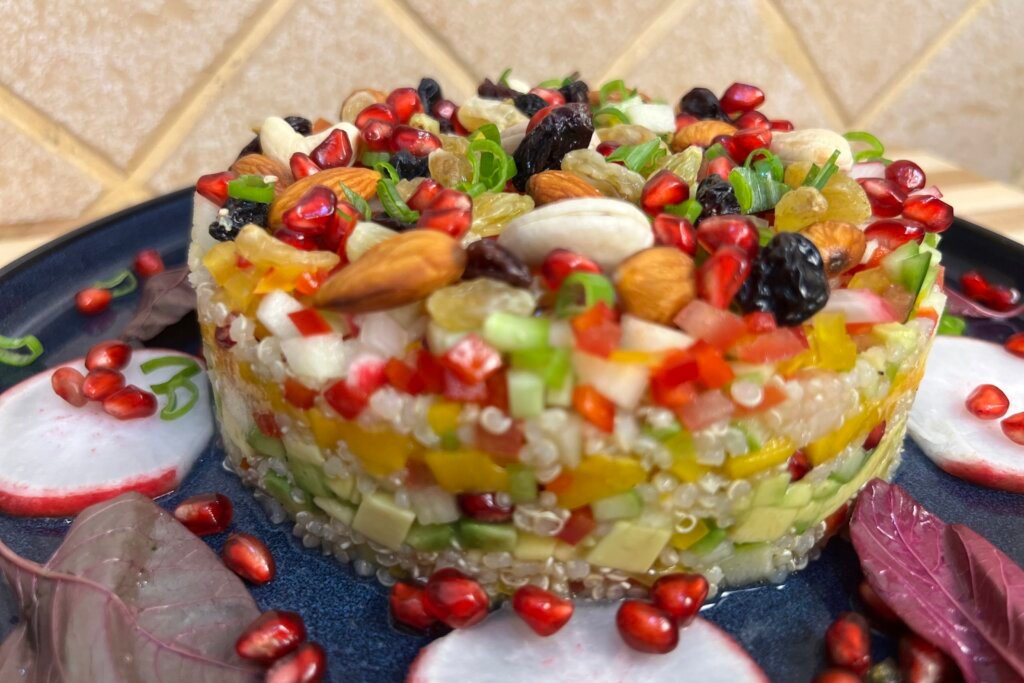
If you enjoy exploring different grain-based dishes, you might also like my Healthy Quinoa Salad. It uses a similar idea of combining colorful ingredients, although quinoa and freekeh offer very different flavors and textures.
One important distinction: freekeh is wheat, so it contains gluten. It is not suitable for anyone who needs to follow a gluten-free diet.
Why Fruits Belong in a Savory Salad
Many people still think of fruit as something we eat after a meal.
However, fruit can play a wonderful role in savory cooking.
In professional kitchens, we frequently look for ingredients that introduce sweetness, acidity, freshness, or contrast.
Fruit can provide several of these qualities naturally.
The important question is not whether fruit belongs in a salad. It is whether the chosen fruit improves the dish.
In this recipe, every fruit has a purpose.
Mango Brings Natural Sweetness
Mango contributes a soft, juicy sweetness that complements the smoky freekeh.
Its golden color also makes the presentation more attractive.
Choose a ripe mango that still feels firm enough to cut into neat cubes. If the fruit is excessively soft, it may lose its shape when mixed with the salad.
Green Apple Adds a Crisp Contrast
Green apple offers a different experience.
It is crunchy, fresh, and slightly tart. Consequently, it balances the sweetness of the mango and honey.
Its firm texture also helps the salad maintain an enjoyable bite.
I recommend cutting the apple shortly before assembling the dish. A little of the recipe’s lemon juice can help slow browning if you need to prepare it in advance.
Strawberries and Blueberries Add Freshness
Strawberries bring a gentle sweetness and a delicate fruity aroma.
Blueberries offer small, juicy bites that contrast with the larger pieces of apple and mango.
These fruits also help create the striking appearance of the finished salad.
Nevertheless, I avoid crushing them during mixing. Their delicate texture deserves a gentle touch.
Pomegranate Makes Every Bite More Interesting
Pomegranate seeds are among my favorite ingredients for adding color to a plate.
Their ruby-red appearance immediately attracts attention.
More importantly, they provide a pleasant combination of sweetness, acidity, and a little crunch.
In this salad, pomegranate helps connect the fruit with the savory ingredients.
It is a small ingredient with a noticeable effect.
The Importance of Texture in a Colorful Freekeh Salad
Flavor is only one part of a successful recipe.
Texture matters just as much.
Imagine eating a salad in which every ingredient feels soft. Even if the seasoning is excellent, the experience can become monotonous.
Now imagine a salad that combines tender grains, crisp apple, crunchy radishes, juicy mango, and delicate berries.
Each bite feels different.
That variety is one of the reasons I enjoy preparing this dish.
The freekeh provides the foundation. The radishes introduce a fresh crunch. The apple adds firmness, while the fruits create softer, juicier moments.
Even the raisins contribute something different with their concentrated sweetness and chewy texture.
When all these elements are balanced, the salad becomes more satisfying to eat.
Why Cutting Ingredients Evenly Matters
One technique I always encourage home cooks to practice is cutting ingredients into consistent pieces.
This is not simply about making the plate look professional.
Uniform pieces help distribute the ingredients more evenly. Therefore, you are more likely to enjoy several flavors in a single forkful.
For this salad, small cubes work particularly well.
They also make it easier to arrange the colorful ingredients neatly when decorating the finished dish.
Take your time with the knife. Good preparation often makes the final assembly much easier.
The Honey-Lemon Dressing That Brings Everything Together
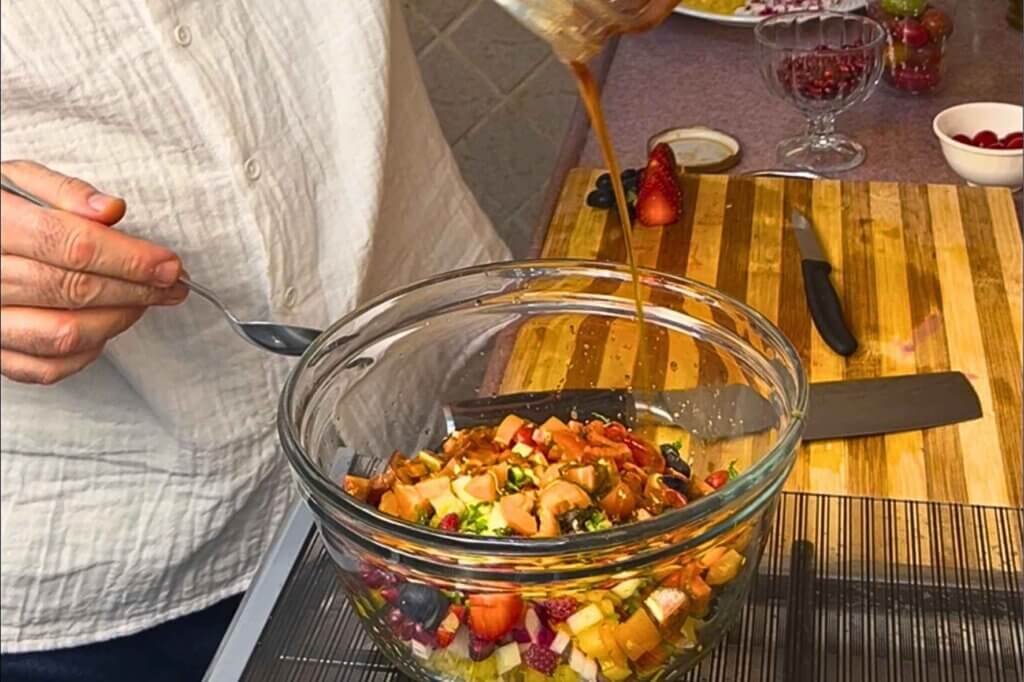
A colorful salad needs a dressing that complements its ingredients without overwhelming them.
For this recipe, I use a combination of fresh lemon juice, honey, olive oil, apple cider vinegar, salt, and black pepper.
The dressing is simple, but each ingredient plays an important role.
Lemon juice introduces brightness.
Apple cider vinegar adds another layer of acidity.
Honey softens those sharper notes and complements the natural sweetness of the fruits.
Meanwhile, olive oil brings a smoother mouthfeel and helps carry the flavors across the salad.
Salt and black pepper complete the seasoning.
How Sweet and Sour Flavors Create Balance
A common mistake when preparing fruit-based salads is making the dressing too sweet.
Remember that the mango, strawberries, raisins, and other fruits already contribute sweetness.
Therefore, the dressing needs enough acidity to maintain balance.
On the other hand, excessive lemon juice or vinegar can make the salad unpleasantly sharp.
The goal is harmony.
You should still recognize the smoky freekeh, the fresh fruit, and the vegetables after adding the dressing.
If one ingredient dominates everything else, the salad loses some of its personality.
This principle applies to many recipes, not just salads.

In my article about Dynamite Sauce, I explore how sweetness, acidity, and other flavors can change the character of a dish.
Although that sauce is completely different from this light dressing, the lesson is similar: every ingredient should have a purpose.
How to Cook Freekeh for a Cold Salad
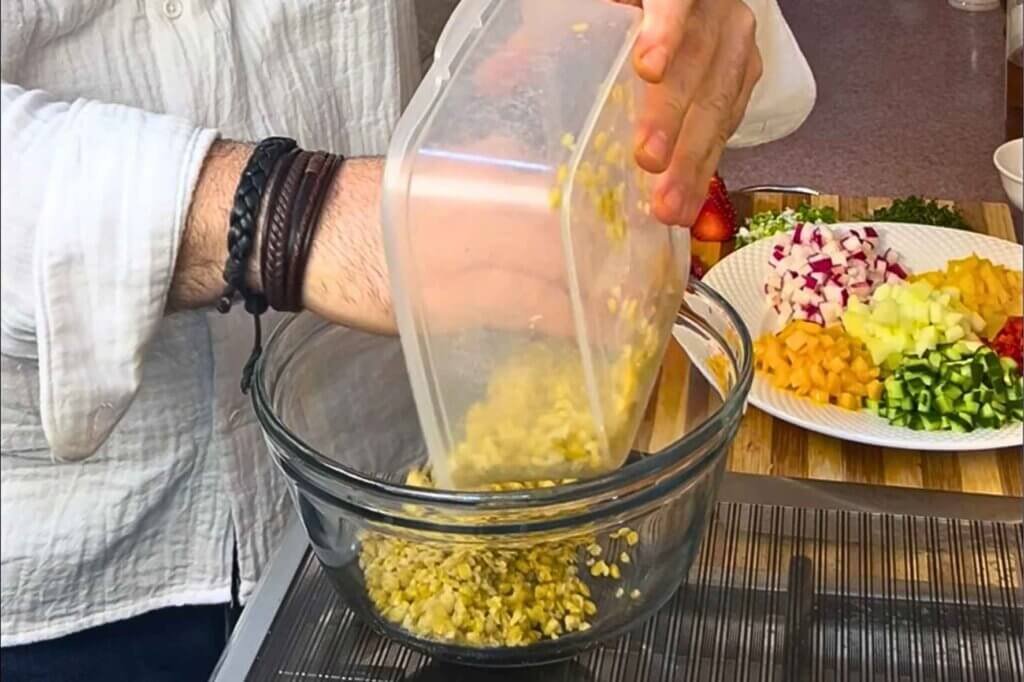
In my cooking video, I begin with freekeh that has already been boiled.
However, if you are preparing the recipe from scratch, cooking the grains correctly is an important first step.
Start by rinsing the dry freekeh and checking for any impurities.
Then cook it according to the package instructions until the grains become tender but retain a little bite.
Cooking times vary depending on whether the freekeh is whole or cracked.
For many varieties, approximately 20–30 minutes of simmering is a reasonable starting point, but always check the texture.
Avoid Overcooking the Grains
Overcooked freekeh can become too soft for this style of salad.
When you combine overly soft grains with juicy fruits and dressing, the result may feel heavy or mushy.
Instead, aim for grains that remain distinct.
Once the freekeh is cooked, drain any excess water and spread it on a tray to cool.
This allows steam to escape and helps prevent unnecessary moisture from collecting in the salad.
I discuss a related principle in my guide to Why Your Rice Becomes Sticky Every Single Time.
Freekeh and rice behave differently, but both benefit from careful attention to water, heat, and cooking time.
Always Cool the Freekeh Before Mixing
This detail makes a significant difference.
If you add warm freekeh to strawberries, blueberries, or other fresh ingredients, the heat can soften them.
The fruits may also release more juice, affecting the salad’s texture.
Therefore, allow the cooked grains to cool completely before assembling the recipe.
If you prepare them ahead of time, refrigerate them promptly in a shallow container and keep them chilled until needed.
Freekeh Colorful Salad with Fruits Recipe
Now that you understand the ingredients and techniques behind this dish, you are ready to prepare it.
The recipe card below contains the complete ingredient quantities, cooking instructions, preparation times, and serving information.
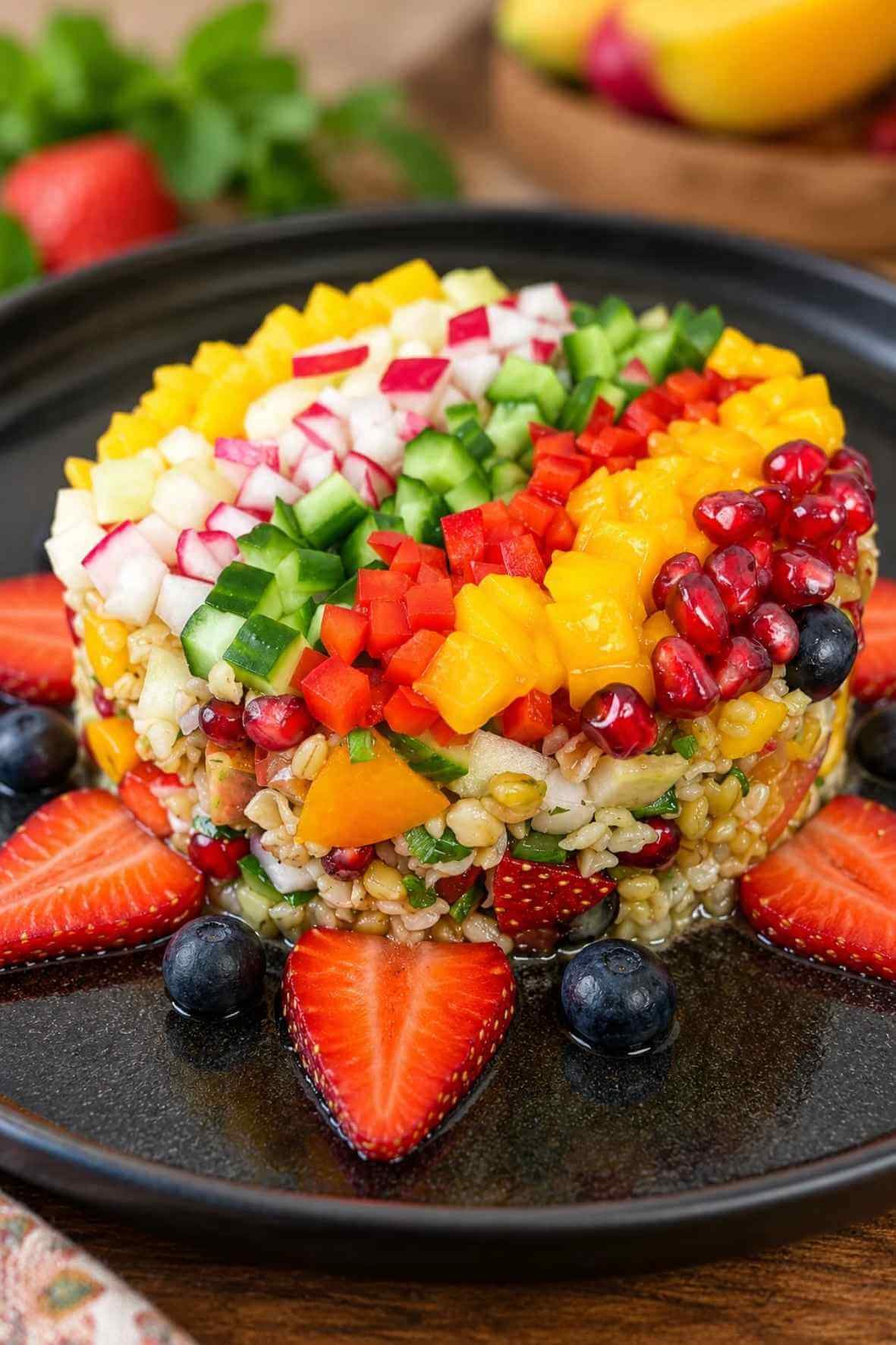
Freekeh Colorful Salad with Fruits
Ingredients
Equipment
Method
- Cook the smoked freekeh in boiling water until tender but still slightly chewy. Drain any excess water and allow it to cool completely before preparing the salad.
- Place the cooled, cooked smoked freekeh in a large mixing bowl. Add the sliced radishes, diced mango, green apple, raisins, pomegranate seeds, chopped strawberries, blueberries, spring onions, and finely chopped fresh mint.
- Season with salt and black pepper.
- Cut the cherry tomatoes into small pieces and add them to the mixture.
- Add the fresh lemon juice, apple cider vinegar, honey, and olive oil to the salad.
- Gently mix everything together until the freekeh, fruits, and vegetables are evenly coated with the dressing.
- Let the salad rest in the dressing for approximately 5 minutes to allow the freekeh to absorb the flavors.
- For a more developed flavor, Chef François suggests preparing the salad ahead of time and refrigerating it for up to 2 hours before serving.
- Place a round plating ring in the center of a serving plate.
- If the salad has released excess liquid, drain it before plating to help it hold its shape.
- Spoon the freekeh salad into the ring, gently pressing it down to create a compact, even layer.
- Reserve a small amount of the colorful salad ingredients for decoration.
- Arrange the reserved ingredients in neat rows across the top of the salad, starting with the radishes and continuing with the other fruits and vegetables.
- Alternate contrasting colors to create an attractive presentation, avoiding placing similar colors directly next to each other.
- Gently press the salad once more to help it maintain its shape.
- Carefully lift the plating ring straight upward to reveal the beautifully arranged salad.
- Serve immediately, while the fruits and vegetables are fresh and crunchy.
Video
Notes
The recipe makes approximately four side-dish servings or two generous main-course portions.
For an elegant dinner-party presentation, I recommend dividing the salad into individual portions and using a round plating ring.
However, you can also serve it in a beautiful salad bowl for a relaxed family meal.
Both presentations work well. The choice depends on the occasion.
How I Turn a Simple Salad into an Elegant Restaurant-Style Dish
Presentation is one of the most enjoyable parts of cooking.
I have always believed that people begin experiencing food with their eyes.
Before tasting a dish, they notice its shape, color, arrangement, and overall appearance.
That first impression creates expectations.
For this salad, I wanted the presentation to reflect the variety of ingredients.
Instead of mixing everything together and serving it casually, I use a round plating ring to create a clean, structured shape.
The freekeh mixture forms the base. Then I arrange the colorful ingredients across the top.
The result resembles a carefully composed restaurant dish.
Why a Plating Ring Makes Such a Difference
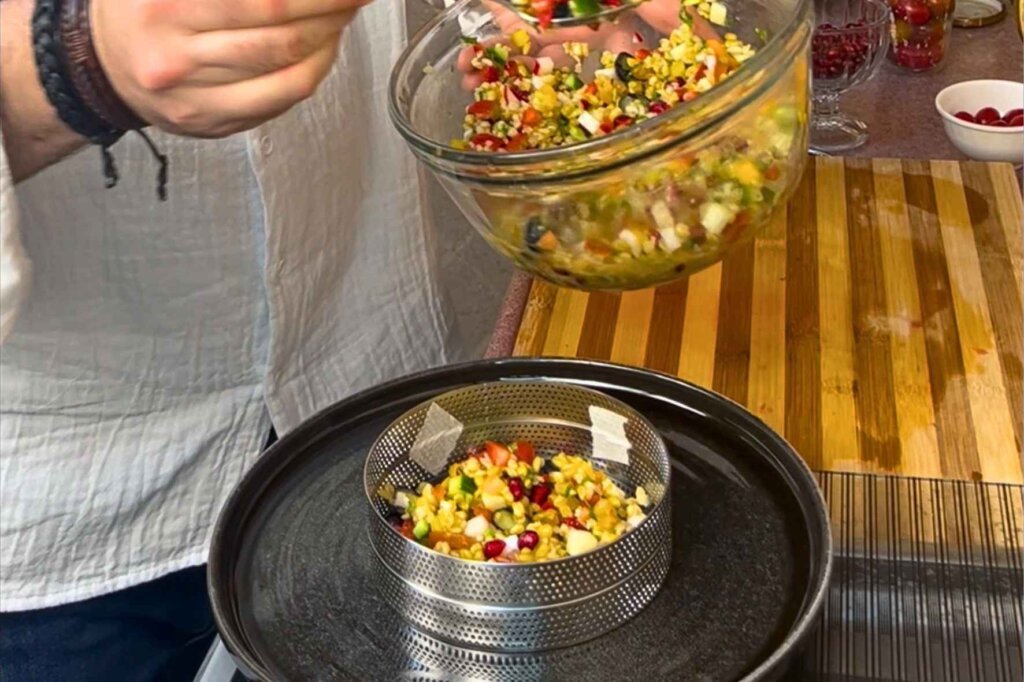
A plating ring is a simple kitchen tool, but it can completely change the appearance of a salad.
It helps you control the shape and height of the portion.
It also creates a clean border, making the finished dish look more deliberate.
However, the salad must have the right consistency.
If it contains too much liquid, it may collapse when you remove the ring.
That is why I recommend draining excess dressing before plating.
Press the mixture gently into the ring without crushing the fruit.
Then lift the ring slowly and vertically.
You want the salad to keep its shape while maintaining its natural texture.
Arrange the Colors Instead of Mixing Everything on Top
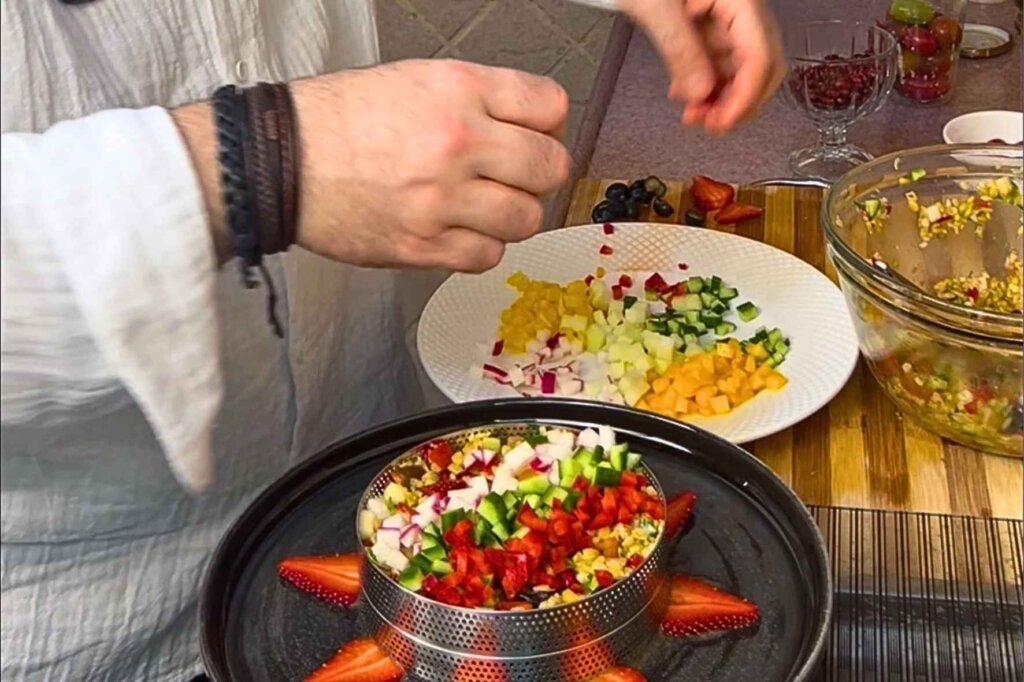
One of the most attractive details in this recipe is the colorful arrangement of ingredients.
Rather than scattering them randomly, I create distinct sections.
The pale radishes contrast with the green ingredients. The orange and yellow tones of the fruit stand out beside the red pomegranate seeds.
Each color remains visible.
This technique creates visual order without making the dish feel artificial.
You do not need complicated decorations or expensive garnishes.
The ingredients themselves provide everything you need.
Finally, arrange the strawberries and blueberries around the salad to complete the presentation.
The dark serving plate creates a beautiful contrast with the bright fruits.
A Salad Worth Serving When Guests Come Over
When I plan a meal for guests, I think about more than individual recipes.
I consider how the dishes will look together, how their flavors will complement one another, and whether the menu offers enough variety.
A colorful salad can play an important role.
It introduces freshness to a table that may already contain rich appetizers, grilled meats, or warm dishes.
Moreover, it gives guests something unexpected to discover.
Freekeh Colorful Salad with Fruits is particularly suitable for this purpose because it looks impressive without requiring complicated last-minute cooking.
You can prepare several components in advance, then complete the presentation shortly before serving.
Build a Beautiful Mediterranean-Inspired Table
If you are planning a gathering, consider serving this salad alongside a selection of Lebanese appetizers.
For example, my Eggplant Mtabbal offers a creamy, smoky contrast to the fresh fruit and grains.
Another wonderful option is Eggplant Raheb, which brings the familiar flavors of roasted eggplant and fresh vegetables to the table.
Although both dishes feature eggplant, they offer very different textures.
You could serve the freekeh salad as a colorful centerpiece and arrange the other dishes around it.
For a more substantial meal, add grilled chicken, fish, or another protein of your choice.
The salad’s acidity and sweetness can provide a refreshing contrast to savory main courses.
If you prefer to begin with a warm dish, my French Onion Soup offers an entirely different kind of comfort.
Together, a warm starter and a fresh, colorful salad can create an interesting dining experience.
Can You Prepare Freekeh Colorful Salad with Fruits Ahead of Time?
Yes, and preparing certain components in advance can make entertaining much easier.
However, I recommend separating the preparation into stages.
Cook the freekeh first, then cool it completely and refrigerate it in a covered container.
You can also wash the fruits and vegetables ahead of time.
For the best texture, cut delicate ingredients closer to serving.
Strawberries can soften after cutting, while green apples may begin to brown.
When Should You Add the Dressing?
For everyday serving, you can combine the ingredients with the dressing shortly before eating.
Allowing the salad to rest for about fifteen minutes gives the grains time to absorb some of the flavor.
If you prefer a stronger, more developed taste, you can refrigerate the dressed salad for up to two hours before serving, as demonstrated in my preparation.
However, remember that fruits and vegetables gradually release moisture.
Before plating, check the consistency and drain any excess liquid.
How Long Can You Store Leftovers?
Place leftovers in an airtight container and refrigerate promptly at 4°C (40°F) or below.
For the best appearance and texture, I recommend enjoying the dressed salad within 24 hours.
Although properly refrigerated leftovers may remain safe longer, the fruit can soften and the presentation will gradually lose its freshness.
Do not leave the salad at room temperature for more than two hours, or more than one hour in very hot conditions above 32°C (90°F).
If you are preparing food for guests, keeping cold dishes properly chilled is just as important as making them look attractive.
Is Freekeh Colorful Salad with Fruits a Healthy Choice?
This recipe combines whole grains, fruits, vegetables, herbs, and olive oil.
Together, these ingredients provide a variety of nutrients and textures.
Freekeh contributes carbohydrates, fiber, and some plant protein.
The fruits and vegetables provide vitamins, minerals, and naturally occurring plant compounds.
Olive oil supplies unsaturated fats, while the herbs contribute freshness and flavor.
However, it is important to consider the complete recipe rather than describing individual ingredients as miracle foods.
The dressing contains honey and olive oil, both of which contribute calories.
The fruits also contain naturally occurring sugars.
That does not make the salad unhealthy. It simply means portion size matters, particularly when serving it as part of a larger meal.
Is This Salad Suitable for Vegetarians?
Yes. The confirmed ingredients contain no meat or fish.
It is suitable for a vegetarian diet that includes honey.
However, because honey is an animal-derived product, the recipe is not strictly vegan.
You could adapt it with a plant-based sweetener, although that would change the original recipe.
Is Freekeh Salad Gluten-Free?
No.
Freekeh comes from wheat and naturally contains gluten.
People with celiac disease or those who must avoid gluten should not use freekeh.
If you need a gluten-free alternative, my Healthy Quinoa Salad is another colorful option. Be sure to check that all packaged ingredients meet your dietary requirements.
Common Mistakes That Can Affect the Final Result
Even a simple salad can lose its appeal when a few small details are overlooked.
Fortunately, these mistakes are easy to prevent.
Using Freekeh That Is Too Soft
The grains should be tender but still have some structure.
If they are mushy, the salad becomes difficult to mix and shape.
Check the freekeh regularly toward the end of cooking.
Adding Too Much Dressing Before Plating
A little moisture helps distribute flavor.
Too much liquid, however, can collect at the bottom of the serving plate.
This becomes especially noticeable when using a plating ring.
Drain excess dressing before shaping the salad.
Cutting the Ingredients Too Large
Large, uneven pieces make the salad harder to arrange.
They can also overpower the freekeh.
Aim for small, relatively consistent pieces that are comfortable to eat together.
Mixing Delicate Fruits Too Aggressively
Strawberries and blueberries require a gentle touch.
Fold the ingredients together rather than stirring forcefully.
This helps preserve their appearance and texture.
Preparing the Decoration Too Early
Freshly cut fruit looks its best shortly after preparation.
If you are serving guests, finish the decorative arrangement close to serving time.
This keeps the colors bright and the ingredients appealing.
Frequently Asked Questions About Freekeh Colorful Salad with Fruits
Can I Use Regular Freekeh Instead of Smoked Freekeh?
Yes, provided it is suitable for cooking and has been prepared correctly.
However, the flavor will be different.
Smoked freekeh gives this recipe its distinctive earthy character, which balances the sweeter ingredients.
Can I Serve This Salad Warm?
I recommend serving it chilled or cool.
The fresh fruits and vegetables taste more refreshing this way, and the texture is easier to maintain.
Warm freekeh may soften the delicate ingredients.
Do I Need a Plating Ring?
Not at all.
The plating ring creates an elegant restaurant-style appearance, but the salad tastes just as delicious when served in a large bowl.
For family gatherings, a generous serving platter can be more practical.
Can I Prepare the Freekeh the Day Before?
Yes.
Cook it, cool it promptly, and store it in an airtight container in the refrigerator.
Then assemble the salad with the fresh ingredients when you are ready.
What Can I Serve with This Salad?
Grilled chicken, fish, roasted vegetables, and Lebanese mezze are all good options.
Choose accompaniments that complement the salad’s sweet, tangy, and smoky flavors without overpowering them.
Can I Replace the Mango or Strawberries?
You can experiment with other fruits, but the flavor balance will change.
The original combination was chosen for its contrast of sweetness, acidity, color, and texture.
I recommend trying the recipe as written before making substitutions.
Why I Believe Beautiful Food Should Be Accessible to Everyone
After more than 30 years of working in professional kitchens, I still enjoy the moment when a simple ingredient becomes something unexpected.
That transformation is one of the pleasures of cooking.
It does not always require complicated sauces, unusual equipment, or expensive products.
Sometimes, it begins with looking at an ingredient differently.
Freekeh is a wonderful example.
We know it as a traditional grain with a familiar smoky flavor. Yet when we combine it with fresh fruits, vegetables, and a carefully balanced dressing, it becomes a completely different dish.
The elegant presentation adds another dimension, but the real achievement lies in the combination of flavors.
That is what I want home cooks to understand.
You can learn professional techniques without losing the warmth and simplicity of home cooking.
You can also create a beautiful plate without turning every meal into a complicated project.
For more practical cooking lessons and personal stories from my professional journey, explore my Chef’s Journal.
A Final Word from Chef François
My Freekeh Colorful Salad with Fruits is an invitation to experiment with ingredients you may already know.
It combines the smoky character of freekeh with the freshness of fruit, the crunch of vegetables, and the brightness of a honey-lemon dressing.
Most importantly, it proves that a salad can be much more than a simple side dish.
Serve it in a beautiful bowl for a family lunch, or arrange it with a plating ring when you want to surprise your guests.
Either way, give the ingredients the attention they deserve.
Cook the freekeh carefully, choose fresh produce, balance the dressing, and enjoy the process of bringing everything together.
If you prepare this recipe, I would love to hear how you served it.
Did you choose the elegant restaurant-style presentation, or did you create your own version?
Share your experience in the comments and explore more of my recipes and my YouTube channel for fresh ideas to bring to your table.

Chef François El Aaraj is a corporate chef and culinary consultant with more than 30 years of experience in professional kitchens and restaurant openings across Lebanon and abroad. Through this website, he shares authentic recipes, cooking techniques, and chef secrets designed to help home cooks create flavorful meals with confidence.
Leave a Reply