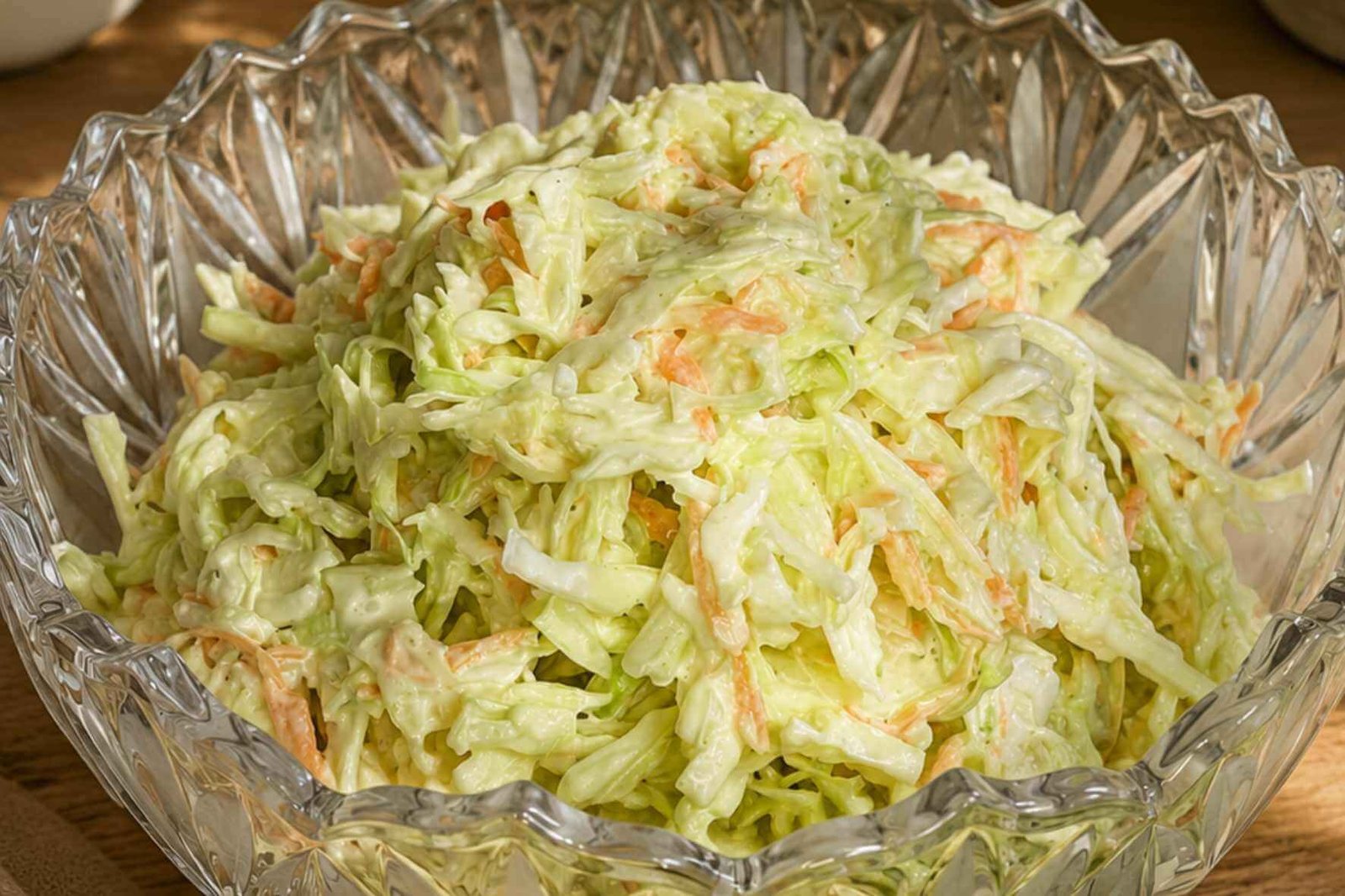
After more than thirty years of working in professional kitchens, I’ve learned that the dishes people remember aren’t always the most complicated ones. Sometimes it’s the simplest recipe on the plate that quietly brings everything together. For me, the creamy coleslaw recipe is one of them.
I’ve prepared this recipe for family meals, restaurant buffets, and à la carte service, and no matter the occasion, I noticed the same thing: when it’s made well, people always ask for more. The combination of crisp cabbage, sweet carrots, and a smooth, creamy dressing creates the perfect contrast to hot, crispy, or grilled foods. It refreshes the palate while adding just enough richness without becoming heavy.
A Side Dish That Deserves More Credit
What many people don’t realize is that great coleslaw isn’t simply chopped vegetables mixed with mayonnaise. The difference between an average bowl and one that tastes like it came from a good restaurant lies in a few small details. Choosing fresh ingredients, preparing the cabbage correctly, balancing the dressing, and giving everything enough time to come together all make a noticeable difference.
Over the years, I’ve also found that this is one of the most versatile side dishes you can prepare. At home, we often serve it with crispy chicken, fish fingers, or homemade mozzarella sticks because the cool, creamy texture balances fried food beautifully. In Lebanon, coleslaw is also a classic addition to homemade burgers, so I regularly use it alongside my Burger Meat Recipe to add freshness and crunch in every bite. We also use it a lot in our sandwiches, like the tawook sandwich, or fries sandwich.
In this article, I’ll share the techniques I’ve learned throughout my career to help you make a creamy coleslaw that stays crisp, well-balanced, and full of flavor. The complete recipe is available in the recipe card below, while here I’ll explain the small professional tips that make a surprisingly big difference.
Why I Always Keep This Creamy Coleslaw Recipe in My Collection
Every chef has recipes they return to again and again, and this creamy coleslaw recipe has always been one of mine. It doesn’t require expensive ingredients or complicated techniques, yet it has the ability to elevate an entire meal.
A Side Dish That Goes with Almost Everything
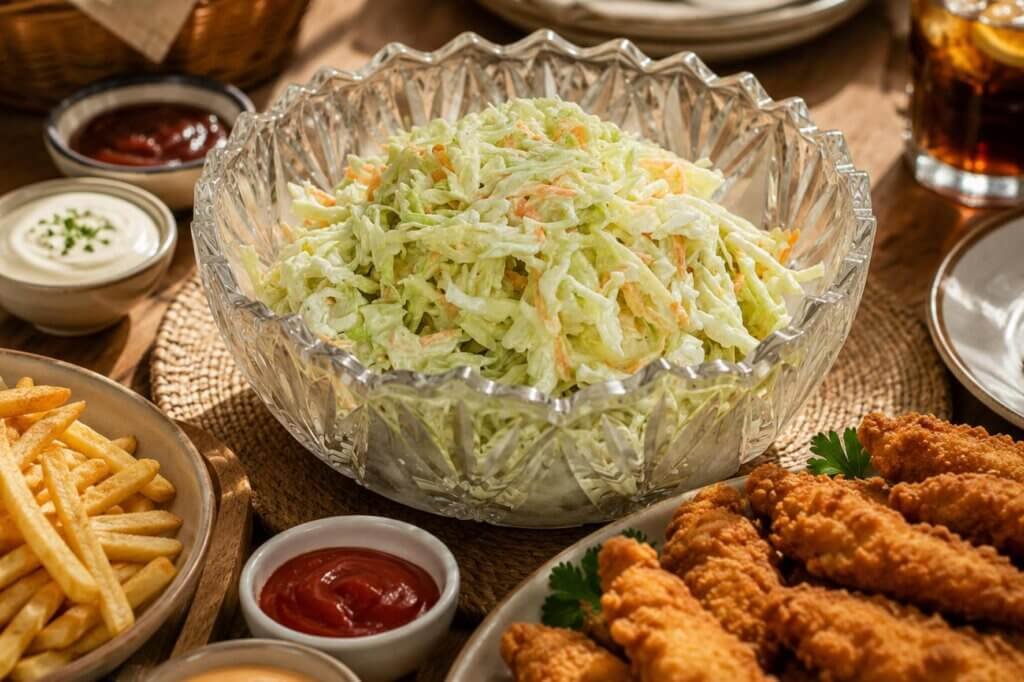
One of the reasons I enjoy making it so much is its versatility. It works just as well beside a simple weekday dinner as it does on a large buffet table. No matter what I was serving, I know this salad will bring freshness, color, and texture to the plate.
Its popularity also comes from the contrast it creates. Fried foods are delicious because of their crispy coating, but they can feel quite rich after a few bites. A spoonful of cool, crunchy coleslaw cuts through that richness and refreshes your palate, making every bite taste just as enjoyable as the first.
I also appreciate how forgiving this recipe is. Unlike many salads that wilt within minutes, a properly prepared coleslaw actually improves after spending a little time in the refrigerator. As the vegetables absorb the dressing, the flavors blend together while the cabbage keeps enough crunch to stay satisfying.
Perhaps that’s why you’ll find some version of coleslaw in restaurants all over the world. Each kitchen has its own style, but the goal is always the same: creating a fresh, creamy side dish that complements the main course without stealing the spotlight.
Let’s Make This Creamy Coleslaw
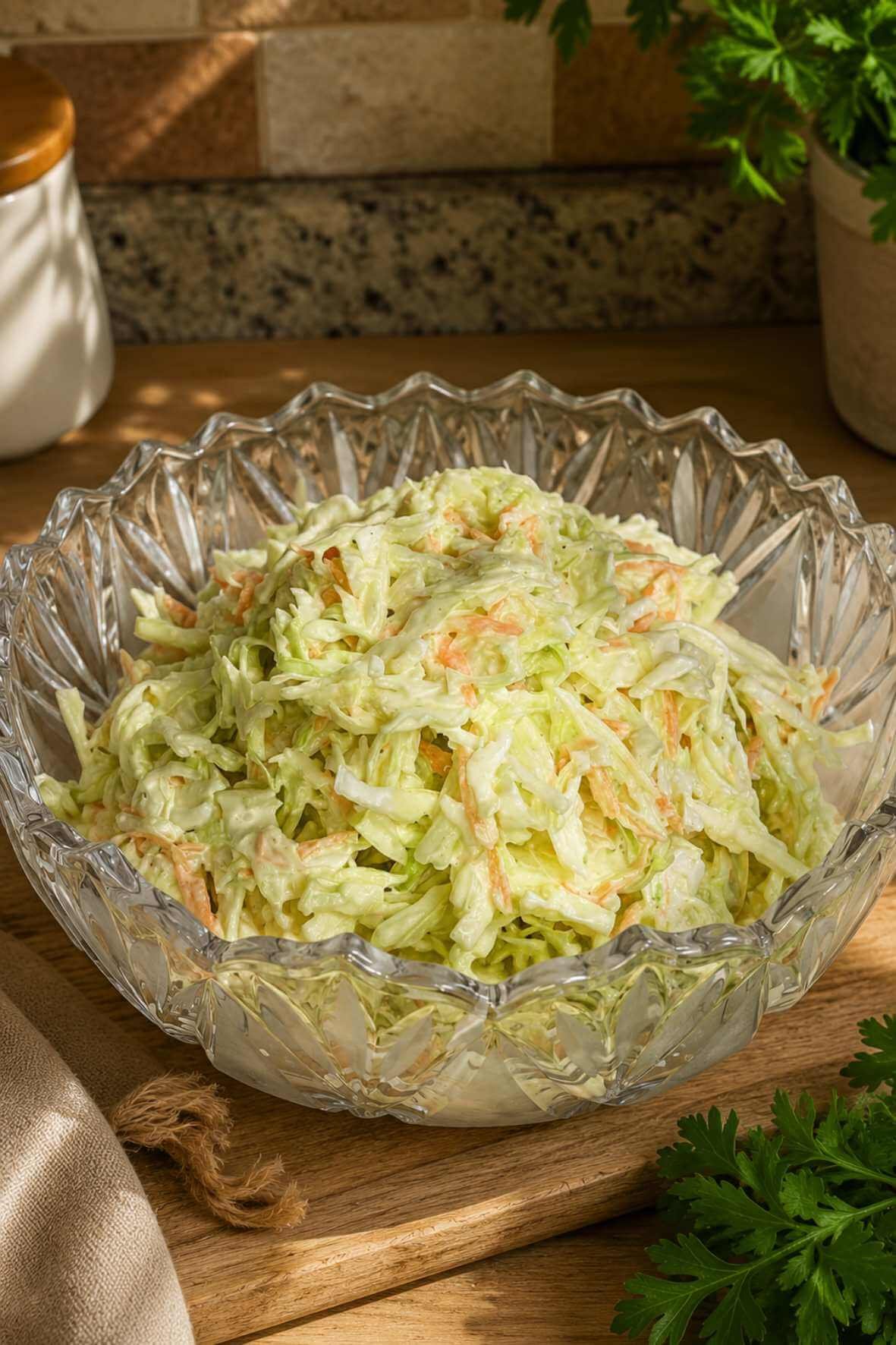
Coleslaw
Ingredients
Equipment
Method
- Place the cabbage on a cutting board.
- Using a very sharp knife, slice the cabbage into very thin, fine strips. Fine slicing is key to achieving the right texture.
- Using the large holes of a box grater, grate the carrot lengthwise to create long, thin shreds.
- Place the shredded cabbage and grated carrots into a large mixing bowl.
- Sprinkle the sugar, salt, and white pepper over the vegetables.
- Pour in the white vinegar. This helps cut through the richness of the mayonnaise and balances the flavors.
- Add the mayonnaise to the bowl.
- Use a spatula or spoon to mix everything thoroughly until the vegetables are completely and evenly coated in the dressing.
- Transfer the salad to a serving bowl. It can be served immediately or chilled in the refrigerator for 30 minutes to allow the flavors to meld.
Video
Notes
The Secret to Crisp, Creamy Coleslaw
One of the biggest mistakes I see people make when preparing coleslaw is thinking that the dressing is the most important part. While a well-balanced dressing certainly matters, it won’t save a bowl of cabbage that has become soft and watery. In my experience, the real secret to exceptional coleslaw starts long before the mayonnaise is added.
Throughout my years in professional kitchens, I learned that texture is just as important as flavor. Every bite should have a satisfying crunch, while the dressing should lightly coat the vegetables instead of pooling at the bottom of the bowl. When those two elements come together, you end up with a side dish that feels fresh, creamy, and perfectly balanced.
The good news is that achieving this doesn’t require any special equipment or complicated techniques. It simply comes down to respecting the ingredients and giving them the attention they deserve.
Don’t Rush the Cabbage
Fresh cabbage naturally contains a lot of water. As soon as you season it or mix it with a creamy dressing, that moisture slowly begins to escape. If you serve the coleslaw immediately, it may taste wonderful at first, but after sitting for a while, the dressing often becomes diluted and the vegetables lose some of their crisp texture.
That’s why I always recommend preparing the coleslaw a little ahead of time whenever possible. A short rest in the refrigerator allows the flavors to blend together, and it also gives you the chance to make a final adjustment before serving. If the cabbage has released a little moisture, you can simply stir everything together or add a small spoonful of mayonnaise if needed. It’s a simple restaurant habit that makes a noticeable difference.
Small Details Make a Big Difference
Another lesson I learned early in my career is that good coleslaw is all about balance. The cabbage should be sliced thinly enough to absorb the dressing but not so thin that it loses its crunch. The carrots should add a gentle sweetness without overpowering the salad, while the dressing should complement the vegetables instead of masking their natural flavor.
These are the kinds of small details that people rarely notice individually, yet together they create the difference between an ordinary coleslaw and one that disappears from the table before anything else. As chefs, we often say that cooking is a collection of small decisions rather than one big secret, and this recipe is a perfect example of that philosophy.
Choosing the Best Ingredients
One of the reasons I enjoy making coleslaw is that it proves you don’t need a long list of ingredients to create something delicious. In fact, because there are so few ingredients, every one of them matters. Fresh vegetables and a well-balanced dressing will always produce a better result than trying to hide mediocre ingredients behind extra seasonings.
Start with Fresh, Firm Cabbage
Cabbage is the heart of this recipe, so it’s worth choosing a good one. I always look for a head that feels heavy for its size, with tightly packed leaves that are crisp and vibrant. If the outer leaves look wilted or the cabbage feels light and soft, it has probably lost some of its freshness.
When slicing the cabbage, I prefer thin, even shreds. Thick pieces can feel a little tough and don’t absorb the dressing as evenly, while extremely fine shreds can lose their crunch more quickly. A sharp knife gives you the most control, although a mandoline works well if you use it carefully.
Some recipes combine green and purple cabbage, and that’s a great option if you want a more colorful presentation. I often keep it simple with green cabbage because it has a mild flavor and lets the creamy dressing shine, but either approach works beautifully.
Fresh Carrots Make a Noticeable Difference
Carrots do much more than add color. Their natural sweetness balances the slight bitterness of the cabbage while adding another layer of texture. I always recommend grating fresh carrots instead of buying pre-shredded ones whenever possible.
Freshly grated carrots are juicier, sweeter, and have a much better texture. Pre-packaged carrots are convenient, but they often become dry around the edges and don’t blend into the salad as naturally.
A Creamy Dressing with the Right Balance
The dressing should bring all the ingredients together, not overwhelm them. Mayonnaise provides richness, while vinegar adds brightness and helps cut through that richness. A touch of sugar softens the sharpness of the vinegar, and the seasoning ties everything together.
One mistake I often see is adding too much dressing. The vegetables shouldn’t be swimming in mayonnaise. Instead, every piece of cabbage should be lightly coated so the salad remains fresh and crisp rather than heavy. If you’re ever unsure, start with a little less dressing. You can always add more, but it’s much harder to fix a coleslaw that’s already overdressed.
After years of preparing this recipe, I’ve found that balance is always more important than quantity. When each ingredient supports the others instead of competing for attention, you end up with a coleslaw that’s creamy, refreshing, and enjoyable from the first bite to the last.
Chef’s Tips for the Best Coleslaw Every Time
I’ve made this creamy coleslaw recipe countless times throughout my career, and if there’s one thing I’ve learned, it’s that success comes from paying attention to a few small details. None of them are difficult, yet together they make the difference between a good coleslaw and one that people remember long after the meal is over.
Let Time Do Some of the Work
One of the best pieces of advice I can give is not to judge your coleslaw the moment you’ve finished mixing it. At first, the dressing may seem a little thick, and the flavors may feel slightly separate. Give it some time in the refrigerator, and you’ll notice a remarkable difference.
As the salad rests, the cabbage and carrots absorb some of the dressing, allowing the flavors to blend together more naturally. I usually like to prepare it at least 30 minutes before serving, although an hour is even better if you have the time. That short wait rewards you with a smoother, more balanced flavor.
Always Taste Before Serving
This is a habit every professional chef develops, and it’s one I encourage every home cook to adopt. Ingredients are never exactly the same. One cabbage may be sweeter than another, while one brand of mayonnaise can be tangier or richer than the next.
For that reason, I always give the coleslaw one final taste just before it reaches the table. Sometimes it needs an extra pinch of salt, a little more vinegar for brightness, or just a touch more sweetness to round everything out. These tiny adjustments take only a few seconds, but they can completely transform the finished dish.
Don’t Panic If It Looks Different After Chilling
Many people open the refrigerator, see a little liquid at the bottom of the bowl, and immediately think they’ve done something wrong. In reality, that’s perfectly normal. Cabbage naturally releases moisture as it rests, especially when it’s mixed with salt and a creamy dressing.
The biggest mistake is adding a large amount of extra mayonnaise without checking the texture first. In many cases, a simple stir is all the coleslaw needs. If it still seems slightly dry after mixing, then add just a small spoonful of mayonnaise rather than several tablespoons. This gradual approach keeps the dressing balanced and prevents the salad from becoming unnecessarily heavy.
Over the years, I’ve found that patience often produces better results than trying to fix things too quickly. Give the ingredients time to settle, make small adjustments only when necessary, and let the vegetables remain the stars of the dish.
What to Serve with Creamy Coleslaw
One of the reasons this creamy coleslaw recipe has stayed in my collection for so many years is its versatility. It isn’t just a salad to serve on the side—it becomes part of the meal. The cool, creamy texture and refreshing crunch balance rich dishes beautifully, which is why you’ll find some version of coleslaw on menus all around the world.
The Perfect Match for Crispy Favorites
If you’ve ever wondered why restaurants almost always serve coleslaw with fried food, the answer is simple: balance. Crispy foods are rich and satisfying, while coleslaw adds freshness that keeps every bite enjoyable from beginning to end.
At home, I love serving this coleslaw with my Crispy Chicken recipe because the creamy dressing complements the crunchy coating perfectly. The same is true with homemade Fish Fingers, where the freshness of the cabbage contrasts beautifully with the delicate fish. It’s also one of my favorite side dishes for Mozzarella Sticks, adding a light, refreshing element that balances the rich, melted cheese.
These are simple meals, but together they create the kind of combination that feels complete without requiring much extra effort.
A Classic Addition to Homemade Burgers
In Lebanon, many of us grew up enjoying burgers with a generous spoonful of coleslaw tucked inside the bun. It’s a combination I’ve always loved because the crisp vegetables add texture while the creamy dressing keeps every bite juicy.
Whenever I prepare my homemade Burger Meat Recipe, this coleslaw is one of the first side dishes I think of. Sometimes I serve it next to the burger, and other times I place it directly inside the sandwich. Both methods work wonderfully, and each gives the burger a fresh, homemade touch that reminds me of the burgers I enjoyed growing up.
No matter how you choose to serve it, coleslaw has a way of making comfort food feel lighter, fresher, and more satisfying. That’s exactly why it continues to be one of the side dishes I prepare most often, whether I’m cooking for my family or for a table full of guests.
Storage and Make-Ahead Tips
One of the things I appreciate most about this creamy coleslaw recipe is that it’s one of the few salads that can actually benefit from being prepared ahead of time. While leafy green salads quickly lose their freshness after they’re dressed, coleslaw has enough structure to hold up beautifully when handled properly.
Can You Make Coleslaw in Advance?
Absolutely. In fact, I often prepare it ahead when I’m expecting guests or planning a barbecue. Giving the salad 30 minutes to a few hours in the refrigerator allows the flavors to come together, making the dressing taste smoother and more balanced.
If you’re preparing it a full day in advance, I recommend keeping it well covered in the refrigerator. Before serving, simply give it a good stir and taste it one last time. Most of the time, that’s all it needs. Occasionally, if the cabbage has absorbed a lot of the dressing, you can mix in a small spoonful of mayonnaise to restore its creamy texture.
How Long Does It Last?
When stored in an airtight container in the refrigerator, homemade coleslaw is at its best during the first two days. It usually remains safe to eat for up to three days, but the vegetables gradually soften as they continue to release moisture.
For the freshest texture, I always prefer enjoying it within the first 24 to 48 hours. That’s when the cabbage still has a pleasant crunch while the dressing has had enough time to develop its full flavor.
Can You Freeze Coleslaw?
I don’t recommend freezing a traditional creamy coleslaw. Mayonnaise doesn’t freeze and thaw particularly well, and the cabbage loses much of its crisp texture once it defrosts. Instead of a fresh, crunchy salad, you’ll often end up with vegetables that are soft and watery.
If you’re looking for meals to prepare ahead and freeze for busy days, there are much better options. I regularly freeze foods like Crispy Chicken, Fish Fingers, and Mozzarella Sticks before cooking them. They keep exceptionally well in the freezer and can be cooked straight from frozen whenever you need a quick meal. Then, while they’re baking or frying, I simply prepare a fresh batch of coleslaw to serve alongside them.
That’s one of my favorite time-saving combinations. It gives you the convenience of freezer-friendly food without sacrificing the fresh, crunchy texture that makes homemade coleslaw so enjoyable.
Frequently Asked Questions
Why did my coleslaw become watery?
This is probably the most common question I receive, and the answer is simple: cabbage naturally contains a lot of water. As it sits, especially after being mixed with salt and dressing, it begins to release some of that moisture. That’s completely normal. A quick stir is often enough to bring everything back together. If needed, add only a small spoonful of mayonnaise instead of a large amount.
Can I make coleslaw the day before?
Yes, and I often do. Preparing it a few hours ahead, or even the day before, allows the flavors to blend beautifully. Just keep it covered in the refrigerator and give it a good stir before serving.
Can I use bagged shredded cabbage?
You certainly can if you’re short on time. However, I still prefer shredding fresh cabbage myself. Freshly cut cabbage usually has a better texture, stays crisp longer, and gives the finished salad a fresher taste.
Can I use purple cabbage instead of green cabbage?
Absolutely. Purple cabbage adds beautiful color and a slightly stronger flavor. You can use it on its own or combine it with green cabbage for a more colorful presentation. The dressing works equally well with both.
Is homemade or store-bought mayonnaise better?
Both work well, so use whichever you prefer. In professional kitchens, we often use high-quality commercial mayonnaise because it offers consistent results and excellent stability. At home, homemade mayonnaise can give the dressing a richer flavor, provided it’s prepared safely and emulsified properly.
What can I serve with creamy coleslaw?
This is one of the most versatile side dishes you can make. I love serving it with Crispy Chicken, Fish Fingers, and Mozzarella Sticks, where its cool, creamy texture balances crispy coatings perfectly. It’s also a classic topping for my Burger Meat Recipe, adding freshness and crunch to every bite.
Can I make this recipe a little lighter?
Of course. If you prefer a lighter version, you can replace part of the mayonnaise with plain Greek yogurt. The dressing will be slightly tangier, but it will still be creamy and delicious. Just remember that yogurt tends to release a little more liquid over time, so it’s best enjoyed within a day or two.
Do I have to follow the recipe exactly?
Not at all. That’s one of the things I love about cooking. Once you understand the balance between the vegetables, the dressing, and the seasoning, you can easily adjust the recipe to suit your family’s taste. Some people enjoy a slightly sweeter coleslaw, while others prefer a little more acidity. The recipe card gives you my favorite version, but don’t be afraid to make it your own.
A Recipe I Never Get Tired of Making
Some recipes stay with you throughout your career, and this creamy coleslaw is certainly one of mine. It has accompanied countless meals, from busy restaurant service to relaxed family lunches, and it never fails to bring freshness and balance to the table.
I hope this recipe becomes one you’ll enjoy as much as I do. If you decide to make it, don’t stop at serving it on the side. Try it with my Crispy Chicken, Fish Fingers, or Mozzarella Sticks, or tuck it inside a burger made with my Burger Meat Recipe for the classic combination so many of us grew up enjoying in Lebanon.
And if you’d like to cook alongside me, I’d love to have you join me on my YouTube channel. There, I share the same techniques, restaurant tips, and recipes that I’ve learned throughout more than three decades in professional kitchens. My goal has always been simple: to help you cook with confidence and enjoy every moment you spend in the kitchen.

Chef François El Aaraj is a corporate chef and culinary consultant with more than 30 years of experience in professional kitchens and restaurant openings across Lebanon and abroad. Through this website, he shares authentic recipes, cooking techniques, and chef secrets designed to help home cooks create flavorful meals with confidence.
Leave a Reply