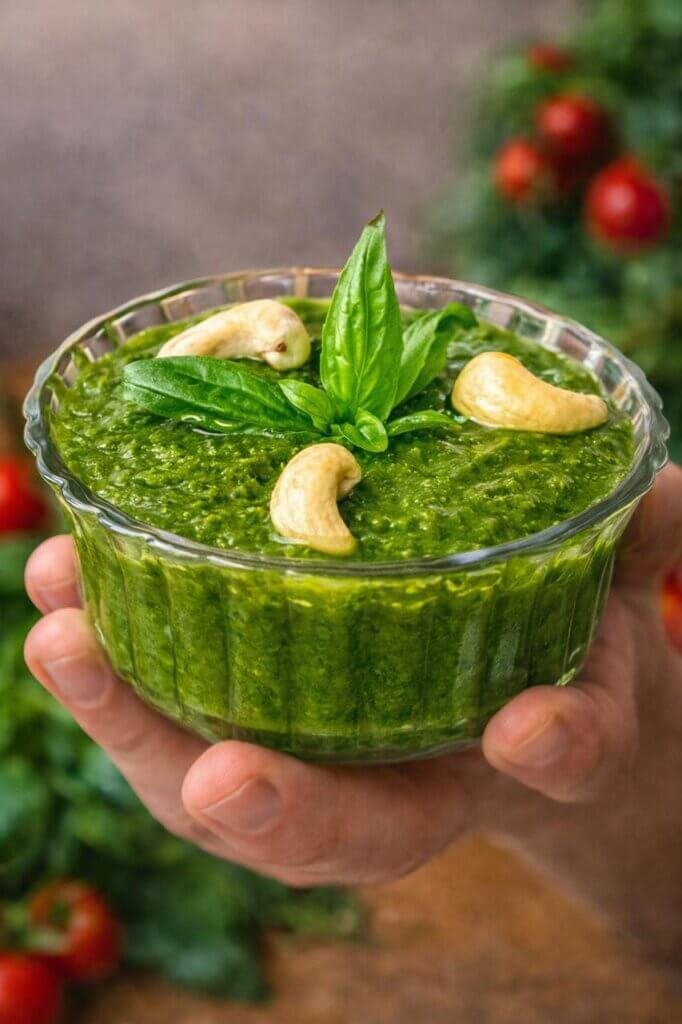
Traditionally, pesto sauce is made with pine nuts, which give it a rich and slightly resinous flavor. However, I chose to use cashews here for a creamier texture and a milder taste. As a result, the sauce becomes smoother and more affordable, so I truly encourage you to try it this way.
The Nutritional Benefits
This pesto sauce combines simple ingredients, each with its own benefits. Olive oil provides heart-healthy fats and supports overall wellness. Cashews add plant protein, magnesium, and a naturally creamy texture. Fresh basil offers antioxidants and a refreshing aroma. Parmesan cheese contributes calcium and extra protein, while garlic supports immunity and adds bold flavor. Together, they create a sauce that is both nourishing and delicious.
The Origins of Pesto Sauce
This sauce began in Genoa, a coastal city in the Liguria region of northern Italy. The name comes from the Italian word pestare, which means “to crush.” Traditionally, cooks crushed fresh basil, garlic, pine nuts, salt, and cheese with a mortar and pestle. This simple technique created a bold, fragrant sauce.
Over time, locals perfected what we now call Pesto alla Genovese. Because Liguria grows delicate, sweet basil, the flavor became lighter and more aromatic than other herb sauces. Moreover, unlike many sauces, this one is never cooked. Instead, it keeps the ingredients raw and vibrant. As a result, pesto delivers freshness in every spoonful while staying true to its rustic Italian roots.
Ingredients
Method
- Place the washed basil leaves, cashews, garlic, fine salt, and olive oil in a blender.
- Blend until smooth and creamy.
- Add the grated Parmesan cheese and blend again briefly until fully incorporated.
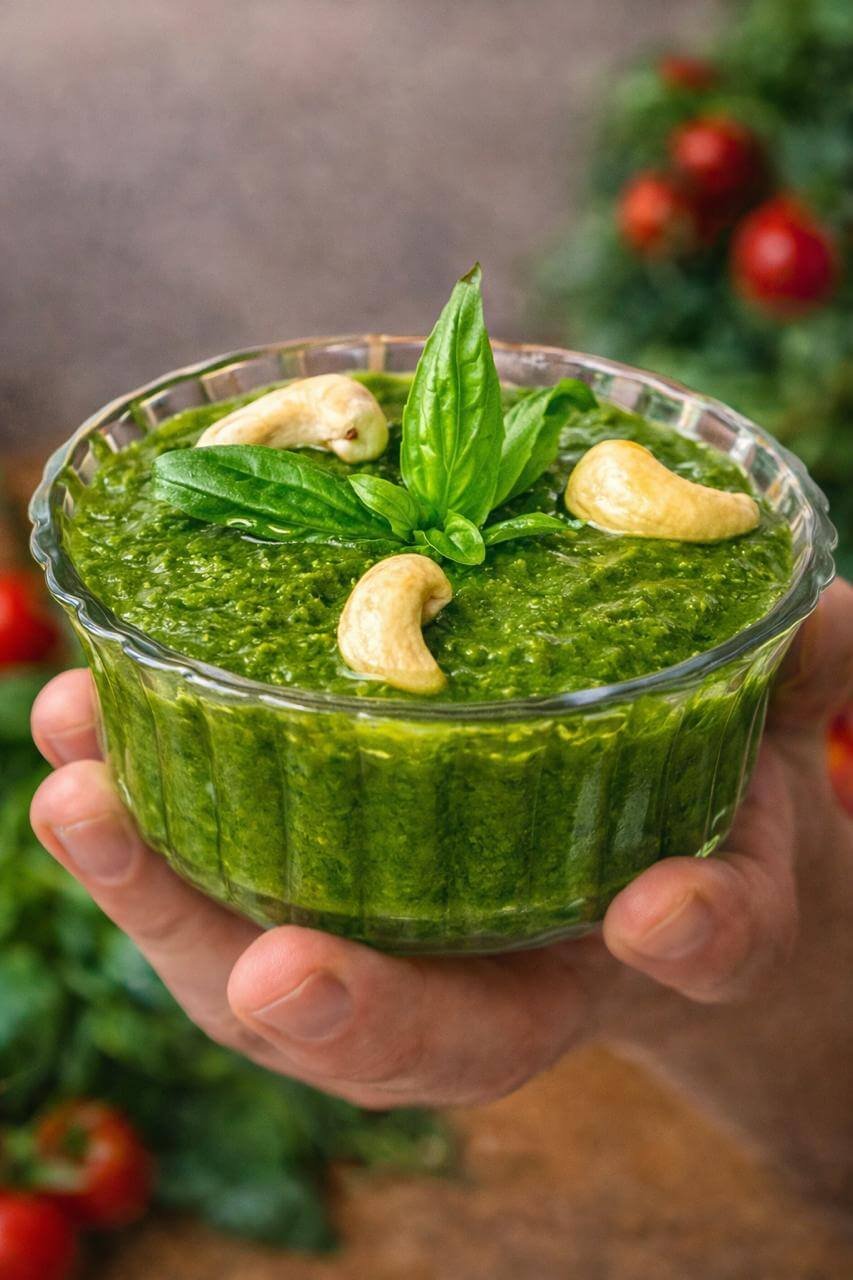
- And now you have a smooth, beautifully green, delicious pesto sauce.
Video
How to Store Pesto Sauce
To store pesto sauce properly, transfer it to a clean, airtight glass jar and smooth the surface. Then, pour a thin layer of olive oil on top to prevent oxidation and preserve its bright green color. Seal tightly and refrigerate for up to 5 days.
For longer storage, freeze it in ice cube trays, then transfer the cubes to a freezer bag for up to 3 months.
Leave a Reply