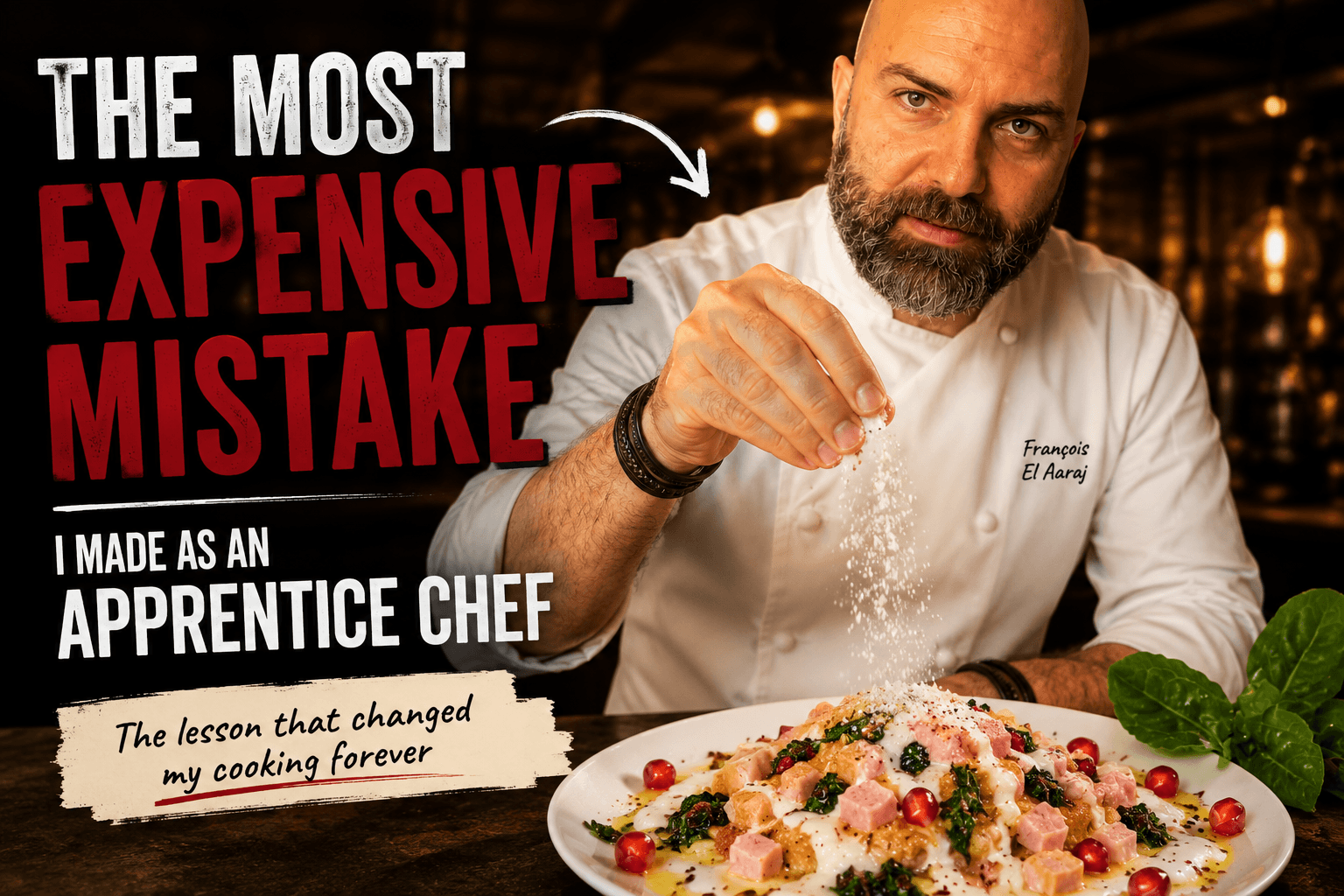
Every Chef Has a Story Like This
When people watch my cooking videos today or prepare one of my recipes, they usually see the finished dish. Whether I’m making a comforting bowl of Lebanese lentil soup, baking fresh bread, preparing a creamy pasta, or sharing one of my favorite desserts, the recipe often looks effortless. They see dishes that I have tested, refined, and perfected through decades of professional experience.
What they don’t see are the years it took to reach that point.
They don’t see the long hours I spent learning in professional kitchens, the chefs who patiently shared their knowledge with me, or the mistakes that quietly shaped me into the chef I am today.
Many people assume professional chefs have always known exactly what they were doing.
The truth is quite the opposite.
Every chef begins as a beginner.
The Lessons Behind the Mistakes
Every experienced cook has burned a dish, overcooked a piece of meat, forgotten an ingredient, or made a mistake that seemed impossible to fix. Some of those moments fade from memory, but a few stay with you forever because of what they teach you.
This is one of those stories.
It happened when I was still an apprentice chef, eager to learn and determined to prove that I deserved a place in a professional kitchen. Every new responsibility felt like another opportunity to earn the trust of my chefs and move one step closer to the career I had dreamed about.
Looking back today, I don’t remember that day because I ruined a sauce.
I remember it because of the lesson that followed.
That single moment changed the way I season food, the way I lead people, and eventually, the way I teach cooking.
More than thirty years have passed since then, yet every time I prepare a soup, stir a sauce, or reach for the salt while testing a new recipe, I still remember that day as if it happened yesterday.
It all began in one of Lebanon’s most prestigious hotels.
My First Steps at Al Bustan
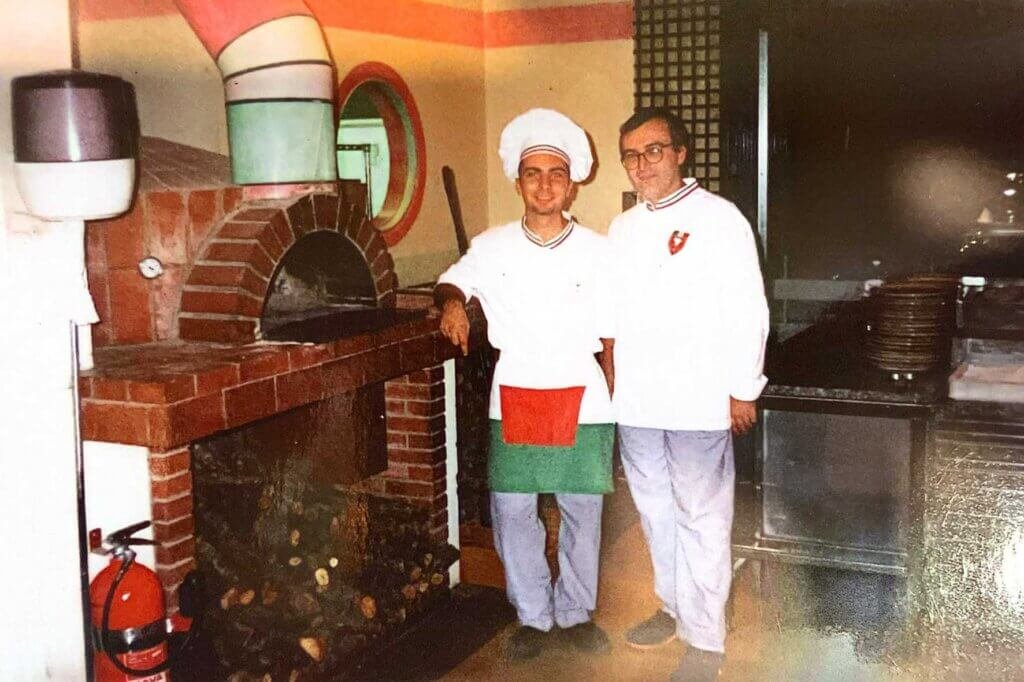
At the time, I was working at Al Giardino, the Italian restaurant inside Al Bustan Hotel in Beit Mery. Back then, Al Bustan was considered one of the finest hotels in Lebanon. Dining there wasn’t simply about eating a meal—it was an experience. Guests expected exceptional food, impeccable service, and flawless attention to detail.
For a young apprentice chef like me, walking into those kitchens every morning was both exciting and intimidating.
Everything moved with purpose. The chefs worked with confidence, every station had its rhythm, and every member of the brigade understood that quality wasn’t optional—it was expected.
Our head chef, Giorgio, was Italian, as was our sous-chef, Donato. While Chef Giorgio spoke enough Arabic to communicate with the team, Donato didn’t speak a single word of Arabic.
“That made everyday life in the kitchen… interesting.”
Learning to Communicate Without Words
Imagine a busy kitchen during lunch or dinner service, everyone rushing to finish orders on time, and Donato trying to ask for something as simple as a frying pan. Since he didn’t know the Arabic word, he would point frantically with his hands, hoping we would understand what he wanted.
Most of the time, we didn’t.
The more we failed to understand him, the more frustrated he became. During the busiest moments of service, he would start shouting instructions in rapid Italian while we all stood there looking at each other, trying to guess what he meant. Looking back now, it makes me smile, but at the time it certainly wasn’t funny when tickets were piling up and everyone was under pressure.
Finding a Common Language
Little by little, however, something unexpected happened.
Without realizing it, we started learning Italian.
Not enough to hold a conversation, of course, but enough to understand the language of the kitchen. We learned the names of utensils, ingredients, cooking techniques, and the most common instructions Donato shouted during service. Every new word we picked up made communication a little easier, and before long, we understood each other far better than we ever thought we would.
“It reminded me that a professional kitchen has its own language. Sometimes that language is spoken with words. Other times, it’s spoken through gestures, eye contact, and teamwork.”
Those early months taught me far more than recipes. They taught me how to adapt, how to observe, and how to work with people from different cultures—all skills that would become just as important as knowing how to cook.
I was one of the youngest members of the brigade, and every day felt like another opportunity to learn. So, I watched the experienced chefs carefully, paying attention not only to what they cooked, but also to how they moved, how they organized their stations, and how they handled the pressure of a busy service.
I wanted more than just a job, I wanted to become the kind of chef who could earn the trust of the people around him.
That opportunity was about to arrive—and with it came one of the biggest lessons of my entire career.
Learning by Watching, Not by Measuring
Professional kitchens have changed tremendously over the years.
Today, many restaurants rely on standardized recipes that specify every ingredient down to the gram. Chefs use digital scales, follow detailed recipe cards, and produce consistent results because everyone prepares each dish using the same precise measurements.
When I first started my career, things were quite different.
Recipes certainly existed, but they weren’t as detailed as they are today. Many preparations were written in a very simple way, almost like reminders for chefs who already knew the recipe by heart. Instead of listing exact quantities, a recipe might simply say:
- One block of ham
- Ten cartons of cream
- Salt and pepper to taste
The exact amount of seasoning wasn’t written down because experienced chefs didn’t need it. They relied on years of practice, tasting, and instinct. They knew what looked right, what smelled right, and, most importantly, what tasted right.
Learning Through Observation
As apprentices, our classroom wasn’t a notebook.
It was the kitchen itself.
We learned by watching every movement our chefs made. We observed how they held a knife, how they stirred a sauce, when they increased or lowered the heat, and even how they tasted a dish before deciding whether it needed another pinch of seasoning.
“Every service became a lesson. Every recipe became a demonstration. And every experienced chef became a teacher, whether they realized it or not.”
Building Confidence in the Kitchen
Instead of simply following instructions, I spent hours paying attention to details that many people would never notice. Experienced chefs could tell whether a sauce was reducing properly with just a quick glance at its texture. Even the sound of onions gently sizzling became a lesson, teaching me that your ears can sometimes tell you as much as your eyes. Another skill that fascinated me was watching chefs instinctively adjust recipes depending on the quality of the ingredients, the season, or even the number of portions they were preparing.
“These were things no recipe book could teach me.”
Little by little, I became more confident. The chefs noticed that I was serious about learning, and they started trusting me with more responsibilities.
For a young apprentice, there was no greater compliment.
One day, my head chef called me over and showed me how to prepare one of our creamy ham sauces. I watched every step carefully, trying to memorize not only the ingredients but also the rhythm of the recipe. When he finished, he looked at me and simply said that the next batch would be mine to prepare.
I remember feeling proud.
That simple gesture told me he believed I was ready.
What I didn’t realize was that only a few minutes later, I would make a mistake I would never forget.
The Day My Chef Trusted Me
As the weeks went by, I became more comfortable in the kitchen. Every service taught me something new, and every day I gained a little more confidence. The chefs noticed that I took my work seriously. I arrived eager to learn, paid attention to every detail, and never hesitated to ask questions when I didn’t understand something.
Little by little, they started trusting me with more responsibilities.
For a young apprentice, there was no greater compliment.
Earning Responsibility

One day, Chef Giorgio called me over to his station. We were preparing one of the restaurant’s creamy ham sauces, a recipe that appeared simple but demanded precision and attention from beginning to end.
I watched him prepare the sauce exactly as he always did. He cooked the ham until it released its flavor, added the cream, adjusted the heat, and finished the sauce with the seasoning. As always, I paid close attention, trying to memorize every movement rather than simply remembering the ingredients.
When he finished, he looked at me and said, “Now it’s your turn.”
“That simple sentence meant more to me than he probably realized.”
The Weight of Trust
Until then, I had mostly assisted the senior chefs, helping them prepare ingredients, organizing my station, and completing the tasks they assigned to me. Preparing an entire sauce on my own meant they believed I was ready for a greater level of responsibility.
Of course, that trust also came with pressure.
The ham we used wasn’t an ordinary ingredient. It was imported, high quality, and one of the more expensive products in the kitchen. There was very little room for error because wasting those ingredients would cost the restaurant far more than throwing away a few vegetables or overcooking a piece of pasta.
Determined to prove that I deserved Chef Giorgio’s trust, I reminded myself to stay focused and pay attention to every detail. I followed his method exactly as I had watched him do countless times before. After dicing the ham, I cooked it carefully, poured in the cream, and watched the sauce come together beautifully.
Everything looked exactly as it should.
For a moment, I thought I had done everything right.
Then came the final step.
Seasoning.
And that’s when one small decision turned into the biggest lesson of my apprenticeship.
One Handful of Salt
Everything looked exactly as it should.
The ham had released its rich flavor into the cream, the sauce had the right consistency, and I remember feeling relieved that everything had gone according to plan.
Only one step remained.
The seasoning.
Today, I almost instinctively season my food in small stages, tasting as I go. Back then, however, I didn’t yet understand why experienced chefs worked that way.
I simply remembered watching Chef Giorgio season the sauce during his demonstration.
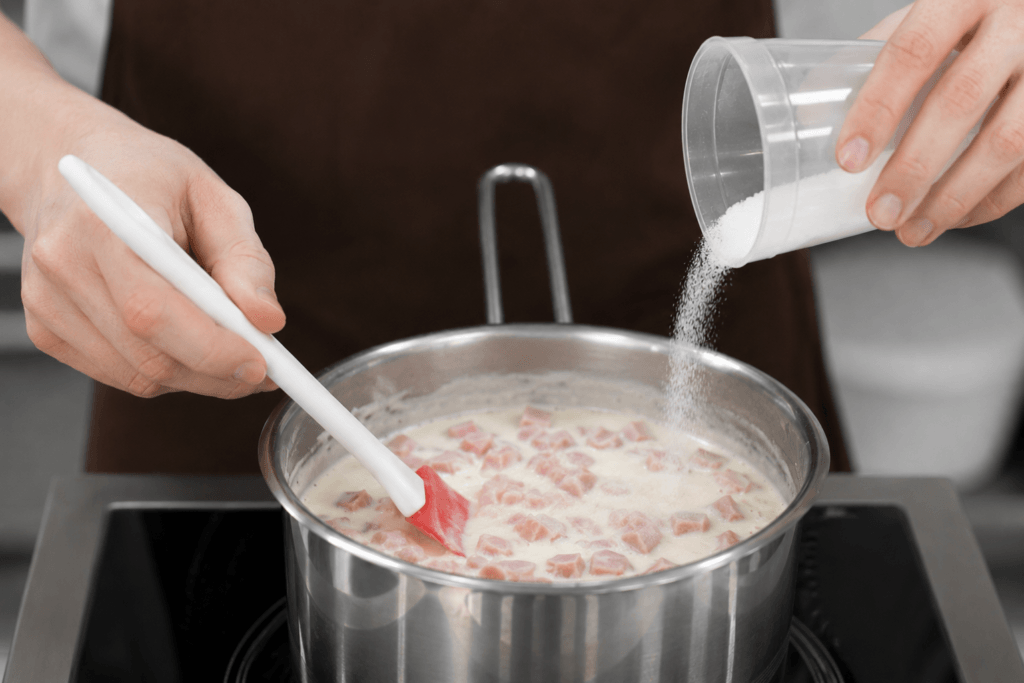
Since our recipes didn’t include exact measurements for salt and pepper, I relied on my memory. I picked up the salt and added what I believed was about the same amount I had seen him use.
All at once.
The Moment Everything Changed
I gave the sauce a good stir, waited a few seconds for the salt to dissolve, and dipped in a spoon.
“The moment I tasted it, my heart sank.”
It was far too salty.
Not slightly over-seasoned.
Not something that needed a splash more cream.
The sauce was unpleasantly salty, and I immediately thought I had ruined the entire batch.
For a few seconds, my mind raced.
I looked at the saucepan and wondered what to do next. Part of me wanted to believe there had to be an easy way to fix it. Another part hoped that maybe I was mistaken and that a second taste would somehow be different.
It wasn’t.
The second spoonful confirmed exactly what I already knew.
I had made a serious mistake.
My thoughts quickly turned to the expensive ham sitting in that sauce. I knew its value, and I knew how much trust Chef Giorgio had placed in me by allowing me to prepare the recipe on my own. More than disappointing myself, I was terrified of disappointing him.
Then another thought crossed my mind.
Should I try to fix it by myself?
Should I throw it away before anyone noticed?
Or should I walk over to the chef and admit exactly what I had done?
Looking back now, I realize that those few seconds taught me something just as important as the cooking mistake itself.
Every professional eventually faces a moment when things go wrong.
The real test isn’t whether you make a mistake.
It’s what you choose to do next.
A Lesson in Leadership
As frightened as I was, I knew there was only one thing I could do.
I walked over to Chef Giorgio and told him exactly what had happened.
“I think I added too much salt.”
And I waited for his reaction.
In my mind, I had already imagined the worst. I expected him to raise his voice, criticize me in front of the rest of the brigade, or tell me I had just wasted some of the most expensive ingredients in the kitchen.
Instead, he remained completely calm.
He came over to my station, tasted the sauce, and quietly nodded.
Then he looked at me and said something that immediately changed the atmosphere.
“Let’s fix it.”
No shouting or humiliation.
No angry lecture.
Just four simple words.
Watching him work taught me a lesson that no culinary school ever could.
Turning Mistakes into Lessons
He explained that although the cream sauce was too salty to save, the ham itself wasn’t the problem. It had simply absorbed some of the seasoning while cooking. We carefully removed every piece of ham from the sauce and set it aside. The cream had to be discarded, but instead of throwing everything away, we started over.
Using the same ham, we prepared a completely fresh cream sauce.
Within a short time, the dish was back on track.
A Lesson I’ll Never Forget
That moment completely changed the way I thought about mistakes.
Until then, I believed that ruining a recipe meant starting from nothing.
Chef Giorgio showed me that experience isn’t just about knowing how to cook. It’s also about knowing what can still be saved.
Professional kitchens can’t afford unnecessary waste. Every ingredient represents time, effort, and money. Experienced chefs learn to think before they throw something away, and that day I witnessed exactly what that kind of experience looks like.
Only after we had finished did Chef Giorgio sit down with me for a brief conversation.
He told me that mistakes happen, especially when someone is still learning. Every chef has ruined dishes at some point in their career, and making one mistake didn’t mean I wasn’t capable of becoming a good chef.
Then he added something I never forgot.
He said that if I made the same mistake again, the cost of the wasted ingredients would come out of my salary.
At first, that sounded harsh.
Looking back today, I understand exactly why he said it.
He wasn’t trying to frighten me.
In fact, it was a wake-up call to understand that trust and responsibility always go hand in hand. He gave me the opportunity to learn from my mistake once, but he also expected me to learn enough that I wouldn’t repeat it.
That balance between kindness and accountability is something I have carried with me throughout my entire career.
Years later, when I found myself leading kitchen teams of my own, I often thought back to that day.
Whenever a young cook made an honest mistake, I remembered Chef Giorgio standing beside me instead of standing over me.
“He didn’t make me afraid to cook again.
He made me want to become a better chef.”
The Lesson I Still Apply Every Day
Season Gradually, Not All at Once

That day completely changed the way I season food.
Before that mistake, I thought seasoning meant adding what looked like the right amount of salt and hoping for the best. Chef Giorgio taught me that professional cooking doesn’t work that way.
Today, I always begin with a small amount of salt.
Then I taste.
If the dish needs more, I add another small pinch and taste again.
I repeat that process until the flavors come into balance.
Many home cooks ask me why restaurant food tastes so well seasoned without tasting overly salty. The answer isn’t that chefs use more salt. We simply build the seasoning gradually and allow our palate to guide us instead of relying on guesswork.
That lesson has followed me through every kitchen I have worked in and every recipe I have created.
Although this wasn’t exactly the same recipe I teach today, you can see how I prepare a rich, creamy sauce in my Creamy Gnocchi alla Carbonara recipe.
Experience Means Solving Problems
People often believe that experience means never making mistakes.
I see it differently.
Experience means knowing how to respond when something goes wrong.
That day, Chef Giorgio didn’t impress me because he cooked a perfect sauce. He impressed me because he immediately recognized that we could still save the most valuable ingredient.
Instead of focusing on what we had lost, he focused on what we could still recover.
I have carried that mindset with me throughout my career.
Whenever I face a challenge in the kitchen, I first ask myself a simple question:
“What can I still save?”
Sometimes the answer is the entire dish.
Sometimes it’s only part of it.
Either way, staying calm almost always leads to a better solution than panicking.
The Best Teachers Build Confidence
As the years passed, I stopped thinking about that day as the time I ruined a sauce.
Instead, I remembered it as the day I discovered what great leadership truly looks like.
Chef Giorgio could have shouted at me. He could have embarrassed me in front of the rest of the brigade or made me afraid to cook another sauce. Instead, he chose to teach me. He corrected my mistake, showed me how to recover from it, and trusted that I would learn from the experience.
That moment stayed with me throughout my entire career.
When I eventually became responsible for training young cooks, I often thought back to that day in Al Giardino. Whenever someone made an honest mistake, I tried to do what Chef Giorgio had done for me: teach first, encourage second, and only criticize when it was truly necessary. I wanted every apprentice to leave the kitchen with more confidence than they had when they walked in.
Years later, that same philosophy became one of the reasons I decided to start teaching cooking online. I realized that sharing recipes wasn’t enough—I also wanted to share the knowledge, techniques, and lessons that experienced chefs pass from one generation to the next. If you’d like to know what inspired me to begin that journey, you can read my article, “Why I Started Teaching Cooking Online.“
Looking back today, I realize Chef Giorgio taught me much more than how to save an over-seasoned sauce.
He showed me the kind of chef—and the kind of teacher—I wanted to become.
Looking Back After All These Years
More than thirty years have passed since I made that mistake.
Since then, I have worked in different kitchens, opened restaurants, trained countless cooks, and taught thousands of people how to cook through my videos and recipes.
Yet I still think about that saucepan of ham and cream from time to time.
Not because I ruined it.
Because of what it taught me.
Every time I season a soup, a pasta sauce, or a stew, I still hear Chef Giorgio’s lesson in the back of my mind.
Start with a little.
Taste.
Then decide if the dish needs more.
That simple habit has saved me from making the same mistake ever again.
Why I Share Stories Like This
People often expect chefs to talk only about successful recipes and beautiful dishes.
I believe there is just as much value in sharing the moments when things didn’t go as planned.
Those moments taught me patience.
They taught me humility.
Most importantly, they taught me that mistakes don’t define us. The way we respond to them does.
If you’re learning to cook and you ruin a recipe, don’t let it discourage you. Every experienced chef has burned something, overcooked something, forgotten an ingredient, or seasoned a dish incorrectly at least once.
The important thing isn’t to avoid every mistake.
The important thing is to learn from each one.
The Lesson I Never Forgot
Whenever I teach a recipe today, I don’t simply explain which ingredients to use or how long to cook them.
I also try to pass on the lessons that shaped me as a young apprentice.
Cooking is about much more than following a recipe.
It’s about observing, tasting, adapting, solving problems, and never stopping learning.
Looking back, I don’t consider that salty sauce the most expensive mistake I ever made.
I consider it one of the best investments in my career.
It taught me to season with patience.
It taught me to lead with kindness.
And it reminded me that the greatest lessons in the kitchen rarely come from perfect dishes—they come from the mistakes we have the courage to admit, the mentors who choose to teach instead of blame, and the determination to come back the next day ready to cook even better than before.
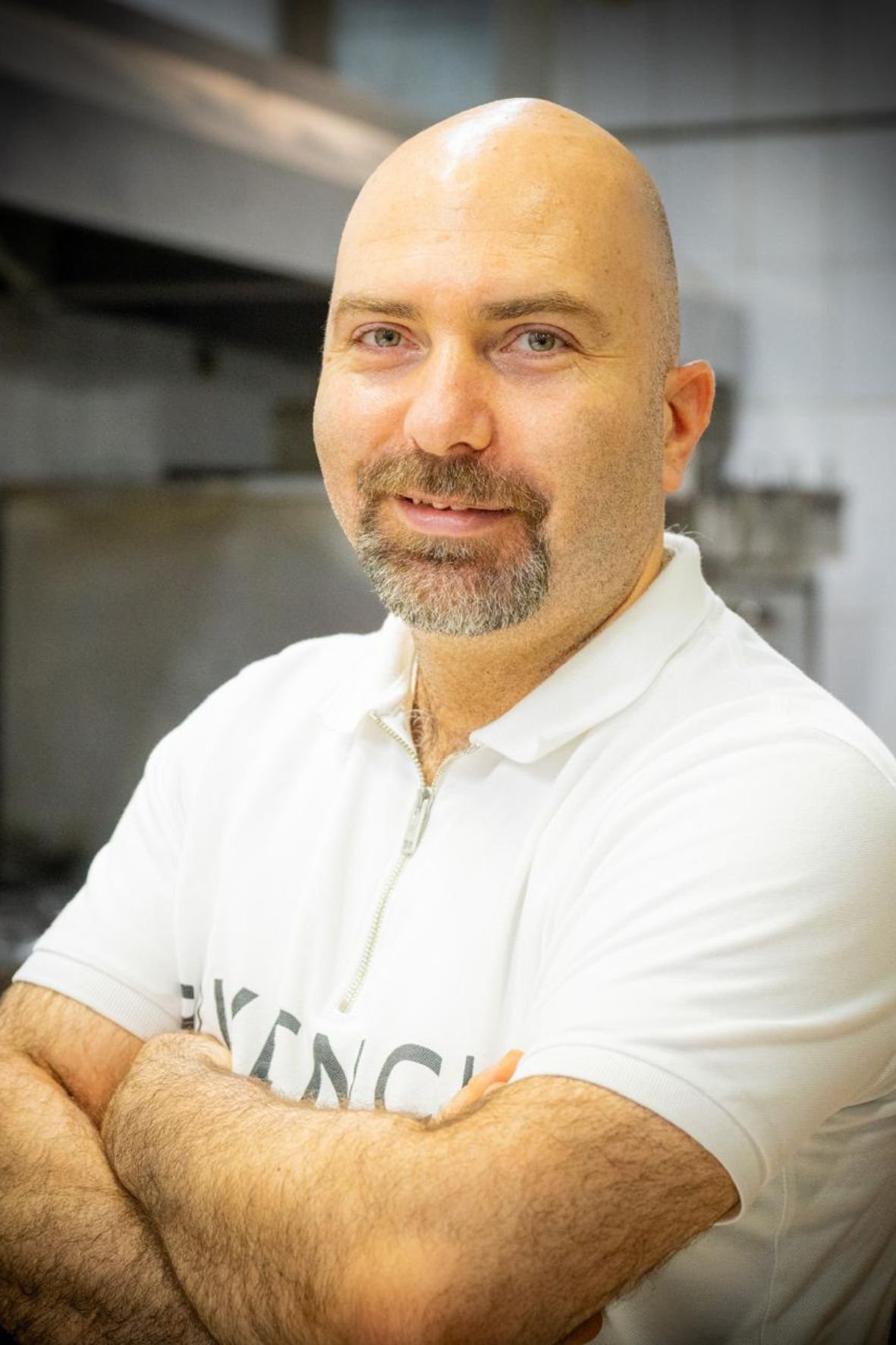
Chef François El Aaraj is a corporate chef and culinary consultant with more than 30 years of experience in professional kitchens and restaurant openings across Lebanon and abroad. Through this website, he shares authentic recipes, cooking techniques, and chef secrets designed to help home cooks create flavorful meals with confidence.
Leave a Reply