Cooking videos can make even the most complicated dishes look surprisingly easy. A few quick cuts show a young cook chopping vegetables, adding ingredients to a pan and serving a perfect meal within seconds. However, what these videos do not always show is the experience behind every simple movement.
Before attempting elaborate recipes, every young cook should learn the basic techniques that make cooking safer, easier and more enjoyable. Skills such as holding a knife correctly, controlling heat, seasoning gradually and reading a recipe from beginning to end may seem simple. Yet they are the foundation of almost every successful dish.
Learning the basics does not mean preparing boring food or delaying creativity. On the contrary, it gives young cooks the confidence to experiment, understand their mistakes and eventually cook without depending completely on a recipe. Once the foundations are strong, more advanced dishes become far less intimidating.
Whether a young person is learning to prepare an occasional snack or hopes to become a professional chef one day, mastering basic cooking skills is the best place to begin.
What Cooking Basics Should Every Young Cook Learn?
Cooking basics are the essential skills that help beginners work safely and confidently in the kitchen. They are not limited to following simple recipes. They also include understanding ingredients, using kitchen tools correctly and knowing how food changes during cooking.
Young cooks should begin by learning how to:
- Read a complete recipe before starting.
- Measure ingredients accurately.
- Hold and use a knife safely.
- Chop vegetables into evenly sized pieces.
- Control low, medium and high heat.
- Boil, simmer, sauté, roast and bake.
- Season food gradually and taste as they cook.
- Prevent cross-contamination.
- Store leftovers safely.
- Keep their workspace clean and organized.
I have learned throughout my years in professional kitchens that strong cooking is built on these small habits. A complicated recipe cannot compensate for poor heat control, careless preparation or incorrect seasoning. Once young cooks understand the foundations, they can approach new recipes with greater confidence and recognize how to correct a dish when something goes wrong.
The goal is not to master every technique immediately. It is to practise one skill at a time until it becomes natural. Even preparing eggs properly, cooking pasta to the right texture or making a balanced salad dressing can teach valuable lessons that apply to many other dishes.
Simple Recipes Help Build Confidence
Every young cook should begin with recipes that use familiar ingredients and a small number of clear steps. Simple dishes make it easier to focus on essential techniques without feeling overwhelmed by complicated instructions.
Scrambled eggs, pasta, roasted vegetables, soup, rice and basic salads are excellent starting points. Although these dishes may appear easy, they teach valuable skills such as controlling heat, measuring ingredients, checking texture and seasoning food gradually.
Successfully preparing a simple meal also gives beginners an important sense of achievement. This confidence encourages them to return to the kitchen, practise more often and try something slightly more challenging the next time.
Mistakes Are Part of Learning
Making mistakes is a natural part of learning. Rice may become too soft, vegetables may cook unevenly or a sauce may need more seasoning. Starting with simple recipes allows young cooks to understand these mistakes without wasting expensive ingredients or becoming discouraged.
Once the basic techniques feel comfortable, beginners can gradually add new ingredients and more advanced methods. A simple tomato sauce can later become the foundation for pasta, pizza, baked dishes and many other homemade meals. This gradual progress turns cooking into a skill that continues to grow with every recipe.
Basic Knife Skills Make Cooking Safer and Easier
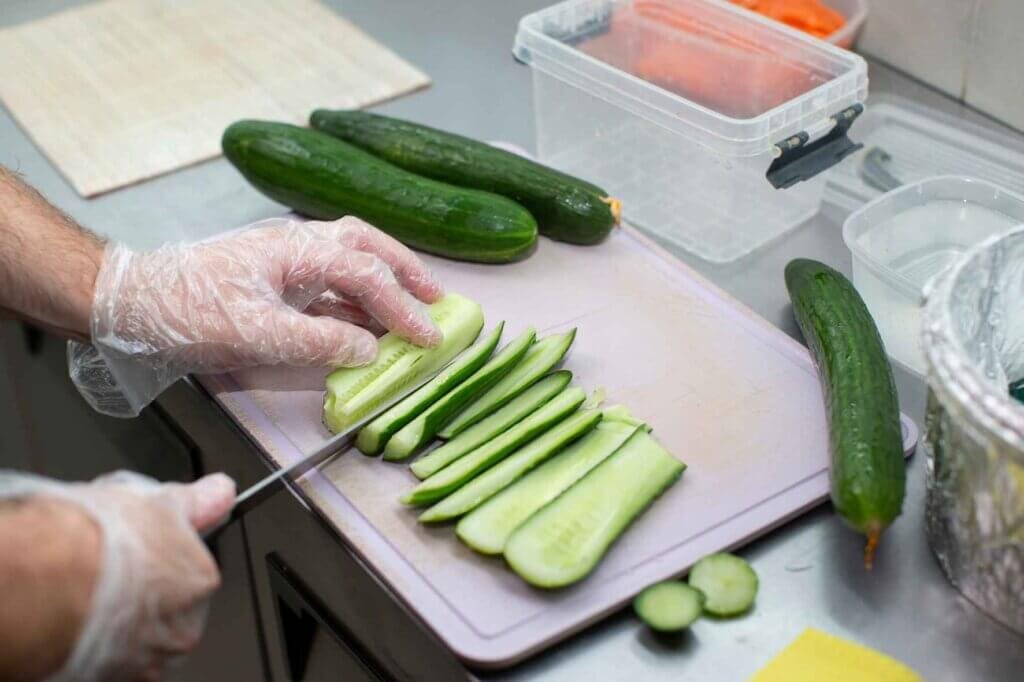
Learning how to use a knife correctly is one of the most important cooking basics for beginners. Good knife skills help young cooks prepare ingredients more quickly, create evenly sized pieces and reduce the risk of accidents.
Beginners should first learn how to hold a knife securely and choose the right knife for each task. A chef’s knife is suitable for chopping many vegetables, while a smaller paring knife is useful for peeling and handling delicate ingredients. Using a stable cutting board is equally important. Placing a damp kitchen towel underneath it can prevent it from sliding during use.
Young cooks should practise simple techniques such as slicing, chopping and dicing with soft, easy-to-handle ingredients. There is no need to work quickly. Accuracy, control and safety should always come before speed.
Even Pieces Cook More Evenly
Knife skills do more than improve the appearance of a dish. Ingredients cut into similar sizes usually cook at approximately the same rate. If some potato pieces are large and others are very small, the smaller ones may burn or become too soft before the larger pieces finish cooking.
Beginners should also learn to keep the fingertips of the guiding hand tucked inward, creating a safe “claw” shape. A sharp knife is generally safer than a dull one because it requires less pressure and is less likely to slip. However, every knife must still be handled carefully and stored safely after use.
With regular practice, chopping becomes more comfortable and efficient. These basic skills can then be used in countless recipes, from soups and salads to stir-fries and roasted dishes.
Understanding Heat Control Prevents Common Mistakes
Knowing how to control heat is one of the most valuable cooking skills a beginner can develop. Turning the burner to its highest setting does not always make food cook better or significantly faster. In many cases, excessive heat burns the outside while leaving the inside undercooked.
Low heat is useful for gentle cooking, melting ingredients and keeping delicate sauces from separating. Medium heat works well for many everyday tasks, including cooking eggs and sautéing vegetables. High heat is helpful for searing meat or bringing water to a boil, but it usually requires close attention.
Young cooks should also allow pans and ovens enough time to preheat. Placing food in a cold pan may prevent proper browning, while using an oven before it reaches the correct temperature can affect cooking time and texture.
Learn to Adjust the Temperature
A recipe may recommend medium heat, but every stove and pan behaves differently. For this reason, young cooks should learn to observe the food instead of depending only on the burner setting.
Oil that begins to smoke, butter that darkens too quickly or food that sticks and burns are signs that the heat may be too high. On the other hand, vegetables that release water without browning may need a slightly hotter pan. Small temperature adjustments can make a noticeable difference.
Heat does not disappear immediately after a burner is turned down. Heavy pans can remain hot for several minutes. Removing the pan from the burner temporarily may sometimes be the fastest way to prevent burning. With practice, beginners learn to respond to these signs and gain better control over the final result.
Learning How to Season Food Properly
Seasoning is about creating balance rather than simply adding more salt. A young cook should understand how salt, pepper, herbs, spices, acidity and sweetness work together to improve the natural flavor of food.
Salt is usually best added gradually throughout the cooking process. Seasoning at different stages distributes the flavor more evenly and reduces the risk of oversalting the finished dish. However, ingredients such as cheese, olives, soy sauce and stock may already contain a considerable amount of salt.
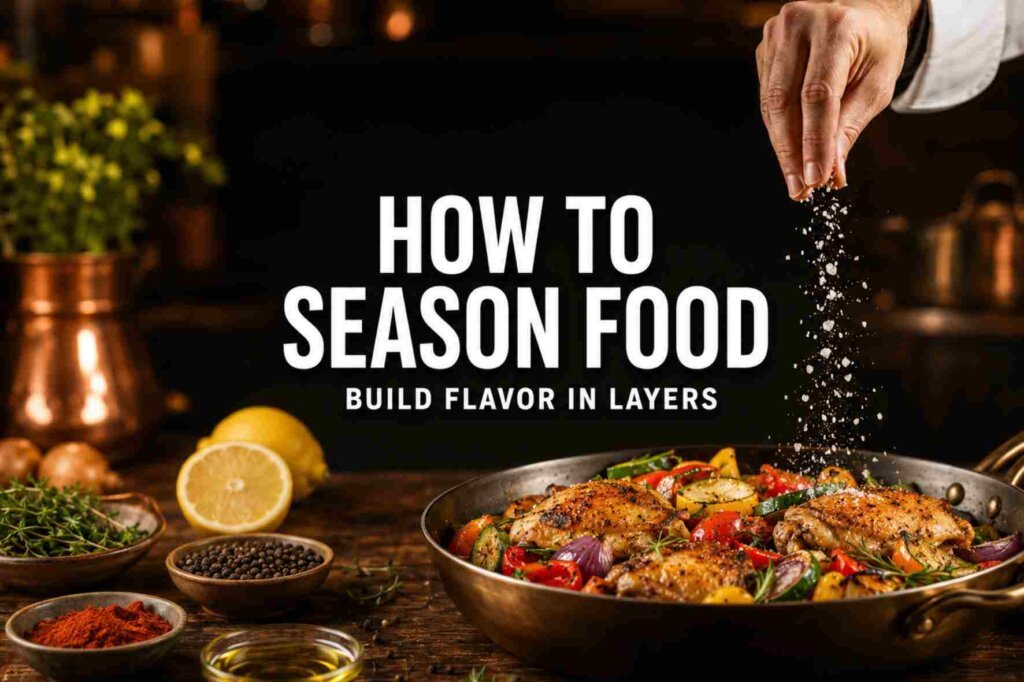
Herbs and spices also behave differently. Dried herbs often benefit from being added earlier, giving them enough time to release their flavour. Fresh herbs are more delicate and may taste better when added near the end of cooking. For more detailed advice, read our complete guide on how to season food properly, where we explain how to build balanced flavour without overpowering the main ingredients.
Taste Before Adding More
Tasting food as it cooks is one of the most valuable habits I learned early in my career.
When I was working as an apprentice under an Italian chef, I once added too much salt to a ham and cream dish. Because the ham was already salty, the additional seasoning made the entire dish far saltier than intended.
That experience taught me never to season automatically. Ingredients such as ham, cheese, olives and stock already contribute salt, so it is important to taste the dish before adding more.
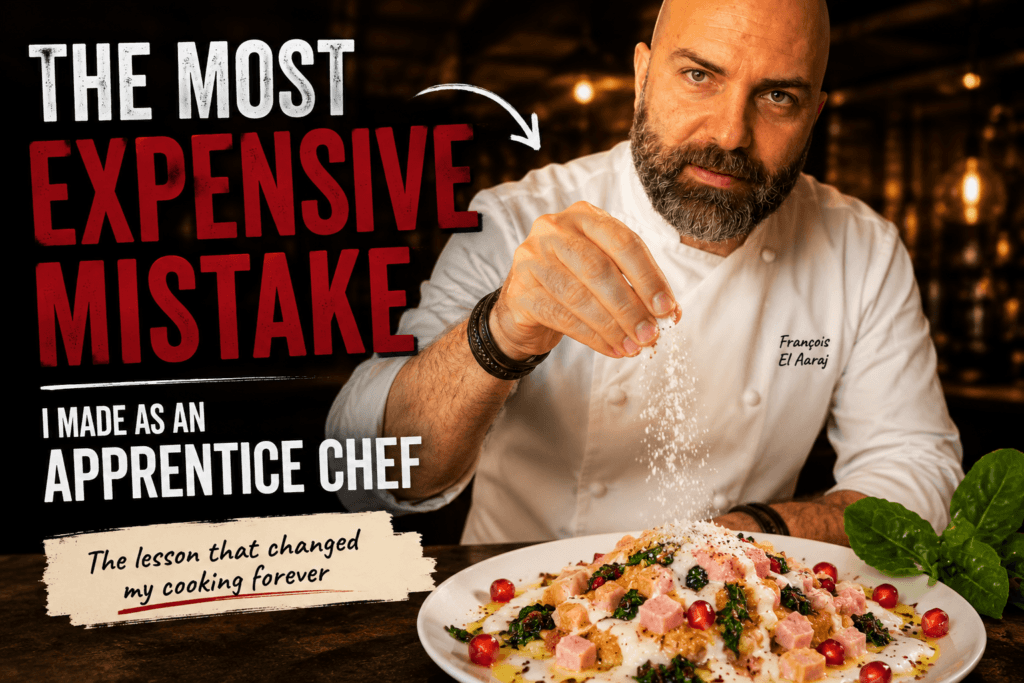
I share the full story and what it taught me in the most expensive mistake I made as a young cook.
When food tastes flat, it does not always need more salt. A little lemon juice or vinegar may add freshness, while herbs, pepper or spices can provide more depth. Strong seasonings should always be added gradually because adding more is easy, but correcting an overpowering flavor can be difficult.
With regular tasting, young cooks begin to understand what a dish truly needs. This habit helps them develop their palate, avoid unnecessary mistakes and eventually cook with greater confidence.
Read the Entire Recipe Before You Begin
One of the easiest ways to avoid mistakes in the kitchen is to read the entire recipe before you begin. Young cooks often start preparing a dish after reading only the first step, only to discover later that an ingredient needs to be softened, marinated, chilled, or prepared in advance.
Reading the full recipe also helps beginners understand the correct order of the steps and estimate the total preparation and cooking time. A dish described as quick may still require extra time to preheat the oven, bring ingredients to room temperature, or allow the food to rest after cooking.
Before starting, make sure that all the ingredients are available, fresh, and suitable for use. Check expiration dates and confirm that you have the required quantity of each ingredient. You should also look up any unfamiliar terms, techniques, or equipment mentioned in the instructions. For more inspiration and step-by-step guidance, you can find many delicious and practical recipes on this website.
Prepare Your Ingredients in Advance
Professional kitchens use the French principle of mise en place, which means putting everything in its place. At home, this can be as simple as washing the vegetables, measuring the ingredients and placing the required tools nearby before cooking begins.
Preparing ingredients in advance makes the process calmer and more organized. It also prevents food from burning while the cook searches for a spice, chops an onion or discovers that an important ingredient is missing.
However, this does not mean every ingredient must always be placed in a separate bowl. Young cooks can keep preparation practical and avoid creating unnecessary dishes. The goal is to know what is needed, complete time-sensitive tasks in advance and make sure everything is ready when the recipe calls for it.
Reading and preparing before cooking may take a few extra minutes, but it often saves time later. More importantly, it allows beginners to focus on the food and learn from the process instead of rushing to keep up with the recipe.
Understanding Ingredients Makes You a Better Cook
Following a recipe teaches young cooks how to prepare one particular dish. Understanding the purpose of each ingredient teaches them how to cook. This knowledge makes it easier to recognize mistakes, adjust recipes and use what is already available in the kitchen.
Every ingredient performs a role. Salt enhances flavour, flour can provide structure or thicken a sauce, eggs may bind ingredients together, and fat can add richness and help food brown. Acidic ingredients such as lemon juice and vinegar can brighten flavours, balance richness and sometimes affect texture.
Young cooks do not need to learn all of this at once. They can begin by observing what happens when an ingredient is added, heated, mixed or left to rest. These small observations gradually build practical knowledge that can be used across many recipes.
Make Substitutions Carefully
Replacing one ingredient with another is not always as simple as choosing something that looks or tastes similar. In baking, changing the amount of flour, sugar, eggs or fat can affect the structure, moisture and final texture. Cooking is often more flexible, but substitutions can still change how a dish behaves.
Before making a replacement, young cooks should ask what the original ingredient contributes. Is it there for flavour, moisture, acidity, thickness or structure? Once its purpose is clear, it becomes easier to choose a suitable alternative.
For example, replacing cream with milk may produce a thinner sauce, while using dried herbs instead of fresh ones can create a stronger flavour. A successful substitution may therefore require adjusting the amount or changing another part of the recipe.
Understanding ingredients gives young cooks greater freedom, but good judgment develops through practice. It is best to begin with small changes, observe the results and remember what worked for the next meal.
Kitchen Safety and Hygiene Come First
Learning to cook is exciting, but safety must always be part of the process. Young cooks should understand that a clean and organized kitchen protects both the person preparing the food and everyone who will eat it.
Hands should be washed before cooking and again after handling raw meat, poultry, seafood or eggs. Cutting boards, knives and utensils that touch raw ingredients must also be cleaned before they are used for cooked or ready-to-eat food. This helps prevent cross-contamination and reduces the risk of foodborne illness.
Young cooks should also learn to turn pan handles away from the edge of the stove, use dry oven gloves and open pot lids away from the face. Water should never be poured onto burning oil. Long hair should be tied back, loose sleeves secured and electrical appliances kept away from water.
Store Food Safely
Food safety continues after the meal is prepared. Perishable ingredients and leftovers should not remain at room temperature for long periods. They should be cooled and refrigerated promptly in clean, covered containers.
Beginners should learn to check expiration dates, follow storage instructions and recognize when food may no longer be safe to eat. However, appearance and smell alone cannot always confirm that food is safe.
Parents or experienced adults should supervise younger cooks when they use sharp knives, hot ovens or boiling liquids. As their skills and judgment improve, they can gradually take responsibility for more tasks while continuing to follow the same safety habits.
Basic Techniques Create Endless Possibilities
A young cook does not need to master dozens of complicated methods. A small collection of basic cooking techniques can be used to prepare hundreds of different meals.
Boiling is useful for pasta, potatoes and some vegetables, while simmering cooks food more gently and is ideal for soups and sauces. Sautéing uses a small amount of fat and relatively high heat to cook ingredients quickly. Roasting creates browning and concentrated flavour, while steaming provides a gentle way to cook vegetables, fish and other delicate foods.
Learning the difference between these methods helps beginners choose the right technique for each ingredient. For example, rapidly boiling a delicate sauce may cause it to separate, while overcrowding a frying pan may cause food to steam instead of brown.
Practise One Technique at a Time
The easiest way to improve is to focus on one technique through several simple recipes. A young cook might begin by roasting different vegetables and observing how their size, moisture and cooking time affect the result.
The same approach can be used with eggs, rice, pasta or sauces. Repeating a technique helps beginners recognize visual signs, textures and aromas that written instructions cannot always explain.
Once these methods become familiar, recipes are easier to understand and adapt. Young cooks begin to see that many dishes are simply different combinations of the same foundational techniques. This is when cooking starts to feel less like following instructions and more like developing a genuine skill.
Basic Cooking Skills Save Money and Reduce Waste
Learning basic cooking skills can help young people manage their food budgets more responsibly. Preparing meals at home is often less expensive than regularly ordering food or buying ready-made meals. It also gives cooks greater control over portions and ingredients.
Young cooks can begin by planning a few meals before shopping and checking what is already available at home. A simple shopping list helps prevent unnecessary purchases, while choosing recipes with shared ingredients makes it easier to use everything before it spoils.
Understanding storage is equally important. Herbs, vegetables, dairy products and cooked meals do not all stay fresh for the same amount of time. Knowing where and how to store them can extend their usable life and prevent good food from being thrown away.
Learn to Use Leftovers Creatively
Leftovers do not always need to be served in exactly the same way. Roasted vegetables can be added to an omelette, soup or pasta dish. Cooked chicken can become a sandwich or salad, while slightly stale bread can be transformed into breadcrumbs or croutons.
Young cooks should also learn the difference between safe leftovers and ingredients that should be discarded. Leftover food must be cooled, refrigerated and reheated correctly. When its safety is uncertain, it is better not to take a risk.
Learning to use available ingredients encourages creativity and builds confidence. It also teaches young cooks that responsible cooking involves more than preparing a tasty meal. It includes planning carefully, respecting ingredients and wasting as little food as possible.
Final Thoughts
Learning the basics is the first step toward becoming a confident and creative cook. Simple skills such as reading a recipe carefully, measuring ingredients correctly, using a knife safely, and understanding basic cooking methods can prevent mistakes and make every dish more successful.
Young cooks should not feel discouraged when something goes wrong. Every mistake is an opportunity to learn, improve, and understand food better. With patience and regular practice, basic techniques soon become natural.
Once these foundations are strong, young cooks can experiment with new ingredients, adjust recipes, and develop their own style. Cooking is not about achieving perfection from the beginning. It is about building confidence one dish at a time. For more practical guidance and inspiration, explore the many recipes available on this website and choose one to start cooking today.
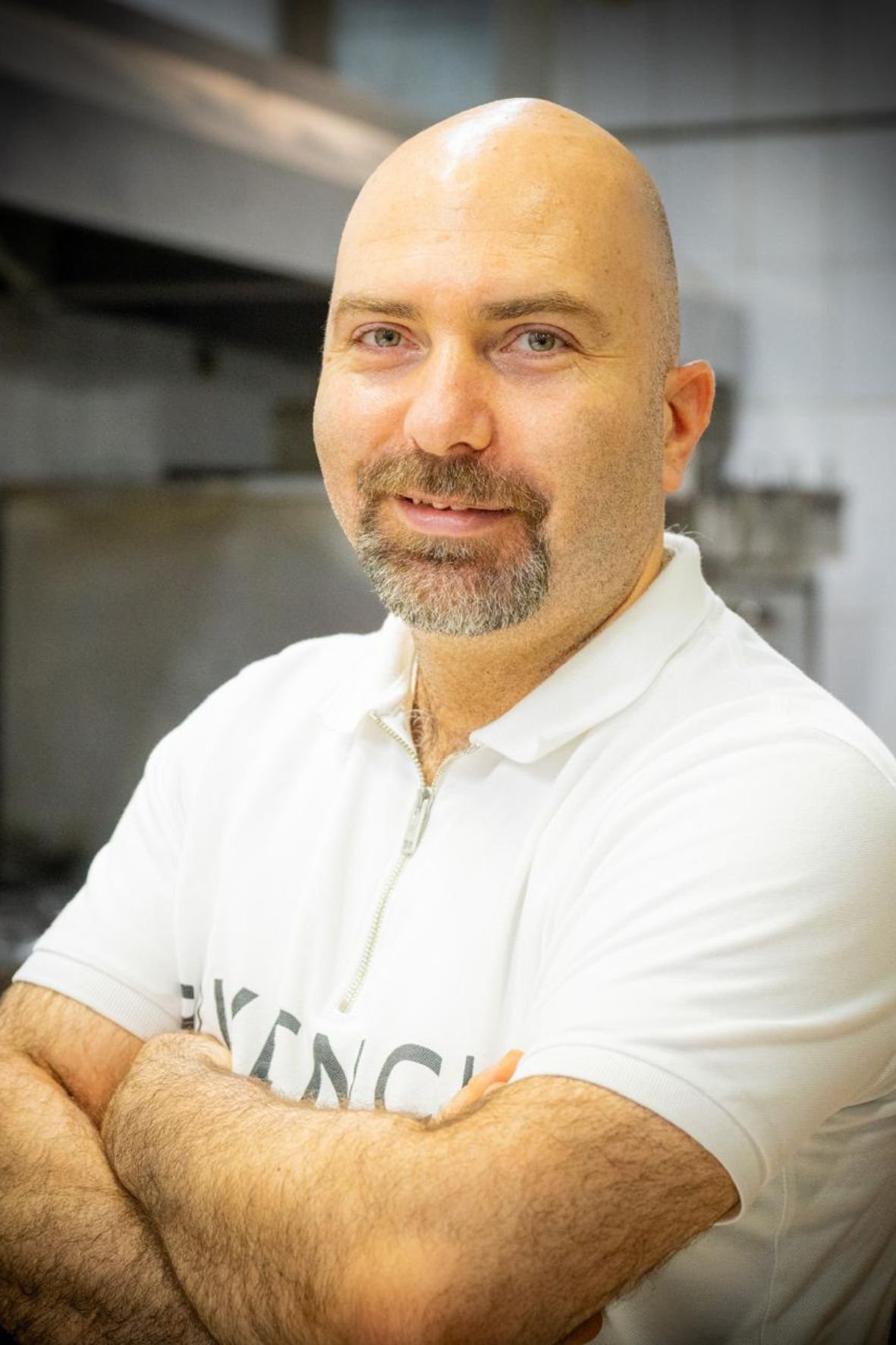
Chef François El Aaraj is a corporate chef and culinary consultant with more than 30 years of experience in professional kitchens and restaurant openings across Lebanon and abroad. Through this website, he shares authentic recipes, cooking techniques, and chef secrets designed to help home cooks create flavorful meals with confidence.
Leave a Reply